
 E-Paper



Approving Pfizer based on global study may impact Indian vaccine makers: Kang
So far, three companies have applied for emergency use authorisation with the country’s apex drug regulator Central Drugs Standard Control Organisation (CDSCO).


Giving Pfizer approval based on their global data, without a bridging study in India, could disadvantage the national vaccine developers and manufacturers, said clinical scientist and vaccine expert Dr Gagandeep Kang.
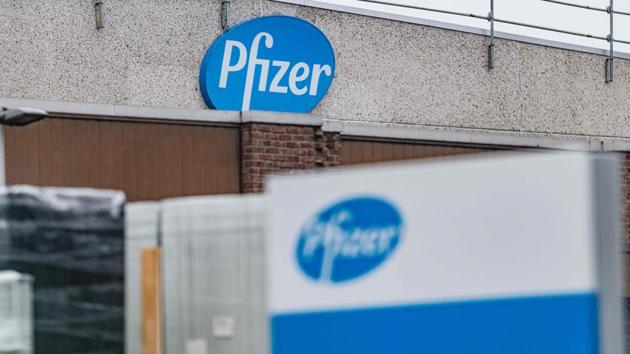
“So far, we haven’t licensed any vaccine without data from India. However, the new clinical trial rules that came into force last year allows licensure without such data, meaning Pfizer could be given an approval. This could disadvantage our manufacturers,” said Dr Kang during a discussion on race for developing a vaccine for coronavirus disease (Covid-19) at the India International Science Festival.
So far, three companies have applied for emergency use authorisation with the country’s apex drug regulator Central Drugs Standard Control Organisation (CDSCO).
This includes Pfizer, which has already been given emergency approval in the United States and the United Kingdom. However, no bridging study on the immune response of Indians has been done so far. Only 4.3% of the participants in the global trial of the vaccine were Asians.
The other two companies to have applied for emergency use authorisation are Serum Institute of India that will be manufacturing 1 billion doses of the vaccine developed by Oxford University along with pharmaceutical company AstraZeneca. A bridging study to gauge the immune response produced by Indians to the vaccine in 1,600 participants is being carried out.
Others, such as the Russian Sputnik V is also conducting a phase III trial in India.
“I think the bridging studies being conducted should not be termed as Phase III as they are just looking for immune response in the participants. They are not looking at finding the efficacy of the vaccine,” said Kang.
The safety of the vaccine is determined in a small phase I trial, the immune response generated is studied in a slightly bigger phase II trial, and the protecting provided by a vaccine in field is gauged in a phase III trial.
The third company to apply for the emergency license is Bharat Biotech that is currently conducting a phase III trial of 26,000 people across 25 sites in the country. Over 13,000 participants have already been recruited. The vaccine candidate was developed by the Indian company along with the Indian Council of Medical Research.
“We will have real phase III data from Bharat Biotech and ZyCovD which is about to start phase III trial,” she said. She added,
Dr Sanjay Rai, head of the department of community medicine at All India Institute of Medical Sciences and one of the lead investigators for Bharat Biotech’s Covaxin, said that people who have already been exposed to the natural infection should be excluded from the initial vaccine drives.
“We know that the people who have had the infection are not susceptible to it for some time and thus can be excluded from the vaccine drives at the moment. The limited number of vaccines can initially be given to the most vulnerable – those in the high risk groups but haven’t had the infection. There are studies going on to look at how long does this natural immunity last; if we find out it doesn’t last long, they can be given the vaccine later on,” he said.
As for the new UK variant, Dr Priya Abraham, director of National Institute of Virology – Pune said, “Even in the UK strain, the RBD protein is 99% identical to the Wuhan strain hence the vaccines are likely to be effective,” she said.


