E-Paper



Arunachal India’s integral part, says New Delhi after China renames 27 places in state
This was the fifth time China has renamed places in Arunachal Pradesh

 Prefer HTon Google


India on Wednesday rejected China’s move to rename 27 locations in Arunachal Pradesh, saying such “vain and preposterous” actions will not change the reality of the state being an integral and inalienable part of the country.
On May 11, China’s civil affairs ministry renamed 27 places in Arunachal Pradesh, including 15 mountains, four passes, two rivers, a lake, and five inhabited areas. This was the fifth time China has renamed places in Arunachal Pradesh, and the first such move since the two countries reached an understanding last October to end a more than four-year-long military standoff in the Ladakh sector of the Line of Actual Control (LAC).
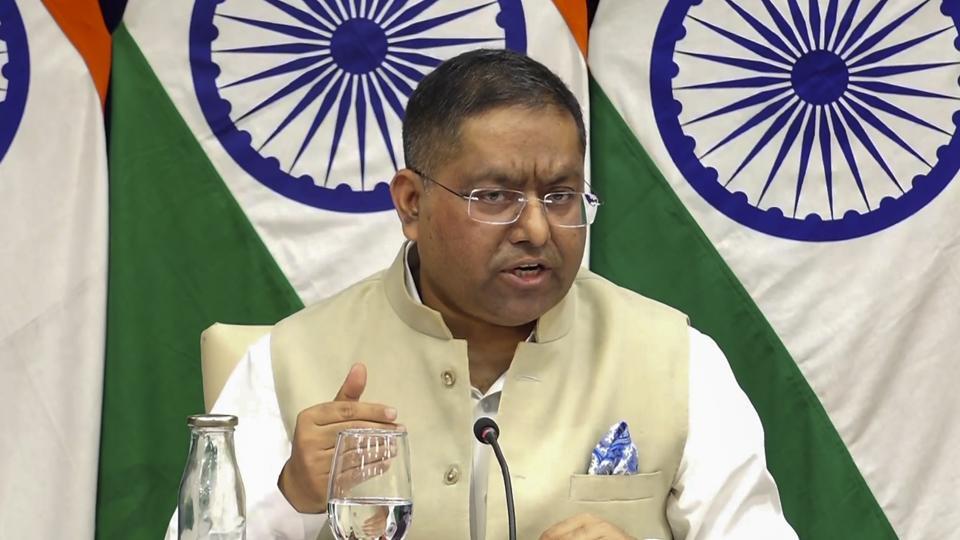
External affairs ministry spokesperson Randhir Jaiswal responded to China’s latest action, saying that Beijing has “persisted with its vain and preposterous attempts to name places in the Indian state of Arunachal Pradesh”.
He added, “Consistent with our principled position, we reject such attempts categorically. Creative naming will not alter the undeniable reality that Arunachal Pradesh was, is, and will always remain an integral and inalienable part of India.”
China began the practice of renaming locations in Arunachal Pradesh, which Beijing refers to as “Zangnan” and claims as part of South Tibet, in 2017. China renamed six locations in 2017, 15 in 2021, 11 in 2023, and 30 more in March 2024. These actions are seen as part of China’s efforts to assert its territorial claim on the strategic state in India’s northeastern region.
The Indian government has rejected all such moves. People familiar with the matter said on condition of anonymity that China’s latest list of new names for locations in Arunachal Pradesh had come at a time when the two sides are engaged in the delicate task of rebuilding relations after ending the face-off on the LAC.
The military standoff in Ladakh and a brutal clash at Galwan Valley in June 2020 that killed 20 Indian soldiers and at least four Chinese troops, took bilateral relations to their lowest point in six decades. The two countries recently agreed to resume the Kailash Mansarovar Yatra to holy sites in Tibet after a gap of four years and are working on other confidence-building measures.
The Indian side has also noted China’s military support to Pakistan during Islamabad’s recent counter-strikes following the launch of Operation Sindoor by New Delhi to target terrorist infrastructure in territories controlled by Pakistan.