E-Paper



As India-US trade talks enter final stage, all possibilities still on table
India-US continued to talk for the sixth day in Washington to converge on a common ground with US showing signs of easing some of its punitive tariffs

 Prefer HTon Google


With just a week to go before the retaliatory tariff of 16% on imports from India to the US kick in, all possibilities remain according to officials familiar with the matter: no deal, with sensitive issues such as US exports of dairy products and agricultural produce, scuttling one; an early deal with both countries dropping sensitive items from the contours of an agreement; and, while the probability of one is low, a big trade deal, as US President Donald Trump had said time and again.
The first eventuality could see the tariffs kick in (on top of 10% that came into effect in April); while the second and third could help Indian exports to the US escape them. To be sure, the people clarified, the first would not affect the larger deal that is being discussed.
Also Read: Trump hints at trade deal with India with 'much less tariffs' amid deadlock
Negotiators of India and the US continued to talk for the sixth day in Washington to converge on a common ground with the American side showing signs of easing some of its punitive tariffs to gain duty-free access to non-sensitive Indian agriculture market, the people cited above added, requesting anonymity.
“Current negotiations are focused on an interim deal with low-hanging fruits as a first approach. Both could drop sensitive items such as dairy products and GM crops concerning India, and electronics for America, to conclude an early deal. Other items could be taken up in the next rounds when negotiations for the first tranche of a comprehensive bilateral trade agreement (BTA) would start,” one of them said.
The ambitious 19-chapter BTA is not just about tariffs alone, he added. “It involves goods, services and investments, besides present and future strategic cooperation between the two nations.”
At present India and the US are negotiating an early harvest deal of the BTA through a fast-track mechanism and expected to arrive at some tangible outcomes before July 9.
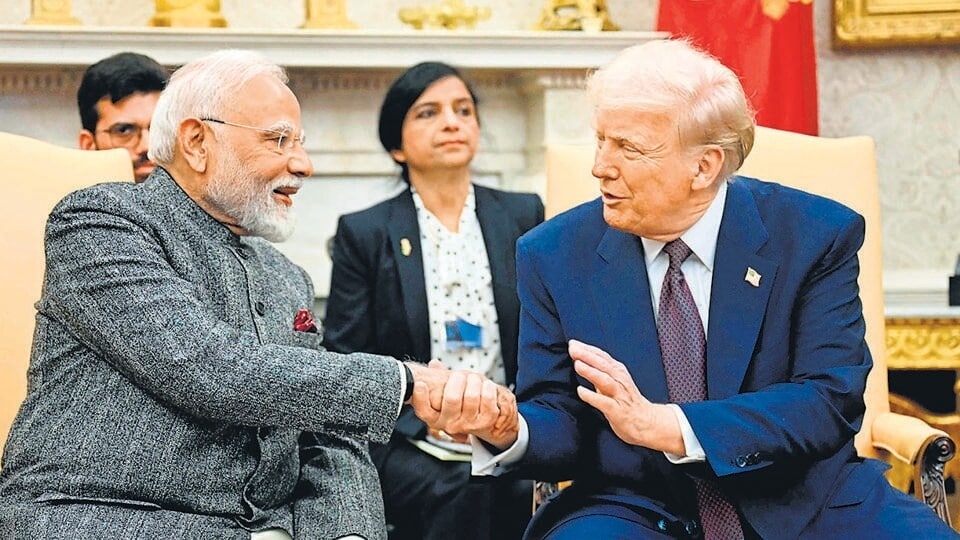
On February 13, Prime Minister Narendra Modi and President Trump resolved to deepen the US-India trade relationship to promote growth that ensures fairness, national security and job creation, leading to boost total bilateral trade to $500 billion by 2030 (Mission 500). In order to achieve that they decided to negotiate the first tranche of a “mutually beneficial, multi-sector BTA by October this year.
Before the first tranche, the two partners have decided to forge a mini deal to ease punitive ‘Liberation Day’ tariffs announced by the Trump administration on April 2, the first person said. Currently, the Indian negotiating team, led by special secretary-commerce Rajesh Agrawal, is camping in Washington from June 26 for the same. The team was originally expected to return in two days.
“If the proposed trade talks fail, the 26% tariffs (10% existing plus 16% impending) will come into force from July 9,” a second person, a government official, said. The failure of the initial harvest deal would, however, not derail the talks for the first tranche of BTA by October 2025, the first person clarified, adding that “efforts are on for a win-win deal that would give market access to most American products and ease tariff barriers for Indian goods”.