
 E-Paper



As power tussle intensifies over Delhi, here’s how world capitals operate
The BJP-led central government introduced a Bill in the Lok Sabha on Monday, giving overarching powers over the city’s daily functions to the Lieutenant-Governor of the Capital, who is appointed by the central government, bringing into focus the complicated structure of governance in Delhi

 Prefer HTon Google


The Bharatiya Jana Party (BJP)-led central government introduced a Bill in the Lok Sabha on Monday, giving overarching powers over the city’s daily functions to the Lieutenant-Governor of the Capital, who is appointed by the Centre, prompting fierce protests from the elected Aam Aadmi Party (AAP) government in the city and reviving an old power tussle for control of Delhi.
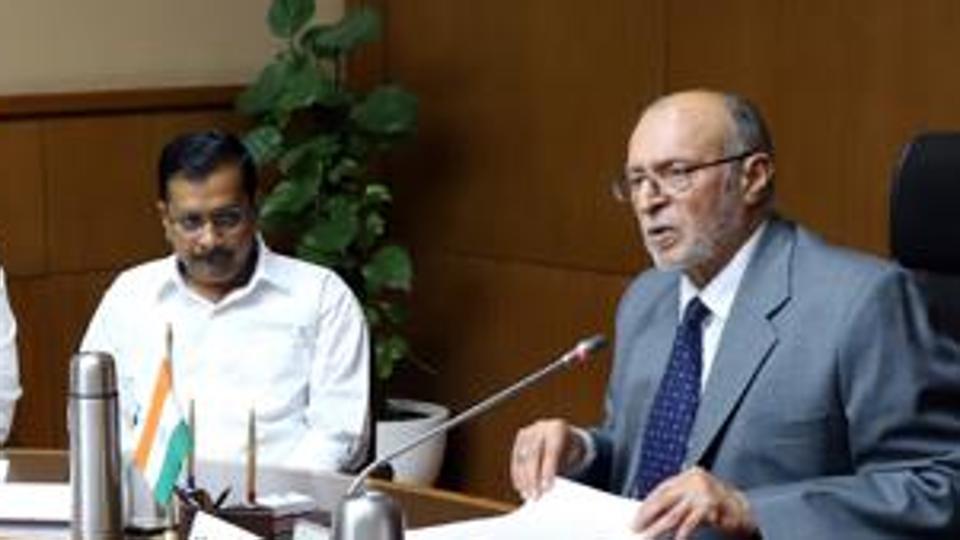
This has, once again, brought into focus the complicated structure of governance in the Capital city. Globally, Delhi is not an exception.
Here’s a quick look into how capital cities across the world function:
Delhi: Delhi, the Capital of India, is technically a Union Territory that has a 70-member assembly and members are elected by the residents of the city. However, the Union government appoints a lieutenant governor (L-G), who is considered the administrator and whose office has, under its jurisdiction, crucial subjects such as police, land and public order. This special status was granted to Delhi under a constitutional amendment in 1991. Laws cleared by the Delhi assembly are routed to the President for his assent through the office of the L-G. Subjects under the city government’s jurisdiction include education, healthcare, fire services, public buses, water supply, electricity and social welfare. Then there are civic agencies which are independent of the city government. They include the three municipal corporations in the city, a cantonment board and a municipal council that is in charge of the central area that houses the Parliament and Union government offices.
Also Read | Kejriwal hits out at Centre over ‘unconstitutional, anti-democracy’ NCT Bill
Washington DC: The national capital of the United States of America has an elected mayor and a 13-member council to govern the district that was established in 1973. The municipal corporation has limited powers relating to health administration, welfare functions and highway development. The mayor and council set local taxes and a budget, which must be approved by Congress. The Congress also maintains supreme authority and can overturn local laws. Residents of Washington DC elect a non-voting Congressional delegate to the House of Representatives and the federal district has no representation in the Senate.
Canberra: In the capital of Australia, the federal government has traditionally been the sole governing authority until the enactment of the Australian Capital Territory (self-government) Act 1988. The assembly — which has a chief minister — has revenue-raising powers and control over a range of municipal functions. Canberra has no other local government. The assembly, however, does not have powers to make laws on subjects that include the establishment of courts, police services and the securities industry.
Also Read | Experts trace the political and administrative roots of the Centre-Delhi tussle
Tokyo: Local municipal bodies in Japan operate at two levels — municipality and prefecture. The prefecture is a local government unit covering a large area including several municipalities. It acts as an administrative tier connecting the national government and municipalities, with its own elected assembly, budget and prefect – also called the governor who is elected through popular vote. The prefecture of Tokyo is the Tokyo metropolitan government, which is a self-governing body with a 127-member assembly and considered superior to all other prefectures. It is in charge of 26 cities, five towns and eight villages that collectively make the Tokyo metropolis.
London: London has 32 boroughs with their own councils that are responsible for running most local services, such as schools, social services, waste collection and roads. Then there is the City of London Corporation, which is an independent municipal body for the historic centre of London (a 3 sq km area in the heart of the Capital). These bodies are independent of the Greater London Authority (GLA) — which is a larger regional governance body that was established in 1999. The mayor of London is the head of the executive of the GLA whose primary role is that of a strategist – covering departments such as fire and police services, transport, regeneration and planning. The assembly is a 25-strong body that is designed to scrutinise the mayor’s work.


