E-Paper



Assam cabinet decides to remove Rajiv Gandhi’s name from Orang national park
Located on the North Bank of Brahmaputra, Orang National Park spread over 78.80 sq km is the oldest forest reserve in the state. It was named a wildlife sanctuary in 1985 and declared a national park in 1999.


The Assam cabinet on Wednesday decided to remove the name of former Prime Minister Rajiv Gandhi from the Orang National Park.
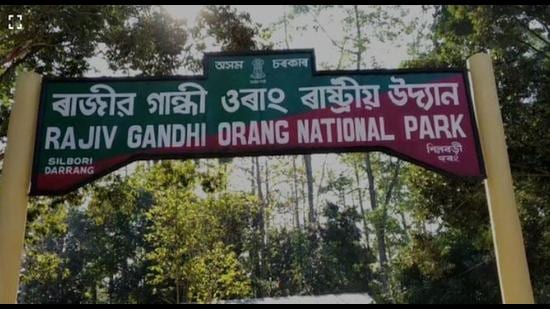
“During a recent interaction between Assam Chief Minister Himanta Biswa Sarma and prominent members of the Adivasi and tea-tribe community, they had demanded removal of former Prime Minister Rajiv Gandhi’s name from the Orang National Park,” said parliamentary affairs minister Pijush Hazarika.
“Since the name Orang is associated with the sentiments of the Adivasi and tea-tribe community, the cabinet has decided to rename the Rajiv Gandhi Orang National Park as Orang National Park,” he added.
Located on the North Bank of Brahmaputra, Orang National Park spread over 78.80 sq km is the oldest forest reserve in the state. It was named a wildlife sanctuary in 1985 and declared a national park in 1999.
In August 2005, the Congress government headed by Tarun Gogoi had decided to rename Orang National Park after the late Prime Minister despite resistance from local groups.
The national park is named after the Oraon people, who are inhabitants of Jharkhand, Odisha, West Bengal and Chhattisgarh. Thousands of them were part of the many tribes from those states who were brought by the British to work in the tea-gardens of Assam.
Many people from the Oraon tribe had settled near the area where the park is now located and the area took its name from them. According to the 2011 census, there are 73,437 Oraon people in Assam.
“There was no demand for renaming of the national park from our side, but there may have been some who sought that. When the state has a BJP-led government, this was expected. In few years, a Congress government might change the name again,” said Dhiraj Gowala, president of Assam Tea Tribe Students Association (ATTSA), the premier student body of the community.
“Such name changes are part of a similar drive by BJP governments across the country. Instead of this, it would be better if the state government focuses on our main demands like granting scheduled tribe (ST) status to tea-tribes, increase in daily wages of tea-garden workers etc.,” he added.
Opposition Congress said that the renaming was another attempt by the BJP to wipe away contributions of Rajiv Gandhi to the country and to the state.
“They can change names, but can’t wipe away the contributions of Rajiv Gandhi as the architect of a modern and progressive India. It was the former PM who brought peace to the state after the six-year-long agitation against illegal immigrants by signing the Assam Accord in 1985. But instead of recognizing these, the BJP is busy rewriting history,” said Bobbeeta Sharma, Congress’s media in-charge in Assam.