E-Paper



Assam: Autopsy shows bruises on 3 Hmar youth allegedly killed in police firing
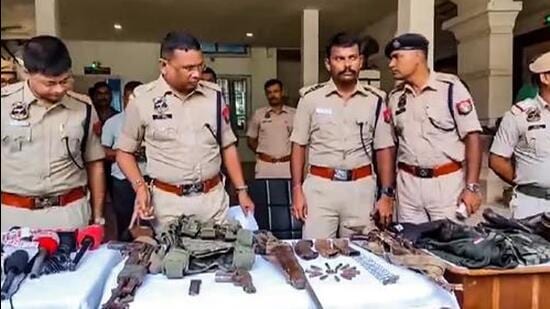
On July 1, three suspected Hmar militants were killed allegedly by the police in Cachar, close to the hilly jungles bordering Manipur’s Jiribam district


Guwahati: The post-mortem reports of three Hmar youths allegedly killed in police firings in Assam’s Cachar district last month show that they had suffered bruises and other wounds prior to their deaths.
The advocate for the families of the three youths, who had approached the Gauhati high court alleging they were killed in a staged encounter, told the court on Wednesday that the reports confirmed their claims.
Three suspected Hmar militants—Lallungwai Hmar, 21, and Lalbikung Hmar, 33, both from Lakhipur in Assam’s Cachar, and Joshua, 32, from Churachandpur district in Manipur—were killed on July 17 after they were arrested by Cachar police the previous day.
According to the police, the trio were killed during an operation in a crossfire with other militants. Countering the police version, the families had refused to take possession of the bodies lying at Silchar Medical College Hospital and sought a probe leading to the deaths.
Appearing for the petitioners on Wednesday, advocate Colin Gonsalves stated that they were satisfied with the post-mortem reports. He stated that the family members have no objection to taking custody of their bodies for their last rites. Gonsalves, however, questioned the nature of injuries found on the bodies.
The families of the deceased had approached the Gauhati high court alleging torture at the time of the arrest and extrajudicial killing.
The family members have also demanded an independent inquiry from the Central Bureau of Investigation, besides compensation.
The post-mortem report of Lallungwai indicated that he had injury marks from bullets and bruises. There was also a diffused contusion over the right temporal area of the scalp, which was bluish in colour. It was stated that the injury was caused by “blunt force impact.”
Besides bullet injury marks, Joshua’s body had bruise marks on the chest, “wounds in many parts of the body,” and three fractures of his ribs.
Lalbikung’s body also had bruises and cut marks on his body. The final report on the cause of deaths stated that Lallungwai’s body had 14 injury marks, Joshua’s had 20 and Lalbikung’s had 23.
Citing the injuries, Gonsalves told the court of justices Kalyan Rai Surana and Soumitra Saikia that the three were tortured prior to their deaths, and the bullet injuries showed they were shot from close range.
Hearing the case, the court granted the Assam government two weeks’ time to file a detailed affidavit of the incident by August 30 and listed the case for hearing again on September 10.
The court also issued directions to ensure that the families take the bodies, which have been lying at SMCH for final rites, and directed the police to provide all required help.
The Hmar Students’ Association also claimed that the three deceased were “village volunteers” who were defending “Kuki-Zomi-Hmar villages” from “Meitei militants” and were murdered extrajudicially by Assam Police after being detained.
Another tribal organisation based in Manipur’s Jiribam and Pherzawl districts claimed that it was a “fake encounter.”.