
Sign in

Assam witch-hunt case: Two women pushed into well, buried alive

Two women were allegedly pushed into a well by three brothers and buried alive by covering it with mud and earth in Assam.

Updated on: Nov 1, 2016, 18:34:36 IST
Hindustan Times | By , Guwahati
Share
Share via
  • facebook
  • twitter
  • linkedin
  • whatsapp
Copy link
  • copy link

Two women were buried alive in Assam on Monday night after they were branded as witches over presence of insects in a village well.
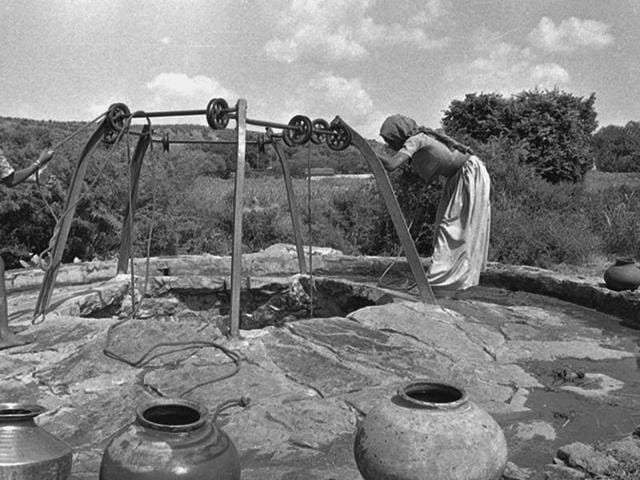
Assam’s legislative assembly passed a bill to prohibit witch hunting in August last year.  Representative picture (HT File Photo)
Assam’s legislative assembly passed a bill to prohibit witch hunting in August last year. Representative picture (HT File Photo)

The victims Sagu Gaur, 60, and Salmi Gaur, 48, were pushed into the well by three brothers- Basu Gaur, Sanu Gaur and Kumar Sanu Gaur and buried alive by dumping mud and earth over them.

The incident took place at Naharbari in Nagaon district, 140 km north-east from Guwahati. Accused Basu and Sanu have been arrested and search is on to nab Kumar Sanu.

“Sagu and Salmi used black magic to infest the well with insects from which we drink water. Last night we caught them and buried them alive,” an unrepentant Basu told local television channels.

Police said both accused have confessed to their involvement in the crime and efforts are underway to recover the bodies from the nearly 10-feet deep well.

“The accused and victims are relatives. Salmi happens to be a cousin sister of the three brothers while Sagu was their maternal aunt,” local police officer Someshwar Kunwor told HT.

Belief in occult for anything from failed crops, disease or death leads many in Assam’s backward areas to blame the events on someone.
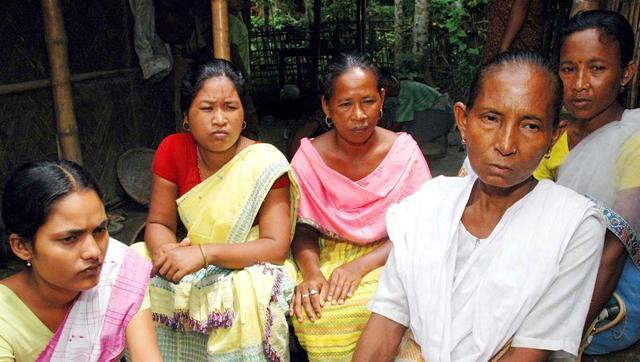
Birubala Rabha (on the right, in white dress) has been crusading against witch-hunting after a village quack almost killed her son in 1996. (Subhamoy Bhattacharjee/HT File Photo)

Read | A witch-hunting survivor crusades to save Assamese women

Usually an ‘oja’ or ‘bej’ (local priest/witch doctor) lays the blame on a villager who is then branded a witch and excommunicated, thrown out from their homes, beaten and even killed in some extreme cases.

The malaise claimed 116 lives (more than half of them women) between 2006 and 2015 and injured hundreds across the state.

Assam’s legislative assembly passed a bill to prohibit witch hunting in August last year. The bill made the offence non-bailable with provisions for arrests without court warrant and trails in fast-track courts.

It also stipulates up to seven years of imprisonment for anyone branding someone a witch, fines ranging from Rs 50,000 to Rs 5 lakhs and life imprisonment if the person branded a witch commits suicide.
  • Utpal Parashar
    ABOUT THE AUTHOR
    Utpal Parashar

    A seasoned senior journalist, I have nearly three decades of experience across print, digital, and online platforms, covering political transitions, insurgencies, environmental issues, and development stories in India and Nepal. I am skilled in breaking news, leading editorial teams and launch of newspaper editions. I am adept at leveraging digital trends and social media to expand global reach, with a strong ethical foundation and a reputation for impactful journalism. An alumnus of Asian College of Journalism, I joined Hindustan Times in New Delhi as a trainee reporter in May 1997. Over the years, I have been posted in Dehradun, Kathmandu (Nepal) and Guwahati. Currently, as Senior Assistant Editor at Hindustan Times, I lead a team reporting on India’s northeastern states. My work involves in-depth analysis, and engaging multimedia storytelling across formats, including text, photo, video, and interactive content. I am skilled in producing timely, shareable content, leveraging digital platforms and social media to engage global audiences. Throughout my career with the Hindustan Times, I have led diverse editorial teams, designed capacity-building activities, and supported reporters in developing strong story ideas, ethical reporting practices, digital skills, and fact-checking techniques. As Senior Assistant Editor for Northeast India, I have been responsible for guiding correspondents through complex political, humanitarian, and community-level stories using multimedia formats. Earlier, as Foreign Correspondent in Nepal, I produced extensive reporting during Nepal’s democratic transition and the 2015 earthquake and its aftermath.Read More

Follow India news real-time updates and the latest news covered on Hindustan Times, featuring today's critical updates on Sonam Wangchuk LIVE and more across India.