E-Paper



At Brics meet, Modi’s pitch against using critical minerals supply as weapon
China’s export curbs on rare earth minerals have been taken up with Beijing by New Delhi in recent weeks

 Prefer HTon Google


New Delhi: The Brics member states should work together to make the supply chains for critical minerals and technology secure and reliable and ensure that no country uses these resources as “a weapon” against others, Prime Minister Narendra Modi said at the Brics Summit in Rio de Janeiro.
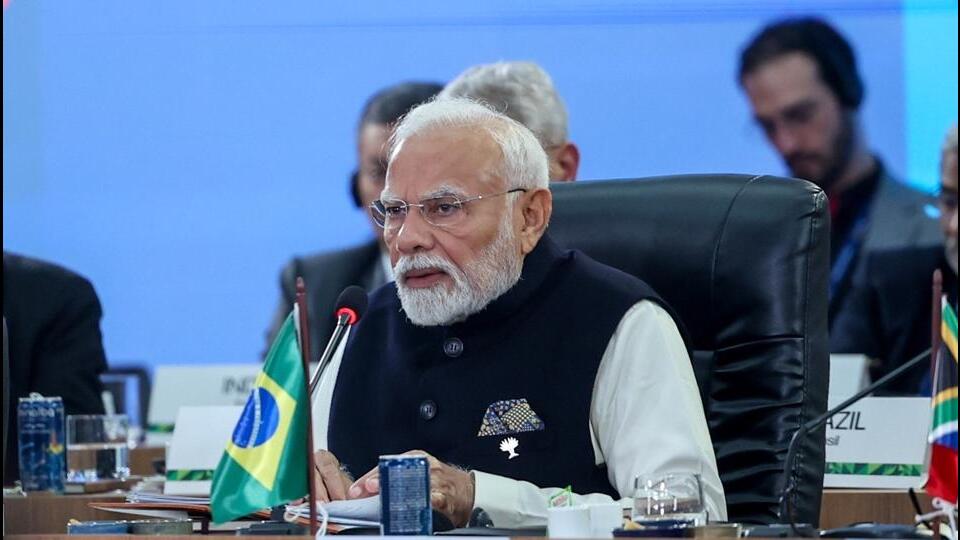
Addressing a session of the summit focused on strengthening multilateralism, economic and financial matters and artificial intelligence, Modi said resolving concerns and encouraging innovation should be given equal importance in the governance of AI.
The Brics Summit adopted a leaders’ statement on the global governance of AI that said countries should work together to address risks, build trust and ensure inclusive international collaboration and access to AI. The Brics leaders agreed on guidelines to foster responsible development, deployment and use of AI for sustainable development and inclusive growth.
Without naming any country, Modi told the session that countries should “work together to make supply chains for critical minerals and technology secure and reliable”. He added, “It’s important to ensure that no country uses these resources for its own selfish gain or as a weapon against others.”
China’s export curbs on rare earth minerals – used in everything from smartphones to electric vehicles and in many of which Beijing has a near monopoly - have been taken up with Beijing by New Delhi in recent weeks. The curbs have affected the production capabilities of Indian EV manufacturers.
Modi said progress and well-being of people in the 21st century depends on technology, especially AI. “AI can greatly improve everyday life, while on the other hand, it also raises concerns about risks, ethics, and bias,” he said.
India perceives AI as a medium to enhance human potential and has a mantra of “AI for All” for the active use of AI in agriculture, health, education and governance. “We believe that resolving concerns and encouraging innovation should be given equal importance in AI governance…Global standards must be created that can verify the authenticity of digital content, so that we can identify the source of the content and maintain transparency and prevent misuse,” he said.
Also Read |Brics Summit: India, Malaysia review bilateral cooperation in trade, investment
The Brics New Development Bank has offered a strong and credible alternative to support the aspirations of countries in the Global South, and it must focus on demand-driven approaches, long-term financial sustainability and healthy credit rating in approving projects, Modi said.
The Global South has special expectations from Brics and members should work together to fulfil them, he said. In this context, he said the Brics Agricultural Research Platform in India can become a mechanism for sharing research and best practices in agri-biotech, precision farming and climate change adaptation.
“Today, as the world order faces pressures from all sides and the world is going through many challenges and uncertainties, the increasing relevance and influence of Brics is natural. We should together consider how Brics can become a guide for the multipolar world in the times to come,” he said.
The leaders’ statement on the global governance of AI further said that developing countries and the Global South should have a meaningful role in decision-making processes related to AI. All countries have the right to benefit from, develop and use AI, it said.
“We underline international cooperation to facilitate access to AI technology and critical components, to remove barriers to financial resources required for AI research and innovation, and to develop necessary knowledge, skills, and risk management frameworks to effectively leverage AI technologies, especially in low and middle-income countries,” the statement said.