
 E-Paper



At UN, a diplomatic battle over humanitarian crisis
A separate resolution proposed by Russia was also scheduled for a vote late on Wednesday at the UN Security Council (UNSC).


With contending resolutions on the humanitarian situation in Ukraine, a new diplomatic battle commenced at the United Nations General Assembly (UNGA) on Wednesday. At the heart of the battle are two separate resolutions—one sponsored by France and Mexico and co-sponsored by 80 states, and which is aligned with the Western position and explicitly pins the blame for the humanitarian crisis on Russian aggression, and the other sponsored by South Africa, which is closer to the Russian position and does not have any reference to the Russian aggression.
A separate resolution proposed by Russia was also scheduled for a vote late on Wednesday at the UN Security Council (UNSC). But the Russian resolution was unlikely to gain the support of a majority of the Council members, and was widely expected to be vetoed by at least three other permanent members of the Council, the US, the UK and France.
India has, so far, abstained from votes on all Ukraine-related resolutions across UN platforms that deplore or condemn Russian aggression. It has, however, articulated its support for the principles of the UN Charter, international law, territorial integrity and sovereignty of states; asked for cessation of violence and emphasised the path of diplomacy and dialogue; and pledged humanitarian support to Ukraine. At the time of going to press, India had not spoken at the UNGA, and the UNSC vote had not been held.
On Wednesday, the UNGA resumed its emergency special session – in the last iteration of the session on March 2, 141 countries condemned the Russian aggression – on Ukraine. While Ukraine and those countries aligned with it blamed Russia for the crisis, Russian permanent representative to the UN, Vassily Nebenzya, said that Russia’s draft resolution in the Council had all the operative elements to address the humanitarian crisis in Ukraine.
“But our western colleagues inserted blatantly anti-Russian elements. It does not bother them that no humanitarian resolution contains a political assessment. It has no place there… It is a political anti-Russian show.” He added that the Franco-Mexican resolution in UNGA would make the “situation more difficult, embolden Ukrainian negotiators, nudge them to take unrealistic positions, and not tackle root causes”. Instead, Russia said, the South African draft in UNGA was closer to the Russian draft in UNSC and had a “humanitarian focus”. In a letter accompanying its resolution, South Africa has argued that political issues that may lead to disagreements should be addressed elsewhere.
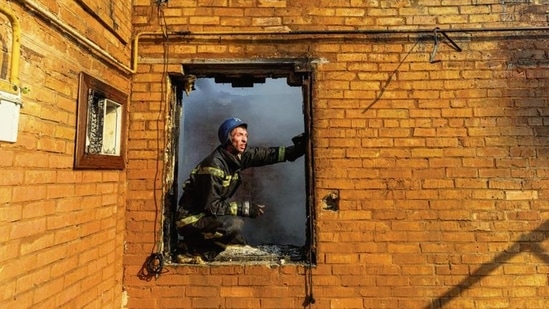
The discussions on the resolutions come in the backdrop of a severe humanitarian crisis in Ukraine. According to various UN agencies, more than 10 million people have been forcibly displaced, which includes 6.5 million internally displaced people and 3.4 million refugees who have fled Ukraine. There have also been thousands of civilian deaths.
As the crisis grew, at the end of February, France and Mexico first circulated a draft resolution with a set of humanitarian demands – but other members, including the US, emphasised the need for an explicit reference to Russia’s role. France and Mexico then added a reference to the UN Secretary General Antonio Guterres’s call to Russia to stop hostilities, and a paragraph that alluded to the Russian role in causing the crisis. With this draft drawing Russian ire, France and Mexico declared that they would take their initiative to the General Assembly.
On March 15, Russia then proposed its own resolution at the UNSC; this included elements from the France-Mexico resolution but omitted any mention of Russia’s role. The US ambassador to the UN, Linda Thomas-Greenfield, opposed Russian attempts to introduce a humanitarian resolution. “Russia is the aggressor here and it is absolutely unconscionable for Russia to think that they can put forward a humanitarian resolution. What Russia needs to do is stop fighting. It needs to stop killing Ukrainians. It needs to stop attacking civilians and forcing people from their homes and creating a humanitarian crisis.”


