
 E-Paper



Benefits should be equal, not for a few: Anne Bouverot
AI promises significant benefits across areas, but the key is to ensure these benefits are for everyone, not just a few said Anne Bouverot, the French President’s Special Envoy for AI.

 Prefer HTon Google


AI promises significant benefits across areas, but the key is to ensure these benefits are for everyone, not just a few said Anne Bouverot, the French President’s Special Envoy for AI.
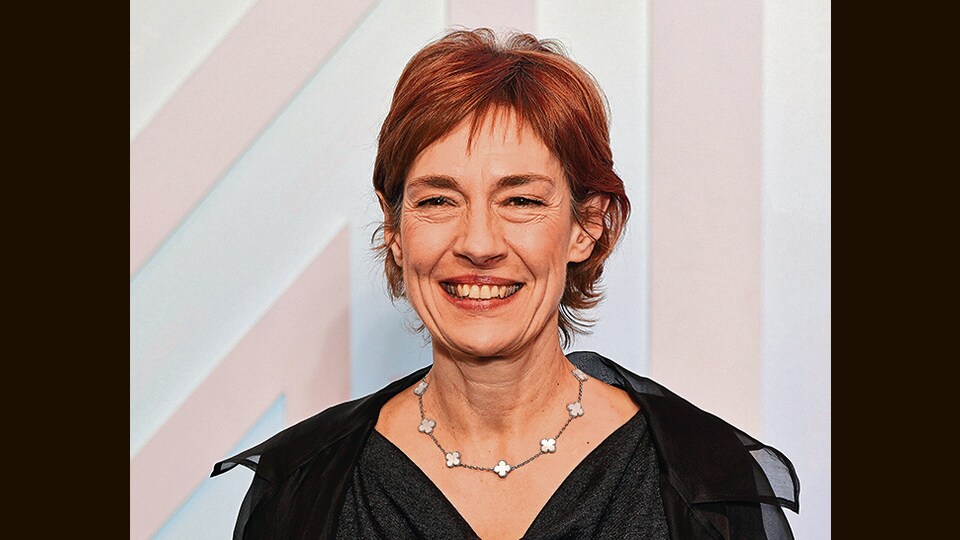
Speaking to Anirudh Suri on the podcast AI Futures: The Road to India AI Summit 2026, Bouverot also discussed emerging challenges in AI, and the areas of opportunity for countries such as France and India. Edited excerpts:
What do you see as some of the new challenges that have emerged in AI in the last year?
At the Paris Summit last year, we had the first global conversation on AI and its implications on energy consumption and climate. This conversation has not abated, with countries racing to organize more data centres, energy supply chains and AI development plans.
The second challenge is the impact of AI on the future of work. At the AI Safety Summit at Bletchley Park in 2023, there were dire predictions that half of the jobs would disappear within two years, which has not happened yet. However, there is potential for great disruption. This has drawn attention both on the policy front as well as from workers. The third challenge is the societal impacts of AI. How will it change education, or health care? There are great benefits, but we need to ensure that these benefits are equal and not just for a happy few.
As companies start to adopt AI more, will the impact of AI on jobs accelerate very quickly?
In a macro view, I don’t necessarily expect that. The work I did with Philippe Aghion, that helped him get his Nobel Prize, looked at innovation across ages. In the various waves of digital innovation, yes, jobs are displaced, and you need to retrain people, but you also get a lot of new jobs.
Cyber security is very important, with AI opening up more points of vulnerability. Similarly, in coding, we can expect to see a lot of benefits from using AI. Once code is produced by these AI systems, you need to check and validate it. That will change the work of IT engineers, but we will continue to need them.
What are you most excited about in terms of AI developments from last year?
AI and health. I was in India in November and saw some great applications of AI helping with early detection of tuberculosis or potential blindness linked with diabetes. In France, I’ve seen some great applications on early detection of breast cancer.
What were some key takeaways and action items from the Paris summit last year?
The summit was co-chaired by Prime Minister Modi and President Macron, and we had heads of states from all over the world and CEOs and researchers. This multi-stakeholder structure was really very helpful.
It took place at a very particular geopolitical moment, with the Stargate announcement in the US and then the news of Deep Seek in China. We showcased startups from all over the world – Mistral in France, Helsing in Germany, and Cohere in Canada. These developments showed that the race was still open, and that others can have a very meaningful role in AI. That’s one of the big takeaways for me from the Paris summit.
We also announced very important global initiatives, like the Coalition for Sustainable AI to help mitigate the climate impact of AI. We were particularly pleased to have the announcement of the next summit in India, because the prior summits had been held in the Northern Hemisphere.
We are not talking enough about the concentration of talent in the US and China. How do you think about that problem?
Talent is absolutely key and should not be limited to one or two countries. Many countries have great education systems – in India, you produce brilliant engineers and scientists that are known worldwide. And we have great people in France as well.
The model in the US has been to attract talent from all over the world, but now they don’t seem keen on doing that as much, making it very difficult for people to come and stay. It’s a great clarion call for countries like France and India to take this as an opportunity to have public and private projects that motivate people to want to stay or come back.
Which country’s AI strategy are you impressed with the most?
The latest US AI strategy is very well thought through. Of the global city-states, Singapore always tops the ranks of the most AI-ready country. They’re so good at training, innovating, and adopting. One thing Europe, specifically France, needs to change about their AI strategy is to have more risk appetite, and faster pace. India needs to take better advantage of the great people you train.
Both the US and China need to be better at working with others. France and all other countries in the world need to work together more, and I’m very pleased that we’re doing that with the Year of Innovation between France and India.
In several countries, the challenge is to attain digital sovereignty but also adopt and diffuse all the latest technologies. How can countries like France and India balance these two often contradictory objectives?
I believe you need to go all in for adoption, but that you need to keep choice – adopt in very important areas but reserve some areas for innovation. In innovation, you need to be in a partnership mode with other countries. Therefore, some of the announcements that will be made in Delhi about partnerships between France, India, Japan, Brazil are very promising. President Macron will be coming to Delhi. 2026 will also be the year of India France Year of Innovation, which is a great opportunity to celebrate the historical links and the active relationship between our two countries.
One of the goals of the Summit is inclusion. Why do you think a lay person should care about the AI summit?
What we found in Paris is that AI is a very interesting topic for everyone. People have a mixture of anxiety, hopes, illusions, and questions about AI and they want to have opportunities to discuss them. We also hosted side events all over France, where people could have discussions locally with some of the experts. A Tour de France of AI,organized by some of our business associations, was hugely successful. India is doing something similar with its Regional Pre-Summits all over India.
What is the rest of the world expecting from the India AI Impact Summit?
I particularly like the name, ‘the AI Impact Summit’, because what’s really important is what impact AI will have in people’s lives. Is it really going to have an impact in health care? Is it really going to have an impact in education? What will it mean for improving particular fields like agriculture, aeronautics, etc.? Impact matters now because the technology is maturing, and can have meaningful impact not just for people in the rich economies, but for people all around the world.
Anirudh Suri is a venture capitalist, host of The Great Tech Game Podcast and nonresident scholar with Carnegie India.


