
 E-Paper



Bengal SIR: Name missing from 2002 electoral roll? Here's what to do next
Bengal SIR: The Election Commission had said draft rolls of the SIR exercise will be published on December 9, and the final rolls on February 7.

 Prefer HTon Google


The Special Intensive Revision (SIR) of electoral rolls kickstarted in West Bengal on Tuesday, days after the Election Commission of India (ECI) announced extending the exercise to 12 states and Union territories as part of the second phase.
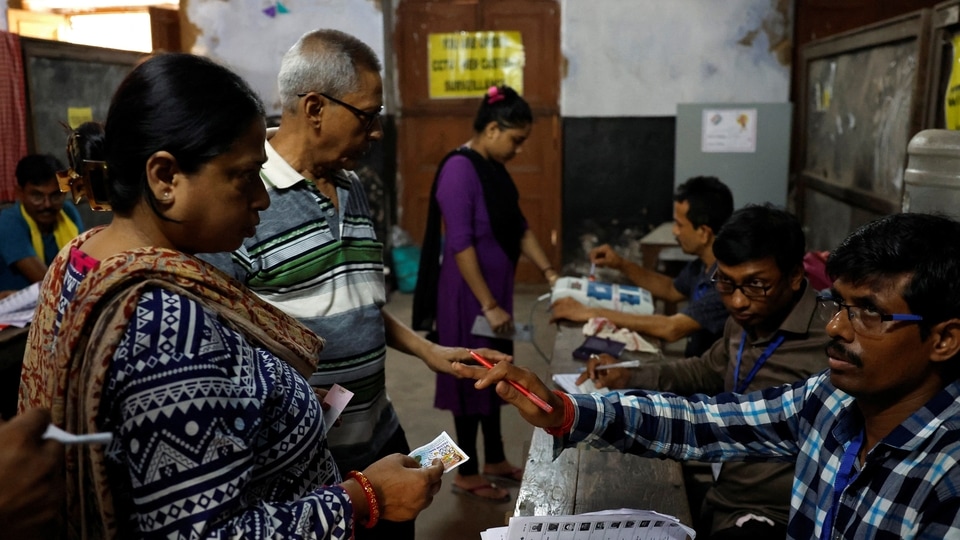
After conducting the exercise in poll-bound Bihar, chief election commissioner (CEC) Gyanesh Kumar on October 27 had announced that the Election Commission will conduct Phase 2 of the Special Intensive Revision (SIR) of electoral rolls in 12 states and Union territories.
Also Read | Voter roll revision SIR begins in 12 states, UTs: Here's a step-by-step guide
What is the process?
The 12 states and UTs covered in Phase 2 of SIR are: Andaman and Nicobar Islands, Lakshadweep, Chhattisgarh, Goa, Gujarat, Kerala, Madhya Pradesh, Puducherry, Rajasthan, Tamil Nadu, Uttar Pradesh and West Bengal.
Of these, Tamil Nadu, Puducherry, Kerala and West Bengal are due for assembly elections in 2026.
CEC Kumar had said during the press conference on October 27 that process begins immediately with voters in these states being matched against the 2002, 2003 or 2004 voter lists (depending on the last SIR held there),.
Draft rolls will be published on December 9, and the final rolls on February 7.
“The second phase will cover 51 crore voters,” he added.
He also said that the current voter lists in these 12 states and UTs will be frozen as of October 27.
The SIR aims to verify voter eligibility. The Election Commission of India does not have the authority to determine citizenship, according to a PTI report.
The month-long house-to-house enumeration will continue till December 4, followed by the publication of draft rolls on December 9. Claims and objections can be submitted between December 9 and January 8.
Notices, hearings and verifications will take place from December 9 to January 31. The final electoral rolls will be published on February 7.
Also Read | SIR exercise begins in Bengal: All you need to know before BLOs land up at your doorstep
To spot ascertain whether your name is on the West Bengal electoral roll, you must look for it with your name's spelling or the name of your parents or relatives in the electoral roll from the last intensive revision held about twenty years ago.
How to check your name in the West Bengal SIR 2002 list?
- Go to [https://ceowestbengal.wb.gov.in/](https://ceowestbengal.wb.gov.in/).
- Close the pop-up and click on “Electoral Roll of SIR 2002”.
- A list of 21 districts from the 2002 electoral roll will appear, from Coochbehar to Birbhum.
- Select the relevant district, for example, Coochbehar.
- A list of Assembly Constituencies will open. Coochbehar has nine constituencies.
- Choose the one relevant to you, such as Mekhliganj.
- A list of polling stations will appear.
- Select the polling station linked to your previous roll entry and click “Final Roll”.
- Enter the captcha code.
- A PDF of the final roll will open.
- On the second page, under “Nirvachak Talika (Electoral Roll 2002)”, you will find electors listed along with the names of their father or husband. The document will display the following details, which you can use to trace your or your family’s name:
• Serial number
• House number
• Elector’s name
• Relation
• Related person’s name
• Gender
• Age
• Photo ID card number
What if your name is not there?
The draft rolls will be released on December 9 and the final rolls on February 7, 2026, through a two-step process.
First, eligible voters must match their names with the electoral rolls from the last intensive revision conducted between 2002 and 2005. After this matching, the EC will publish the draft rolls.
Second, individuals whose names, or whose parents’ or relatives’ names do not appear in the draft list will receive notices. They will then have to prove their eligibility to be included in the electoral roll by submitting required documents.
Documents allowed
If your name is missing from the West Bengal draft electoral roll, you can establish your eligibility by submitting documents that prove your identity, age and residence.
The Election Commission accepts a broad range of records.
You may submit identity cards or pension payment orders issued to regular employees or pensioners of the Central or State government or any PSU. You can also provide ID cards, certificates or documents issued by the Indian government, banks, local authorities or PSUs.
A birth certificate issued by a competent authority, a passport, or matriculation or educational certificates from recognised boards or universities are also valid.
A permanent resident certificate issued by the State authority, a Forest Rights Certificate, or caste certificates such as OBC, ST or SC may also be submitted.
Where applicable, the National Register of Citizens document is accepted, along with family registers prepared by State or local authorities and any government-issued land or house allotment certificate.


