
 E-Paper



Bhagavad Gita, Natyashastra enter UNESCO’s Memory of the World Register; PM Modi calls it a ‘proud moment’
Prime Minister Narendra Modi took to social media and said, “A proud moment for every Indian across the world!"

 Prefer HTon Google


The Shrimad Bhagavad Gita and Bharat Muni’s Natyashastra have been inscribed in UNESCO’s Memory of the World Register — a global initiative that preserves documentary heritage of outstanding value.
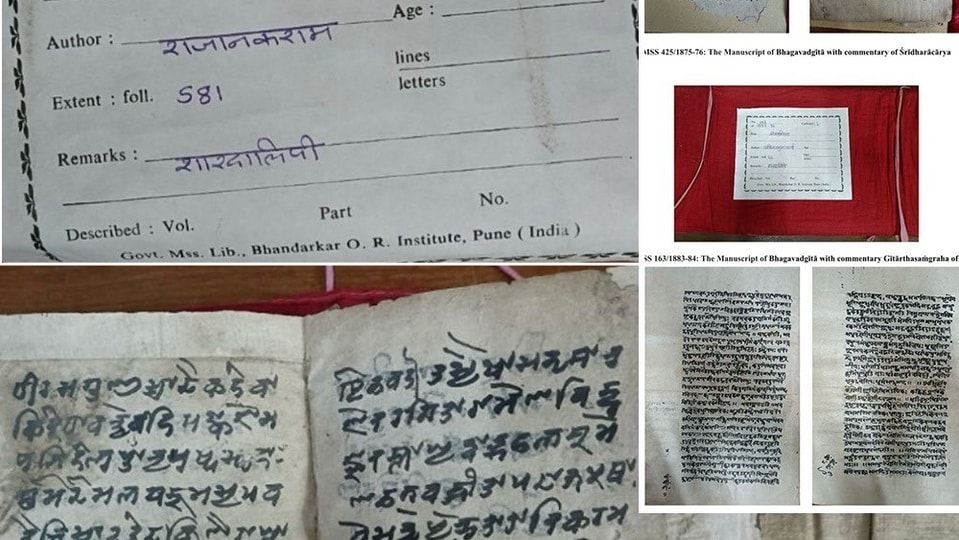
Reacting to the achievement, Prime Minister Narendra Modi took to social media and said, “A proud moment for every Indian across the world! The inclusion of the Gita and Natyashastra in UNESCO’s Memory of the World Register is a global recognition of our timeless wisdom and rich culture. The Gita and Natyashastra have nurtured civilisation, and consciousness for centuries. Their insights continue to inspire the world.”
UNESCO’s Memory of the World Register recognises important historical texts, manuscripts, and documents that have influenced societies across generations. The Bhagavad Gita, a sacred dialogue between Lord Krishna and Arjuna, has long been regarded as a spiritual and philosophical cornerstone.
Meanwhile, Natyashastra, penned by ancient sage Bharat Muni, is considered the foundational text on performing arts, especially theatre, dance, and music.
About Bhagavad Gita
The Bhagavad Gita, containing 700 verses in 18 chapters, is embedded within the Bhīṣmaparva (adhyāya 23-40) of the epic Mahabharata. It takes the form of a dialogue between Lord Krishna and Arjuna with armies lined up for the great war intended to free Arjuna of dejection.
Bhagavad Gita is a central text in the continuous, cumulative ancient intellectual Indian tradition, synthesising various thought movements such as, Vedic, Buddhist, Jain and Cārvāka. Due to its philosophical breadth and depth , the Bhagavad Gita has been read for centuries across the globe and translated into many languages.
About Natyashastra
Preserved at the Bhandarkar Oriental Research Institute and believed to have been codified around the 2nd century B.C., Bharatamuni’s Natyashastra is considered the essence of Nāṭyaveda — an oral tradition of performing arts comprising 36,000 verses, also known as the Gāndharvaveda.
This ancient text lays down an elaborate framework for various art forms, covering nāṭya (drama), abhinaya (performance), rasa (aesthetic essence), bhāva (emotion), and saṅgīta (music).
It serves as a foundational guide to Indian theatre, poetics, aesthetics, dance, and music. One of the most significant declarations in the Natyashastra is Bharatamuni’s assertion that “no meaning can blossom forth without rasa", a timeless insight that continues to influence global literature and art.


