After the US Commission on International Religious Freedom (USCIRF) publicly criticised the RSS, Ministry of External Affairs (MEA) issued a statement, on Friday, calling the body biased and accusing it of having a history of making inflammatory remarks about India.
In a statement released on X, the USCIRF had said that the US government should focus on imposing sanctions on RSS members found guilty of violating religious freedoms.
Also Read | MEA on no permit for Telangana CM Revanth Reddy's US trip: Event wasn't appropriate to CM’s office
Deep Dive
What was the US Commission on International Religious Freedom's criticism of the RSS?
Why did India accuse the USCIRF of bias?
How did India respond to USCIRF's opposition to Mohan Bhagwat's US visit?
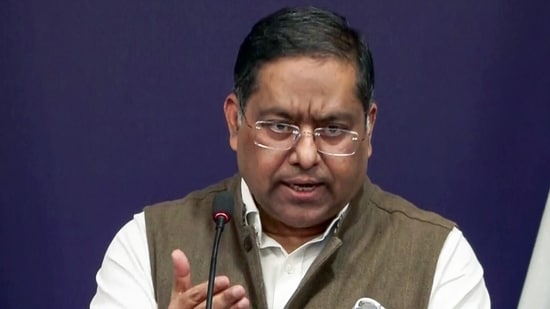
MEA spokesperson Randhir Jaiswal, responding to a question from a journalist during a press conference on Friday, said that the ministry was aware of the statement made by the body and added that such organisations lack credibility.
"We are all aware that the organisation—or entity—you are referring to is biased; for years, it has been making disparaging and inflammatory remarks about India. I would say we should steer clear of such organisations, as they operate with their own agendas and lack any credibility or trustworthiness. That is my response to that point," Jaiswal said.
Created in 1998 by an act of Congress, the USCIRF “monitors the universal right to freedom of religion or belief (FoRB) abroad” and makes recommendations to the US President, Secretary of State, and Congress. The agency says it acts independently, but the US President and senior political leaders in the House of Representatives and the Senate appoint its nine commissioners.
What did USCIRF say?
{{/usCountry}}Created in 1998 by an act of Congress, the USCIRF “monitors the universal right to freedom of religion or belief (FoRB) abroad” and makes recommendations to the US President, Secretary of State, and Congress. The agency says it acts independently, but the US President and senior political leaders in the House of Representatives and the Senate appoint its nine commissioners.
What did USCIRF say?
{{/usCountry}}The USCIRF had publicly opposed a scheduled visit to the US by RSS chief Mohan Bhagwat, who is set to travel to New York later this month.
Also Read | ‘Well-established facts’: MEA on Donald Trump's praise of voter IDs in India
“India’s PM Modi is a member of the Rashtriya Swayamsevak Sangh (RSS), an Indian umbrella organisation whose sub-groups have perpetrated attacks on religious minorities, including Christians and Muslims. Now the RSS leader, Mohan Bhagwat, plans to visit the US,” said Asif Mahmood, the chairman of the USCIRF.
Earlier this year, the agency had created a stir when it recommended targeted sanctions against India’s external intelligence agency and the RSS. It also called for the US government to link security assistance and bilateral trade policies towards India to religious freedom in the country, while recommending that India be designated a “country of particular concern”.
Jaiswal refuses to comment on Pak summoning US diplomat over Gor's remark
Jaiswal refused to comment on Islamabad summoning a US diplomat over US Ambassador Sergio Gor’s recent remarks that Jammu and Kashmir is an “important part of India”. He said there was no reason to comment on Pakistan’s “frustration”.
Also Read | Why Sergio Gor's Kashmir remark is significant: Pakistan's sharp response, US travel advisory review
"I will repeat, Jammu, Kashmir, and Ladakh are integral and indivisible parts of India. They were, they are, and they will remain so. I see no reason to comment on Pakistan's frustration. This is what I have to say," Jaiswal said in response to a question on Pakistan’s diplomatic protest over Gor’s remarks.
On Wednesday, Islamabad summoned the US Charge d’Affaires and lodged a protest, stating that Gor’s remarks on the status of J&k were “factually incorrect” and contradicted Washington’s longstanding position on Kashmir.