
 E-Paper



Will Prashant Kishor play the kingmaker?
The Jan Suraaj Party (JSP) is contesting all 243 seats in Bihar, but Prashant Kishor has chosen to stay out of the fray.

 Prefer HTon Google


Is the political climate ripe for strategist-turned-politician Prashant Kishor’s Jan Suraaj Party (JSP)?
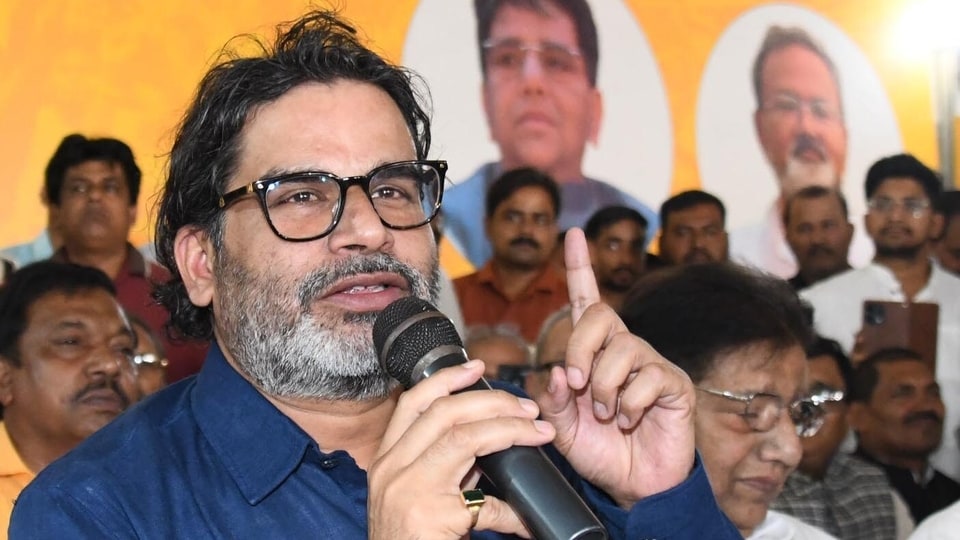
Kishor, who has positioned the JSP as a disruptor in the state’s crowded electoral field, promises to improve education and employment in the state and overturn the liquor ban.
On a scorching Thursday afternoon, while half of Sonho — a hamlet in Bihar’s Saran district lies asleep, four SUVs zip through its dusty roads. Rahul Kumar Singh, the JSP’s candidate for the Amnour seat, arrives with his supporters and soon takes over the narrow lanes to campaign for the upcoming polls.
“We are telling the people that Lalu Prasad had been in power for 15 years, Nitish Kumar has been in power for 20 years, but the migration from Bihar has not stopped. The level of education in Bihar has not improved. Bihar has the highest illiteracy, but the people are most laborious. There are no factories here. The young people have to leave their families to get low-wage jobs in Delhi, Hyderabad, Mumbai and Haryana,” Singh said, claiming that the JSP would work extensively towards improving education and jobs.
Hardly a hundred metres away, Sanjay Shukla — who identified himself as a relative of Singh — remained unimpressed with the JSP. “Women recently got ₹10,000 for Jeevika (livelihood). The roads are excellent, as you can see. There is safety and security,” he said.
In each of the 35 villages this correspondent visited, residents were aware of Kishor, his JSP, and the slew of promises he had made.
Key among them are the repeal of Bihar’s liquor prohibition within hours of coming to power, an increase in the monthly pension for those aged 60 and above to ₹2,000, a relief package linking migrant workers and farmers directly to the Mahatma Gandhi National Rural Employment Guarantee Act (MGNREGA), and free schooling for children under the age of 15.
Among these, the liquor ban is the most talked-about promise. Many people want the ban to be removed, said Vikas Kumar, a fruit-seller at Station Road in Darbhanga town.
Nearly 60 kilometres from Amnour, Dr Amit Kumar Das, a Kayasth by caste and the JSP’s candidate for the Muzaffarpur seat, said he senses a perceptible change in Bihar.
Speaking from his plush Shree Hospital located near Hathi Chowk in Muzaffarpur district, Das lamented how neither coalition had done justice to Bihar and emphasised that “new experiments” were the need of the hour. “If I am the change, let me be the change. Caste and sectionalism should not be at the centre of the political agenda,” he said.
While Kishor is a household name in Bihar, his party faces an uphill task to earn the political trust of many voters. From the Mahadalit enclaves to shopkeepers and unemployed youth, the Jan Suraaj Party is not the top choice for a significant portion of the population.
“He will cut votes from both the Mahagathbandhan and the NDA and alter the political arithmetic, but forming a government would be very difficult,” said Suresh Kumar, a political science student at Patna University.
Dipankar Bhattacharya, general secretary of the Communist Party of India (Marxist–Leninist) Liberation, had told PTI on Friday that “the Jan Suraaj Party has created a buzz mainly among migrant workers from Bihar living in places like Delhi”.
“But, in Bihar, the story is different. The party has not found the same traction among the people here. It is an open battle in the poll-bound state of Bihar. Prashant Kishor must have wised up to the reality over the months he had been touring the state. A reason why he might have chosen to stay out of the contest himself,” he added.
The JSP is contesting all 243 seats, but Kishor has chosen to stay out of the fray. He has fielded candidates from all walks of life, including several former IAS or IPS officers. He has candidates from extremely backward castes, Dalits, Muslims and upper castes, even as he is trying to set a new narrative that Bihar requires progressive, development-oriented politics. He has prepared himself for this election through a two-year padayatra and by setting up his organisation from scratch.
His pinned post on X shows the plight of a girl student who wants a school building.
“Listen to the agony of this little girl… If you still haven’t abandoned your blind devotion to the leaders who do politics in the name of caste and religion, then the coming generations of Bihar will never forgive you!!,” the post said.
Muzaffarpur-based political analyst Pramod Kumar argued, “The JSP doesn’t have a base in any caste group. He is fighting his first election in Bihar, where every existing political party has a strong vote base and caste affiliations.”
Patna-based analyst Dhirendra Kumar maintained, "JSP can get maximum 8% votes. He can at best, become a recognised party. I don't think he will be able to become a kingmaker."
Kishor’s Patna office is always packed with people—an impressive sight for a political startup. But the numbers might still not add up to make him the kingmaker of the 2025 Bihar elections.


