E-Paper



‘Direct attacks on Indian mission completely unacceptable’: UK foreign secretary
The Indian side has taken up the activities of pro-Khalistani activists very strongly with authorities in Australia, Canada, the US and the UK.

 Prefer HTon Google


NEW DELHI: Against the backdrop of reported plans by pro-Khalistan elements to carry out a so-called “Kill India” rally to the Indian high commission in London on July 8, British foreign secretary James Cleverly said on Thursday that any attacks on the mission are “completely unacceptable”.
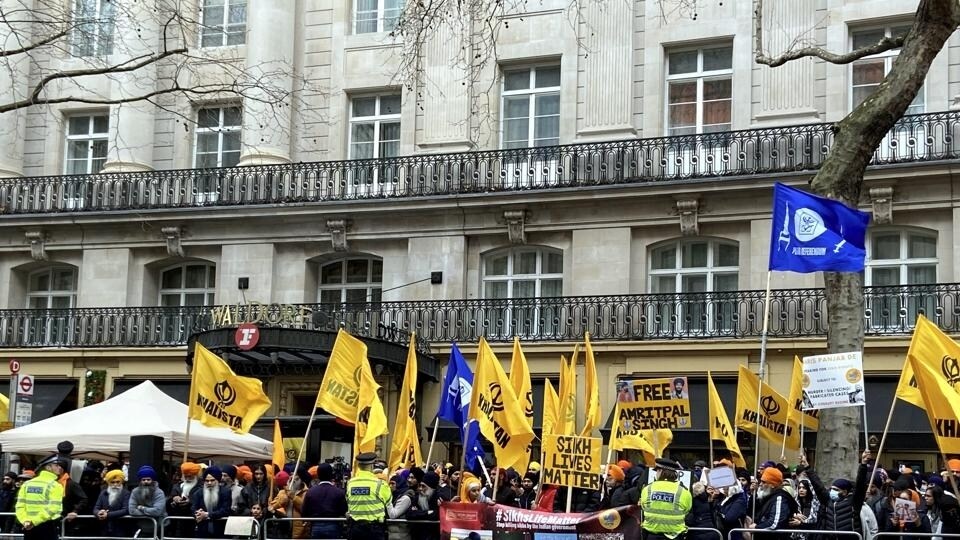
Several accounts on Twitter began posting about the rally this week, saying the rally was meant to “challenge [the] #Indian hand” in the killing of Khalistani separatist leader Hardeep Singh Nijjar, a designated terrorist, in Canada last month.
The development came close on the heels of an attack on India’s consulate in San Francisco and threats to senior Indian diplomats in Australia, Canada and the US through posters issued by pro-Khalistan elements. India’s external affairs ministry summoned the Canadian envoy this week to protest against the development.
“Any direct attacks on the Indian High Commission in London are completely unacceptable. We have made clear to @VDoraiswami and the Government of India that the safety of staff at the High Commission is paramount,” Cleverly tweeted on Thursday morning, referring to India’s high commissioner in London, Vikram Doraiswami.
The UK high commissioner to India, Alex Ellis, quoted Cleverly’s tweet and posted: “To amplify the importance which @FCDOGovUK attaches to the safety and security of friends and colleagues, and their premises, at @HCI_London.”
The tweets announcing the “Kill India” rally of July 8 featured images of Doraiswami and India’s consul general in Birmingham, Shashank Vikram.
People familiar with the matter said the attempt by Khalistani activists to burn down the Indian consulate in San Francisco in the early hours of July 2 and the threats against senior Indian diplomats in Australia, Canada and the US are being seen as another instance of coordinated action by pro-Khalistan groups.
As with the posters seen in Australia, Canada and the US, the tweets about the July 8 rally falsely referred to senior Indian diplomats in the UK as the “faces of Hardeep Singh Nijjar’s killers in Vancouver”. Pro-Khalistan Twitter accounts also posted a video featuring Sikhs For Justice (SFJ) leader Gurpatwant Pannun, designated a terrorist, claiming Indian diplomats in Australia, Canada, the UK, the US and European countries are “responsible” for the killing of Nijjar.
The latest attack on the Indian mission in San Francisco came a little more than three months after Khalistani activists planted flags at the consulate, broke through barricades and used flagpoles to smash windows.
The Indian side has taken up the activities of Khalistani activists very strongly with authorities in Australia, Canada, the US and the UK and demanded action against them.
During a violent protest at the Indian high commission in London on March 19, pro-Khalistan activists had clambered onto the mission’s balcony and pulled down the national flag from a pole in front of the building. India has then lodged a strong protest with the UK about the violence, and even reduced security around the British high commission in Delhi.