
 E-Paper



Cabinet approves setting up of third launchpad in Sriharikota
The Union Cabinet on Thursday approved setting up of a third launchpad at Isro’s Satish Dhawan Space Centre at Sriharikota at a cost of ₹3,985 crore, Union minister Ashwini Vaishnaw said.


The Union Cabinet on Thursday approved setting up of a third launchpad at Isro’s Satish Dhawan Space Centre at Sriharikota at a cost of ₹3,985 crore, Union minister Ashwini Vaishnaw said.
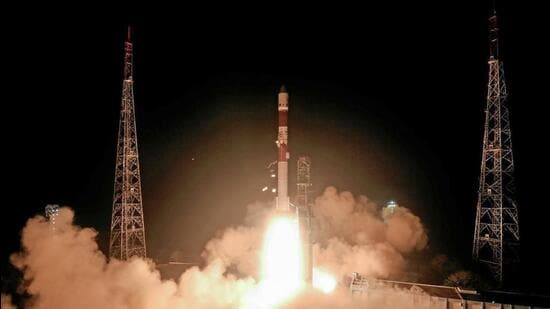
The project envisages the establishment of the launch infrastructure at Sriharikota, Andhra Pradesh for the Next Generation Launch Vehicles of Isro and also to support as standby launchpad for the second launchpad at Sriharikota. This will also enhance the launch capacity for future Indian human spaceflight missions, the government said in a statement.
“This will also enhance the launch capacity for future Indian human spaceflight missions,” the government said.
The third launchpad will be built at the Satish Dhawan Space Centre at Sriharikota and will be capable of putting 30,000 tonne spacecraft in low earth orbit as against the existing capabilities of 8,000 tonnes as India eyes a larger pie in the global space economy.
The Union Cabinet, at a meeting chaired by Prime Minister Narendra Modi, approved the setting up of the third launchpad over the next four years with maximum participation from the industry, information and broadcasting minister Ashwini Vaishnaw said.
The Indian Space Research Organisation is also developing the Next Generation Launch Vehicle (NGLV) which will be 91m in height. The launchpad is designed to have a configuration that is as universal and adaptable as possible that can support not only NGLV but also the LVM3 vehicles with a semicryogenic stage.
It will also be able to support scaled up configurations of NGLV with capabilities of hauling 70 tonnes payload to low earth orbit.
The launchpad will be built with maximum industry participation fully utilizing Isro’s experience in establishing the previous launch pads and maximally sharing the existing launch complex facilities.
The project will boost the Indian space ecosystem by enabling higher launch frequencies and the national capacity to undertake human spaceflight and space exploration missions.
As on date, Indian Space Transportation Systems are completely reliant on the first and second launchpads.
The first launch pad was built 30 years ago for PSLV missions and continues to provide launch support also for the Small Satellite Launch Vehicle (SSLV). The second launchpad was established primarily for GSLV and LVM3 and also functions as standby for PSLV. The second launchpad has been operational for almost 20 years and has enhanced the launch capacity towards enabling some commercial missions of PSLV/LVM3 along with the national missions including the Chandrayaan-3 mission. The second launchpad is also getting ready to launch the human rated LVM3 for the Gaganyaan missions.
The expanded vision of the Indian Space Programme, the government has announced plans to establish the Bharatiya Antariksh Station (BAS) by 2035 and achieve an Indian crewed lunar Landing by 2040.
These ambitions require a new generation of heavier launch vehicles with new propulsion systems, which cannot be met by the existing launchpads, an official statement said.The expeditious establishment of a third launchpad to cater to a heavier class of Next Generation Launch Vehicles and as a stand by second launchpad is highly essential so as to meet the evolving space transportation requirements for another 25-30 years.


