
 E-Paper



Cabinet secretary urges bureaucrats to break out of 'routine', improve work culture
Dr TV Somanathan says "routine is routinely ignored", urges officers to focus on small behavioural changes that can improve governance.

 Prefer HTon Google


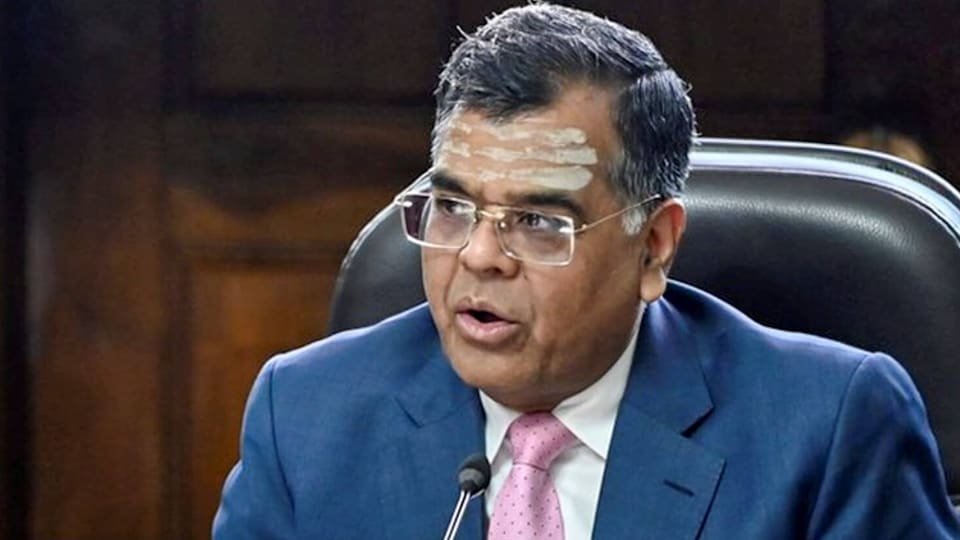
Cabinet Secretary Dr TV Somanathan has urged civil servants across the country to move beyond entrenched work habits, saying officers must continuously reflect on their performance instead of allowing years of service to become "one year's experience repeated 30 times."
In a letter, addressed to all chief secretaries, advisers of states and Union Territories, and directors general of state administrative training institutes, Somanathan said many middle-ranking officers had expressed the need for practical guidance on routine administrative work despite being satisfied with subject-specific training.
"As Cabinet Secretary, I have the pleasure of meeting many officers," he wrote, adding that several officers had told him they needed "more practical guidance in so-called 'routine' matters" tailored to the government and public sector context so they could become "better administrators and managers."
'Routine' is important, but often ignored
Describing routine work as "extremely important", Somanathan said civil servants often fall into fixed habits over long careers and stop paying attention to basic practices that improve professional output.
"The habit of self-reflection and introspection," he wrote, and the ability to "honestly reflect on our day's work, to look back on our failures and deficiencies, admit them and improve upon them, can be valuable."
He asked officers to constantly question themselves: "Are we improving ourselves with each passing year and doing something better each year," or are they merely "following the beaten track of our own past habits of working without making any efforts at self-reflection or self-improvement?"
Warning against complacency, the Cabinet Secretary said officers who simply continue with established routines may eventually have to confront whether their experience amounted to "30 years' experience" or merely "one year's experience repeated 30 times."
'Small things' distinguish outstanding officers
Somanathan clarified that he was not asking officers to undergo a complete personality change. Instead, he urged them to focus on seemingly minor aspects of day-to-day administration.
"We, as civil servants, must take care of small things," he wrote, saying changes in daily official routine could lead to "better output, or reduce our stress level, or both."
These "small things", he said, include how officers conduct meetings, manage their time, communicate with peers and subordinates, engage with visitors, and motivate teams by trusting them and delegating responsibilities.
Arguing that these practices often matter more than technical expertise, he said they "often distinguish an outstanding officer from a mediocre one, even more than domain knowledge."
Cabinet Secretariat to issue practical 'Guides'
To help officers adopt better work practices, Somanathan announced that the Cabinet Secretariat, in consultation with the National Centre for Good Governance (NCGG), would periodically issue practical handbooks.
"The Cabinet Secretariat will... be issuing simple guidelines in the form of 'Guides' from time to time," he said, covering "various practical steps that we could take during 'a day in Office' as a civil servant."
He also directed chief secretaries to circulate the first guide among officers under their jurisdiction and specifically asked state administrative training institutes to ensure that young state civil service officers also imbibe these behavioural changes.
What the Cabinet Secretary suggested
The first guide, titled "Conducting Effective Meetings", focuses on making official meetings more productive and time-efficient. It says officers should:
- Be clear about the "purpose of the meeting" before convening one.
- Ask whether "the meeting is necessary" or if emails, phone calls or one-to-one discussions can achieve the same objective.
- Schedule meetings with adequate notice and avoid important meetings immediately before or after holidays.
- Prepare a clearly structured agenda with supporting documents circulated in advance.
- Group related agenda items together and assign specific agenda points to individual participants.
- Avoid placing complex agenda items immediately before or after lunch.
- Ensure meeting equipment such as video conferencing systems, Wi-Fi, microphones and presentation systems are functioning properly.
- Carefully decide "whom to invite", limiting participation to decision-makers, subject experts, implementers and key stakeholders.
- Verify quorum where required and maintain attendance records in formal meetings.
Meetings often become 'directionless'
Explaining why the first guide focuses on meetings, Somanathan said they consume a significant portion of officers' working hours but are often ineffective.
"Many officers have told me that many of our meetings tend to start late, be overstretched and directionless, and often lead to no tangible 'takeaways'," he wrote.


