E-Paper



Can last-minute question papers stop exam leaks? Experts flag some challenges
Nandan Nilekani, who heads the HPTF on examination reforms, also suggested expanding computer-based testing infrastructure in the country

 Prefer HTon Google


A proposal by Nandan Nilekani, Infosys co-founder and head of a government task force on exam reforms, to generate test papers at the last minute from massive question banks has drawn scrutiny from educators, academic experts, and technology providers, who warn it could compromise exam standards.
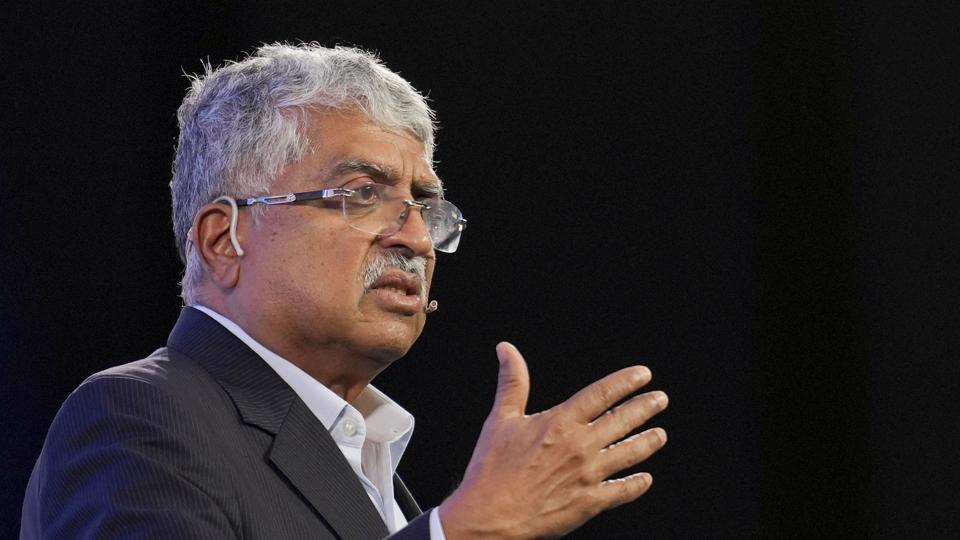
Nilekani, who heads the high-powered task force (HPTF) on examination reforms, also suggested on Tuesday expanding computer-based testing (CBT) infrastructure across the country.
“The moment you have a question paper, then that creates an economic incentive for that to be sold. So the way to do that is to really have a massive bank of questions and only at the last minute generate the question paper for that day and therefore then the question of having a question paper goes away and there is no economic incentive for that,” he told the Bloomberg New Economy Forum on Tuesday.
Academic and security concerns
People familiar with the HPTF’s deliberations said a large question bank could reduce the possibility of leaks during the printing, dispatch and distribution of physical papers. However, they cautioned that computer-based tests were not entirely foolproof and that securing examinations would require substantial investment in government-run centres.
The proposal also raises a fundamental academic question: can a computer-generated selection of questions ensure balanced syllabus coverage and comparable difficulty while testing understanding rather than merely factual recall?
Question banks need academic validation
Teachers associated with selecting questions for exams conducted by the National Testing Agency (NTA) asked whether last-minute selection would preserve the academic quality and consistency of high-stakes tests.
“The worst thing about preparing paper at the last moment is the challenge of balancing different units of the curriculum, the relative weightage and type of questions to be included in the final paper. It is going to fail miserably,” one of them said, questioning who would select the questions and the criteria governing the process.
They said every question has two important attributes — its discrimination index, which indicates how well it distinguishes between candidates of different abilities, and its difficulty level. When assembling a paper, both must be considered, which requires specialised expertise rather than simply drawing questions randomly from a database.
The experts also cautioned that dividing question-writing assignments among individual specialists could result in duplication and gaps in syllabus coverage. A question bank compiled from separately prepared sets would still require an overarching academic review to ensure the final paper was coherent and appropriately balanced.
“Four professors sitting together on a question bring four different opinions,” another expert said, arguing that the sum of individually prepared questions did not necessarily make a well-designed examination paper.
Another concern is whether a question bank could adequately capture questions requiring interpretation and application of knowledge rather than factual recall. Experts also warned that random selection could produce papers of substantially different difficulty levels across examination sessions. “Even if multiple sets were prepared in advance, matching their difficulty would remain a challenge,” one expert quoted above said.
Technology alone cannot guarantee security
People familiar with the HPTF’s deliberations said CBT could reduce vulnerabilities associated with physically moving question papers but would not eliminate malpractice.
“CBT is not entirely foolproof, as there is also a possibility of malpractice through network sharing, including someone else taking the examination remotely on behalf of a candidate if the examination centre happens to be managed by a private school, college or university,” one of them said.
Addressing these vulnerabilities would require substantial investment in dedicated examination centres in government institutions, the person added, noting that the task force’s recommendations were yet to be finalised.
Anand Kumar, teacher and founder of Super 30 (Patna-based free coaching for underprivileged IIT aspirants), did not favour artificial intelligence-based last-minute paper generation and full computer-based testing for NEET-UG, the national entrance examination for undergraduate medical courses. He warned it could “create barriers” for rural and poor students lacking computer access, that remote centres may lack metro-level facilities, and that large AI question banks risk errors.
“Making exams fully computer-based risks new barriers for talented children in remote villages without computer access. Remote centres may not match metro facilities and security. Large AI-selected banks offer no guarantee all questions are correct. Fix systemic weaknesses, not make opportunities harder for the poor. Exams must identify talent everywhere, not showcase technology,” he said in a post on X on Wednesday.
Ashish Mittal, founder and director of Noida-based examination technology provider Innovatiview India Ltd, which has worked with NTA since 2019, said creating a large question bank required more than accumulating questions.
“It calls for rigorous academic validation, standardised difficulty levels, secure access controls and the ability to generate balanced question papers closer to examination time,” he said.
Expanding CBT infrastructure was not merely about increasing the number of computers, Mittal said.
Centres would need reliable technology, secure networks, backup power, robust candidate authentication and real-time monitoring. “A comprehensive, technology-led security framework, supported by strong operational protocols with candidate experience at the epicentre of all of this, will be essential to ensure examination integrity, fairness and consistency at a national scale,” he said.
Government infrastructure
A member of the committee headed by former ISRO chairman K Radhakrishnan, which recommended an overhaul of NTA in October 2024, said the proposed system would require an on-demand network of senior subject experts, better use of government school infrastructure and professional examination management.
The member said an “on-demand engine of senior experts” should be made available, with government schools providing infrastructure for CBT and local teachers assisting with supervision. This would require careful coordination of examination calendars and centres, along with psychometric testing experts on the examination agency’s rolls, to improve the system over time.
To be sure, the Radhakrishnan committee recommended developing a nationwide network of standardised testing centres, initially capable of accommodating 200,000 to 250,000 candidates per session and eventually expanding to district headquarters. It described CBT as the “sure way forward” against paper leaks.
The Centre told the Supreme Court on August 4 that it had not finalised a decision to shift NEET-UG to CBT from 2027. In CBT, encrypted questions are electronically distributed to examination infrastructure under strict access controls, reducing dependence on physical transportation. The format is already used for JEE-Main, CUET and UGC-NET.
The transition to CBT for NEET-UG from pen-and-paper testing (PPT) would face major logistical challenges.
More than 2.2 million candidates registered for NEET-UG 2026, and accommodating them through CBT would require multiple sessions unless testing capacity expands substantially. Multiple sessions would, in turn, require a transparent and independently audited normalisation system to account for differences in question-paper difficulty.
Nilekani panel
The six-member Nilekani panel was set up on July 27 this year to submit comprehensive, tech-driven, and leak-proof exam-reform recommendations following protests led by the Cockroach Janta Party (CJP), which spearheaded the agitation over the cancellation of NEET-UG 2026 on May 12.
At least 120 questions in a guess paper—a compilation of suggested questions based on previous trends and patterns—matched the May 3 examination paper, triggering widespread protests and eventually the resignation of then education minister Dharmendra Pradhan on July 25.
In its first charge sheet filed in a Delhi court in May in the NEET-UG 2026 paper leak case, CBI said the accused sold and purchased question papers for the May 3 examination for amounts ranging from ₹25,000 to ₹25 lakh.