E-Paper



CBSE eases section expansion norms
The changes notified in a circular on Thursday will apply to all existing and newly affiliated schools, excluding foreign schools.

 Prefer HTon Google


New Delhi: In a bid to address space constraints amid rising demand for school admissions, the Central Board of Secondary Education (CBSE) has amended its affiliation norms to allow section expansion based on built-up carpet area rather than land size.
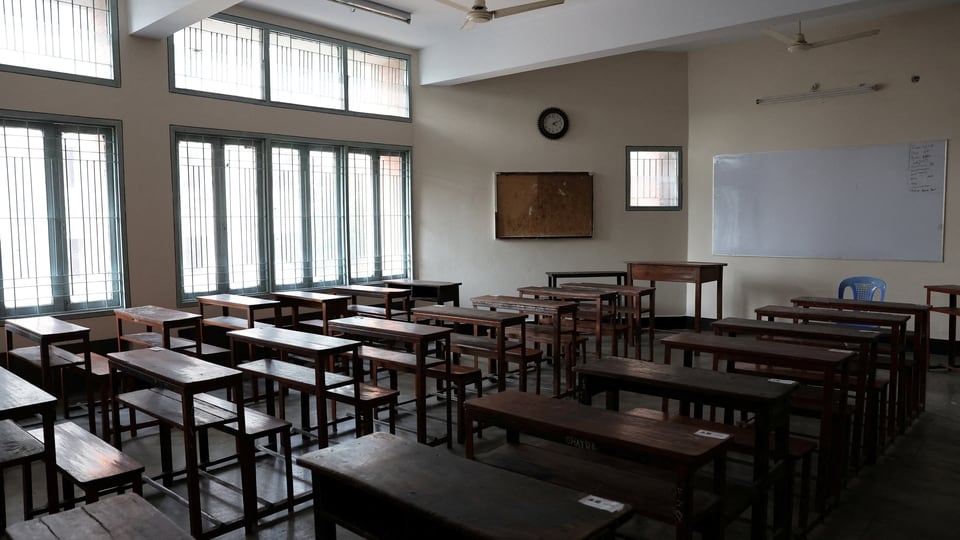
The move came after the board received feedback from schools facing functional difficulties to increase additional sections beyond the permissible limit even when there is a demand for new admissions. Due to the paucity of the available seats in the neighbourhood schools, the children may be required to travel long distances for attending schools impacting their health and overall social and psychological development and sense of belonging, CBSE said in its circular.
The move is expected to ease admission pressure, reduce long student commutes, and align with the National Education Policy (NEP) 2020’s goals of equitable access and neighbourhood schooling, officials and school principals said.
The changes notified in a circular on Thursday will apply to all existing and newly affiliated schools, excluding foreign schools.
Until now, the maximum number of sections a school could run was determined by the total land area available, often limiting expansion in densely populated urban areas. Under the revised rules, schools can now add three additional sections for every 400 square metres of built-up area beyond the base requirement.
Under the old CBSE affiliation rules, the number of sections a school could run was based on its total land size, regardless of how much of that land was actually built upon. However, under the new rules, the focus has shifted to the built-up carpet area— the actual enclosed, usable academic space. Under the earlier CBSE affiliation rules, the number of sections allowed for Classes 11 and 12 combined was capped at one-third of the total number of sections running in the school. However, under the new rules, the number of sections for Classes 9, 10, 11 and 12 is capped separately, with each level allowed a maximum of one-fourth of the total number of sections running in the school from Balvatika to Class 10 or 12, respectively. This number is then rounded up to the next higher even number and distributed equally between the two classes at each level. The land area shall be utilized only for the purpose of deciding the category of the schools, that is branch school, middle school, secondary and senior secondary level school.
Despite the shift in section criteria, the national board has retained the cap of 40 students per section to ensure quality education and adequate infrastructure.
The new policy also mandates certification of the built-up area by local bodies or licensed architects and outlines minimum infrastructure requirements, including libraries, labs, and activity rooms, for every 48 sections.
“The number of sections and students shall be restricted as per the actual facilities in the school. The number of sections shall be restricted in accordance with above with built-up carpet area units scaled down to 400 square meters – 3 sections for every 400 square meters thereafter school shall create additional infrastructure like laboratories, library, indoor game room and other activity rooms beyond every 48 sections,” CBSE said.
Sudha Acharya, the principal of ITL Public School, Dwarka in New Delhi said the new rules will benefit schools. “We had to refuse admission to students due to cap on sections and classroom strength of 40 students. It is a welcoming change and now schools will be able to add more sections to give admission to more students,” she said
The reforms were based on stakeholders feedback and recommendations from a CBSE-appointed committee, and were ratified by the board’s governing body in June 2025. The move also aligns with a Supreme Court order from February 2025, which emphasized compliance with Model Building Bye-Laws (MBBL) 2016 for school infrastructure.
“We got representation from officials of more than 1500 schools across the country. We formed a committee and now have come up with new reforms for schools. Earlier there were restrictions on height [Flooring] of schools but now we have said that heights of schools will be based on local bye-laws. Now, schools can expand in line with state government laws. They can add new sections in their new floors and admit more students as per the demand,” CBSE secretary Himanshu Gupta told HT.
According to information available on CBSE’s website, the board has 30,984 affiliated schools.
Last week, CBSE in a circular allowed the cap size to be increased to 45 students per section in exceptional situations—such as mid-session transfers, students repeating a year. In February CBSE introduced new rules allowing schools already affiliated with the board to set up “branch schools” with classes from Balvatika to Class 5 in a bid to address the issue of shortage of space. Schools affiliated with CBSE can apply to establish branch schools, within the same city as the main school, from the 2026-27 academic session.