E-Paper



Central Vista plan gets SC nod in 2-1 majority verdict
By a 2-1 majority -- the majority judgment was given by justices AM Khanwilkar and Dinesh Maheshwari, while justice Sanjiv Khanna disagreed and wrote a separate order -- the bench dismissed a clutch of petitions against the redevelopment project while holding that the government and its agencies fulfilled all legal requirements in altering the land use of the seven plots in the area, and in obtaining the environmental clearances for constructing the new Parliament building.

 Prefer HTon Google


The Supreme Court on Tuesday gave the thumbs-up to the Central government’s over ₹15,000 crore redevelopment plan for the historically significant Central Vista area of New Delhi where a new Parliament, Central Secretariat and union ministries’ offices are to be built. The court declared that the project is “in line with the standards of public trust” and constitutes a “just use of resources” for a public purpose, without breaching any tenet of environmental protection.
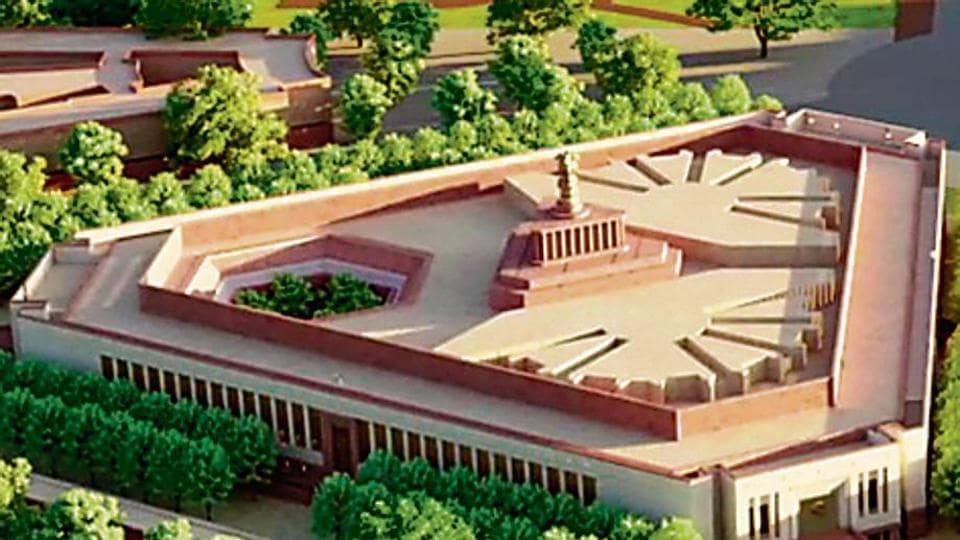
By a 2-1 majority -- the majority judgment was given by justices AM Khanwilkar and Dinesh Maheshwari, while justice Sanjiv Khanna disagreed and wrote a separate order -- the bench dismissed a clutch of petitions against the redevelopment project while holding that the government and its agencies fulfilled all legal requirements in altering the land use of the seven plots in the area, and in obtaining the environmental clearances for constructing the new Parliament building.
The majority judgment upheld the land use plan for the seven plots in the Central Vista area where a new Parliament, with a built-up area of around 60,000 square metres, and expanded seating for over 1,200 members of both Houses, along with 10 other buildings to house all 51 Union ministries, are to be built within an integrated complex marked by underground transit connectivity and structural identity.
The minority view, however, held that the land use plan and the environmental clearance must be reviewed.
In split verdicts, the view of the majority holds.
The government hailed the majority verdict, which was criticised by green activists and political parties who have been concerned about its environmental impact, the potential loss of heritage buildings and the vast public funds to be devoted to the project at a time when the nation is battling the Covid-19 pandemic and the economy is in recession.
Rejecting the petitioners’ argument on whether the government should spend so much money on the redevelopment plan, the court said that it “cannot be called upon to govern” by dictating that the government desist from spending money on a particular project or ask it to run its offices only from areas decided by the court.
Apart from affirming the land use, defended by the government through solicitor general Tushar Mehta, the court also dismissed objections to the Central Vista Committee’s recommendations and the environmental clearances, paving the way for a new Parliament building, which the government intends to construct first and has thus separated it from the plan to build the Central Secretariat.
The court said the government will, however, have to take approvals from the Heritage Conservation Committee and municipal authorities before the construction begins on the new Parliament. At the same time, it urged the government to install smog towers atop the new Parliament building while making smog towers and smog guns mandatory for all construction projects in the future.
Justice Khanna, in his verdict, questioned the process by which the land use was changed, besides inadequate consultation and public participation.The judge found favour with the arguments made by the petitioners, through senior counsel Shyam Divan, Sanjay Hegde and advocates Shikhil Suri and Shadan Farasat, that the entire process had been short-circuited, and required a review.
But the majority verdict held that the Delhi Development Act did authorise the government to “modify” the master plan for the Capital without the necessity of specific amendments or a new master plan because the proposed changes were essentially in the nature of “swapping of the uses of the concerned Government plots” and do not pertain to any private ownership at all.
It rejected the challenges to the October 17, 2017, and March 20, 2020, notifications with respect to what it called a “minor” change in land use in the Central Vista area, noting the land was to be ultimately used for the similar purposes of having government offices, public and semi-public use and for recreation, and no change of a substantial or radical character was envisaged.
“The project does not involve any conversion into private ownership and has no element whatsoever of permitting commercial use of vital public resources.The proposed project is in line with the standards of public trust and the petitioners have failed to point out any circumstance which would suggest otherwise,” stated the verdict.
It also underscored that there was a “substantial compliance of the prescribed procedure” by the government and that the final decision was the outcome of involvement of all the planning authorities referred to under the Delhi Development Act.
About the need to have a more extensive public hearing for a project of national importance such as this, the majority judgment said that the government records substantiated that the process of inviting objections and chance to raise grievances were accorded to the objectors.
It turned down the petitioners’ contention that Parliament was too kept out of the purview of consultative exercise.The verdict noted that the proposal regarding the new Parliament building was placed before the General Purposes Committee (GPC) which was headed by the Lok Sabha speaker and included MPs from all major national political parties having a presence in Parliament.
The judgment also shot down the petitioners’ contention that the entire Central Vista area was a heritage zone, after relying upon the listed heritage chart submitted before the bench by government authorities. It did not find any infirmity in having separate plans for Parliament on the one hand and the Central Secretariat and other buildings on the other, noting that it was for the government to formulate such policy decisions regarding the redevelopment.
It further upheld the appointment of the consultant, stating the documents corroborated that there had been no favouritism or malice behind the decision.
“The political issues including regarding development policies of the Government of the day must be debated in the Parliament, to which it is accountable. The role of Court is limited to examining the constitutionality including legality of the policy and Government actions. The right to development, as discussed above, is a basic human right and no organ of the State is expected to become an impediment in the process of development as long as the government proceeds in accordance with law,” concluded the majority.
Union minister of housing and urban affairs Hardeep Singh Puri welcomed the verdict and pledged to maintain the highest standards in executing the project.“Delhi is on course to becoming a World Class capital city and in the first step by the time nation completes 75 years of its Independence in 2022 a new Parliament building will be ready reflecting the aspirations of new India,” Puri tweeted.
The Congress said the project was not a legal issue, but a case of misplaced priorities of “an autocrat seeking to etch his name in the annals of history”. Senior party spokesperson and deputy leader of the Opposition in the Rajya Sabha Anand Sharma said: “We are living in strange times. No relief for the migrant labour, no justice for India’s farmers fighting for their rights in bitter cold, pouring rain, tear gas and braving lathis. As we approach Ganatantra Diwas, need to reflect on state of Republic.”
Environmentalist Bhavreen Kandhari said the project was harmful for the environment and an encroachment of public space by the government. “This project is an encroachment of open places, which are meant for the public, by government,” Kandhari said.
Lt Col Anuj Srivastava (retd), an architect and activist of LokPATH, which describes itself as a public collaborative for holistic and appropriate development, said more public consultation was required for the project to go ahead. “It’s a 611-page judgment.The court heard us patiently. The judgment is a split one but we are quite disheartened and disappointed. Are we leaving something for our children that we will be proud of? We are exploring our legal options.”
(With inputs from HTCs and agencies)