
 E-Paper



Centre allocates vaccines for June as many states complain about doses sanctioned
The health ministry data on vaccination shows that on average two million doses are being administered daily.

 Prefer HTon Google


The Centre has allocated vaccine quotas to states for June to bring clarity on how many doses they will get, a Union health ministry communication to states said even as most of them reported slowing down of vaccinations in May compared to April.
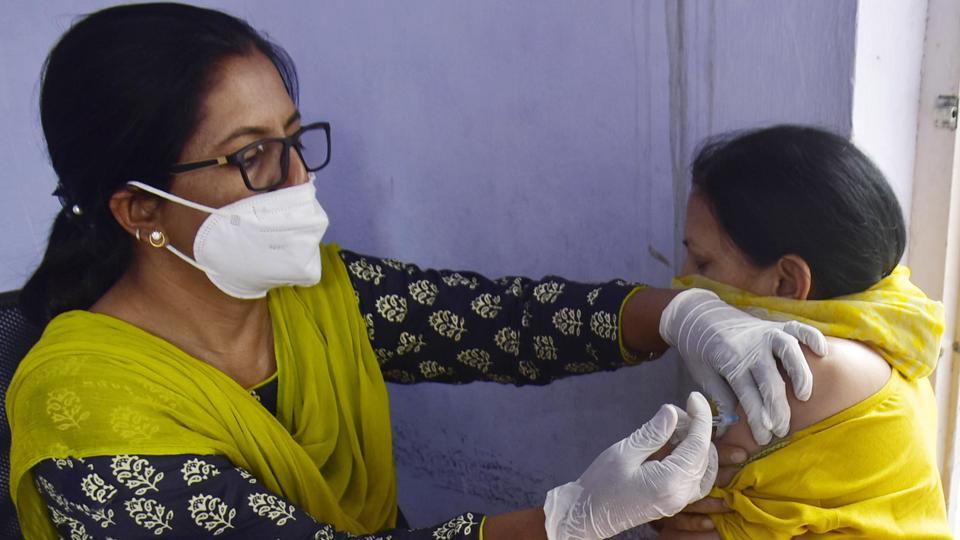
Until May 27, 220 million doses were supplied to states of which 201 million or 91.04% (including wastage) were utilised, according to the Co-WIN website. India needs 2.2 billion vaccines to cover the population above 18.
The health ministry data on vaccination shows that on average two million doses are being administered daily. The maximum weekly vaccination took place between April 3 and 9 when 24 million doses were given. This came down to 11.6 million from May 22 to 28, according to the Co-WIN website.
The vaccinations in May were about 40% less than that in April even though functionaries such as V K Paul, member (health), Niti Aayog, have said all adult Indians would be vaccinated by the year-end.
According to the information the Centre has provided to states, big states such as Rajasthan, Maharashtra, Gujarat, Tamil Nadu, Madhya Pradesh, Bihar and West Bengal will get at least 40 million doses in June. Uttar Pradesh has refused to share the data on the doses it is getting.
The vaccines allocated to each state include doses for the first 15 days of June for the above 45-year-old age group and the vaccines the states would buy from the two Indian manufacturers, Serum Institute and Bharat Biotech, for the month.
The Centre is bearing the cost of vaccinating people above 45. The states have to arrange for doses for people in the 18-45 age group.
The number of vaccines that private hospitals can buy directly from manufacturers in June was not immediately known.
A Jharkhand government official said: “We have been told that this is [the] interim quota and we would receive more vaccines than the number shared by the Central government.” The official added that several states have objected to very few vaccines allocated.
The vaccination for the 18-45 age group started on May 1. But states such as Jharkhand, Chhattisgarh and Karnataka delayed it as enough vaccines were not available. Others like Haryana, Maharashtra and Rajasthan had to suspended vaccination for this age group in between in absence of enough vaccines.
Officials and ministers in several states said the number of vaccines allocated would mean the closure of several vaccination centres.
“The Centre’s letter informing about the vaccines we would get in June clearly shows the vaccination mess we are in,” said Chhattisgarh health minister T S Singh Deo. “We may have to close some new vaccination centres for the 18-45 age group. We would not be able to meet the target of vaccinating at least 20% of the population in June,” he said.
Until now, about 5% of the state’s people have got at least one dose of Covid vaccines. “At this pace, we would take at least 4.5 years to vaccinate all people,” said state health secretary Alok Shukla.
Rajasthan health minister Raghu Sharma said the quota system for vaccines introduced for June shows the Centre has failed to ensure enough vaccines. “We have been asking for Centre to take over procurement and distribution of vaccines and allow other government PSUs [Public Sector Undertakings] to take over manufacturing to meet the shortfall,” he said.
Odisha’s additional chief secretary (health) PK Mohapatra said the state government was unhappy with the doses allocated. “If we get a large number of vaccines from the international manufacturers, we would be able to cover a large number of people in the 18-45 age group,” said Mohapatra.
Karnataka health minister K Sudhakar said vaccinating all would remain a challenge with the quota of vaccines. “We and people have to understand the manufacturing constraints. We are trying to get vaccines from all sources including importing from international manufacturers,” he said.
Goa chief minister Pramod Sawat said they have asked the Centre to allow inoculation of 18-45 from the vaccines meant for 45 plus group if there is not enough demand. “This would be a loan of doses,” Sawant said, admitting of shortage of vaccines for the 18-45 age group.
Madhya Pradesh’s immunisation officer Santosh Shukla said if they receive the entire quota of vaccines from the Centre, the state would be able to do more vaccinations than it did in May.
In May, the state inoculated 2.1 million people as compared to 4.2 million in April. “We could vaccinate 3.5 million people in June if the vaccine promised are made available,” he said. The state has administered close to 7.5 million doses so far.
A West Bengal health department official said the state has been allocated around one million doses for the first 15 days of June, which is not enough.
Andhra Pradesh principal secretary (medical and health) Anil Kumar Singhal said the state will get 1.1 million vaccination doses till June 15 and it would buy another 1.5 million doses.
Himachal Pradesh and Uttarakhand would get lesser doses than they have administered in May.
Kuldeep Singh Martoliya, the nodal officer for Covid-19 vaccination in Uttarakhand, said, “In June, we will receive over 20,00,00 Covishield and over 62,000 Covaxin doses for 45 and above and in case of 18-44 age bracket, we will get 14,10,00 Covishield and 41,970 Covaxin doses.”
Himachal’s mission director, National Health Mission, Nipun Jindal said the state will 2,52,770 doses of Covishield from the Centre for the first fortnight of June. He added the state will procure 1,19,760 doses directly from the Serum Institute of India. “We have asked the Centre to increase the allocation,” Jindal said.
Uttar Pradesh’s health and family welfare minister Jai Pratap Singh said the state will get adequate vaccines in June without disclosing the allocation made to the state.


