
 E-Paper



Centre asks SC to transfer petitions against new IT rules from 5 high courts
The Centre has told the Supreme Court that petitions against the new IT rules are being heard by high courts of Delhi, Bombay, Madras, Calcutta and Kerala.

 Prefer HTon Google


New Delhi: The Union government has approached the Supreme Court to transfer petitions filed against the Information Technology (Intermediary Guidelines and Digital Media Ethics Code) Rules 2021, in over five high courts to the apex court, people familiar with the development said.
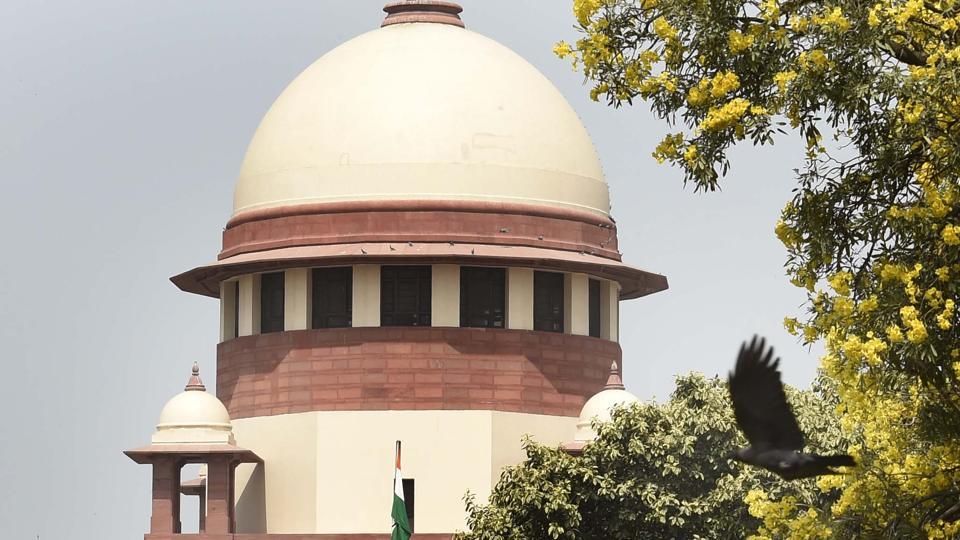
The petition is expected to come up for hearing later this week.
At present, the challenge to the intermediary guidelines and a Digital Media Ethics Code introduced in February is pending consideration before the high courts of Delhi, Bombay, Madras, Calcutta and Kerala. A petition has also been filed before the Karnataka high court where notice is yet to be issued.
“In all, four transfer petitions have been filed in the Supreme Court by the ministry of electronics and information technology. The transfer has been sought to avoid multiplicity of proceedings before various high courts and to ensure uniformity in the consideration of the rules under challenge,” a person familiar with the development said.
The new rules apply to digital news media platforms, social media intermediaries and OTT platforms and bring digital media under a three-tier oversight mechanism. This will comprise a grievance officer responsible for dealing with complaints to take down indecent content within 24 hours of a complaint. The two remaining tiers of the oversight system comprise a self-regulatory body of experts headed by a former judge, and an inter-departmental committee headed by a senior bureaucrat of the information and broadcasting ministry.
The first petition challenging the rules was filed in the Delhi high court by Foundation for Independent Journalism which runs the news website ‘The Wire’ in March this year. Later, the Quint Digital Media Limited which publishes The Quint also filed a petition and the same is under consideration before the Delhi High Court.
Simultaneously, various high courts issued notices on petitions challenging the rules. Digital News Publishers Association along with a journalist filed a petition in Madras High Court, legal news website Live Law approached the Kerala high court, a journalist and an online news portal moved the Bombay high court while Calcutta high court issued notice on a PIL filed by one Sayanti Sengupta,.
These petitions have largely claimed that the rules curtail and restrict the freedom of the Press in India and claim the conditions imposed under the Digital Media Ethics Code and guidelines are onerous and beyond the scope of the Information Technology Act 2000.
The use of vague words such as “good taste” and “decency” in the ethics code are additional challenges to the rules which, according to many of the petitioners, give “pervasive control to state over published content”. The news websites argued that such a code provides a handle for the government to bring down content that doesn’t suit it.
The rules, according to the Centre, are intended to provide speedy redressal of bringing down harmful content and allows users to demand removal of personally intimate pictures or videos within 24 hours. The functionaries are also bound under the rules to cooperate with the Government and investigating agencies for verification of identity, detection and prevention of crimes, and investigation or prosecution of offences.


