
 E-Paper



Centre grants one-year extension to CBI Director Praveen Sood
Centre grants one-year extension to CBI Director Praveen Sood.

 Prefer HTon Google


Central Bureau of Investigation (CBI) director Praveen Sood has been given a one-year extension beyond his extended term at the helm of the premier investigating agency that was to end on May 24, the government said in an order on Wednesday.
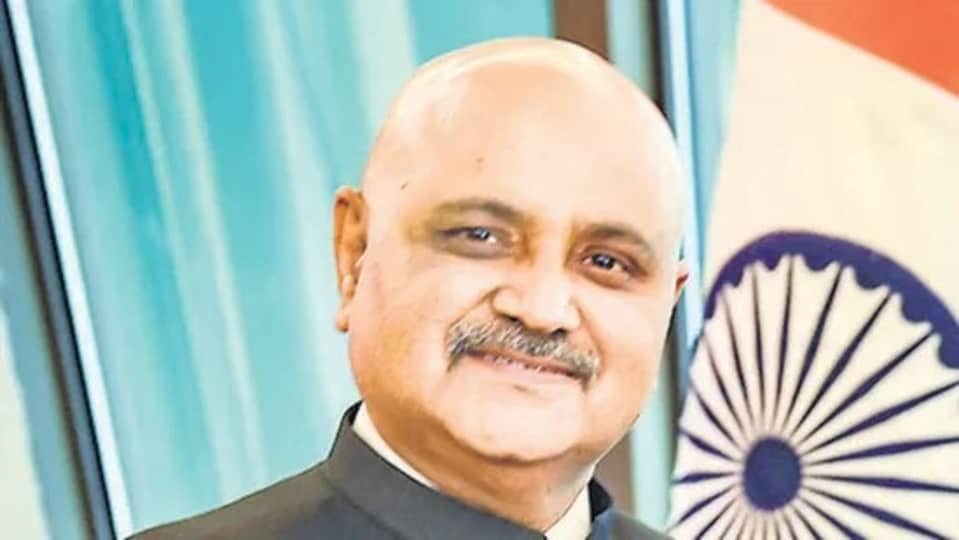
The order was issued by the Department of Personnel and Training (DoPT) following Tuesday’s meeting of the high-powered selection committee headed by Prime Minister Narendra Modi and comprising Chief Justice of India Surya Kant and the leader of the opposition, Rahul Gandhi.
Gandhi had issued a dissenting note on the process for selecting the CBI director.
“The Appointments Committee of Cabinet, based on the recommendations of the Selection Committee, has approved the extension in tenure of Praveen Sood, IPS (Karnataka cadre, 1986 batch) as Director, CBI, for a period of one year beyond May 24, 2026,” the order said.
Sood, who was first appointed as CBI director on a two-year term on May 25, 2023, was given a one-year extension in 2025.
Also Read | ‘Leader of Opposition not rubber stamp’: Rahul Gandhi flags ‘bias’ after meet to pick CBI chief
Continuity of the leadership needed
People familiar with the development said that the high-powered panel decided to give CBI continuity of the leadership so that the ongoing anti-corruption activities of the agency are not affected.
Over the last few years, CBI has reduced its investigation pendency from 1,695 cases in 2020 to 1,048 cases in 2025 and, over the last three years, has brought nearly 120 fugitives from abroad. In 2025 alone, India brought back a record 47 fugitives from abroad and issued a whopping 251 Interpol red notices.
According to official statistics, there has been a sharp increase in the number of trials completed in 2025, to 1,022 cases, up from annual figures of 500-600.
Also Read | High-level meet on May 12 to pick next CBI chief
Sood is ex-DGP of Karnataka
Before joining the premier central agency, Sood was the director general of police (DGP), Karnataka.
In November 2021, the government notified an ordinance to amend the Central Vigilance Commission (CVC) Act and the Delhi Special Police Establishment (DSPE) Act to grant three one-year extensions to the Enforcement Directorate (ED) chief and the CBI director, if they so desire. This was subsequently passed by Parliament a month later. The ordinance was used to give three back-to-back extensions to former ED director Sanjay Kumar Mishra.
A CBI officer said the agency, under Sood’s leadership, has won extradition cases of Mehul Choksi and Nirav Modi from the UK and Belgium, respectively, but their repatriation is stuck with the governments of these countries.
CBI's latest cases: NEET 2024 paper leak, RG Kar rape case
CBI also successfully investigated and finalised several sensitive cases including NEET-UG 2024 paper leak, RG Kar hospital rape and murder, cash-for-jobs irregularities involving former railways minister Lalu Prasad Yadav and his family, Delhi excise policy 2021-22 related irregularities in which former chief minister Arvind Kejriwal and deputy CM Manish Sisodia were arrested (a trial court, however, has discharged all the accused and the matter has now been challenged by the Delhi high court).
In the last eight months, CBI officials said the agency has also registered 50 cases to probe the builders-bankers nexus in sanctioning huge amounts under so-called subvention schemes without following any due diligence.
Over the last couple of years, CBI has focused more on its core duties, registering more DA cases and trapping people while taking bribes.
According to the Central Vigilance Commission’s annual report 2024, CBI registered a total of 807 regular cases or FIRs and Preliminary Enquiries (PEs) - precursors to the FIRs.


