
 E-Paper



Centre notifies rules of law against malpractices in public exams
The department of personnel and training issued a gazette notification for the Public Examinations (Prevention of Unfair Means) Act, which was cleared by Parliament in February


New Delhi: The Centre on Monday notified the rules of the Public Examinations (Prevention of Unfair Means) Act, 2024, which aims to curb malpractices in public examinations, amid a controversy surrounding premier entrance tests. The department of personnel and training issued a gazette notification for the Act, which was cleared by Parliament in February.
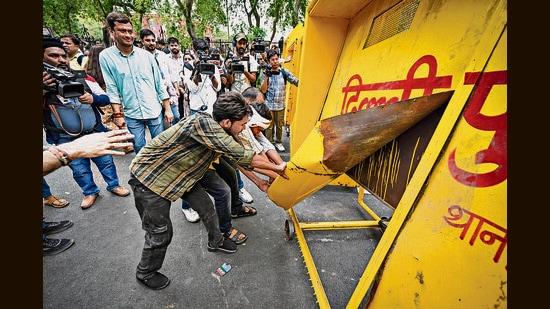
The rules have been notified in the backdrop of a controversy around skewed results and allegations of paper leaks that has reached the Supreme Court, which will hear petitions on the problems with the undergraduate medical entrance test (NEET-UG) on July 8. The government cancelled the UGC-NET exam (for college teachers) on June 19, and the CSIR-UGC-NET (for research fellowships and lectureships) on June 21.
The new law mandates engagement of services from other government agencies by the public examination authority to conduct examinations. Some institutions like schools, educational premises owned by governments, public sector undertakings and autonomous bodies are exempt from being categorized as service providers and any misconduct by their staff during tests would be addressed according to the relevant provisions of the law.
The rules also outline provisions for computer-based tests, including processes like candidate registration, allocation of exam centres, distribution of question papers, evaluation and processing results. Specific guidelines cover digital and physical infrastructure requirements, standard operating procedures for exam centres, seating arrangements, computer node specifications, server and network requirements, and procedures for ensuring exam integrity that range from pre-exam audits to post-exam activities.
When an incident occurs, the person in charge of the venue will prepare a detailed report to be submitted to the regional officer via the centre coordinator. If initial evidence suggests a case for legal action, immediate steps will have to taken by the regional officer.
In cases where individuals below the management level of the service provider are implicated in malpractices or fail to report incidents as required, the centre coordinator would have to escalate the matter to the regional officer, who will then conducts an inquiry and decide whether to direct the centre coordinator to initiate legal proceedings. If higher management or the board of directors of the service provider are found involved, the regional officer would submit detailed findings to the public examination authority for further action.
Incidents involving higher management are referred to a committee constituted by the public examination authority. This panel would comprise officials from the authority, an expert nominee and a representative from the relevant ministry or department. The committee will examine the regional officer’s report and present its findings to the public examination authority for appropriate action.
Additionally, the Act outlines a specific procedure to handle allegations against public servants involved in examination administration. Upon receiving a report from the regional officer or otherwise, the examination authority will scrutinize the conduct of the public servant to determine if actions were undertaken in good faith. A committee may be formed for this purpose.
The Act also establishes a monitoring mechanism to oversee implementation and adherence by public examination authorities nationwide. This includes forming review committees to look at the conduct of public servants involved in exam administration, ensuring accountability and transparency.
The draft legislation, passed by Lok Sabha on February 6 and by Rajya Sabha three days later, prescribes hefty fines and jail terms for culprits, even as it keeps students and candidates outside its remit. The Act defines “unfair means” as activities for monetary or wrongful gain, including leaking question papers, tampering with answer sheets, providing unauthorized assistance, and creating fake examinations or websites. Punishments under the law range between fines of up to ₹1 crore, and prison time between three and 10 years.
.


