
 E-Paper



Govt says Covid-19 situation stabilising but flags cases of black fungus
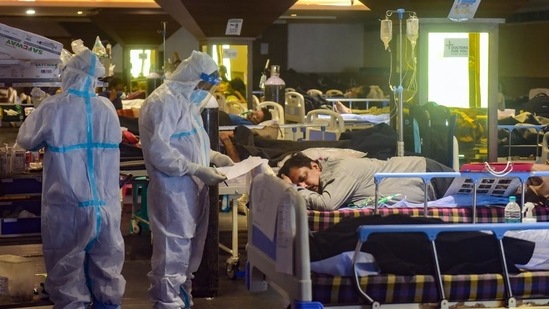
The overall Covid-19 situation in the country appears to be stabilising, the Union government said on Saturday, but experts also warned that secondary infections such as mucormycosis or “black fungus” were adding to the country’s mortality rate


The overall Covid-19 situation in the country appears to be stabilising, the Union government said on Saturday, but experts also warned that secondary infections such as mucormycosis or “black fungus” were adding to the country’s mortality rate.
Niti Aayog member Dr VK Paul said that to control the spread of the rare fungal infection, people must control their blood sugar levels, maintain hygiene, and doctors must prescribe steroids with caution. “Some states are reporting 400 to 500 cases; we do not know the burden of the disease yet. This is an emerging problem and ICMR (Indian Council of Medical Research) has started collecting data. We have also asked states to keep an eye on it,” he said.
Black fungus cases went up 2.5 times last year between September and December across 16 centres in the country, according to Dr Arunaloke Chakrabarti, head of the department of microbiology at Post Graduate Institute of Medical Education & Research, Chandigarh. He is part of the Fungal Infection Study Forum and is one of the members who drafted the government advisory on mucormycosis.
India’s Covid-19 positivity rate – proportion of samples that return positive – dipped from 21.9% last week to 19.8%, said Union health ministry’s joint secretary Lav Agarwal during the health ministry briefing on Saturday. A dropping positivity rate is indicative of slowing of the spread of infection, but experts urged caution.
An increase in cases was seen in Tamil Nadu, which was a “cause of concern,” Agarwal said. Currently, 11 states have over 100,000 active cases, eight states have 50,000 to 100,000 active cases, and 17 have fewer than 50,000 cases, according to data shared by the official.
Dr Randeep Guleria, director of the All India Institute of Medical Sciences, who was present at the briefing, said that there was a need to ensure good infection control practices in hospitals as there was an increase in secondary infections such as Covid-associated mucormycosis.
Click here for complete Covid-19 coverage
There are at least 23 people with the infection currently admitted to AIIMS, of whom 20 are still positive for Covid-19, Dr Guleria said.
Mucormycosis, also known as black fungus, has been seen among those who have uncontrolled diabetes, whose immunity is compromised or those who are given excessive steroids or immune-modulating drugs such as tocilizumab.
According to doctors, if left untreated, it may kill 80% of those infected. If not detected early, it affects the orbit of the eye and the mouth, resulting in people losing their vision or jaw during debridement — the process of removing dead tissue from an infection or wound.
“Covid-19 itself is a risk factor for the infection as it leads to the reduction in lymphocytes (white blood cells, one of body’s main immune cells), this increases the risk of opportunistic infections. There was a similar increase in fungal infections seen during the SARS outbreak too. The second risk factor is uncontrolled diabetes and the third is misuse of steroids (which suppress the immune system),” said Dr Guleria.
He added: “Studies have shown that steroid given in those who have mild disease and are not on oxygen leads to more morbidity and mortality because of secondary infections.” The expert urged diabetics to keep their sugar levels in check and those who have been treated with steroids to monitor their blood sugar levels.
He added that high doses of steroids were not required for the treatment of Covid-19 patients. “Mild to moderate dose is good and only for five to 10 days. Longer use of steroids also leads to poor control of blood sugar and increases the chances of fungal infections.”
Other than the focus on the fungal infection, Paul also said that the country “managed” to deal with four million active cases, the case fatality ration (CFR) – the proportion of people who die among those who test positive – “remained stable”, and the improvement was faster than the previous wave.
He said that a “narrative” was being created that the technology transfer for Bharat Biotech’s Covaxin happened because “certain people” said it should be done a few weeks ago.
“There is a narrative that the tie-ups for Covaxin is being done after some people said it a few weeks ago. That is not the case. Complex technologies cannot be transferred like this. It takes about 70 to 75 days for the vaccine to be manufactured. Bharat Biotech along with the government has transferred technology to the three PSUs. This is the outcome of those efforts,” he said.
He also said that the second “narrative” was that the duration between two Covishield shots was being increased to 12-16 weeks due to vaccine shortage. He said everyone should trust the experts in the National Technical Advisory Group on Immunisation (NTAGI), which had taken the decision based on data coming out of the UK, where the duration had been extended.


