
 E-Paper



Centre weighs proposal to allow private sector to procure foodgrain
The Union government is weighing a proposal to allow the private sector to procure foodgrain for federally held stocks and limit charges payable by the Centre to states for purchasing cereals at 2% over and above MSPs in steps aimed at pruning subsidy costs.

 Prefer HTon Google


The Union government is weighing a proposal to allow the private sector to procure foodgrain for federally held stocks and limit charges payable by the Centre to states for purchasing cereals at 2% over and above minimum support prices (MSPs) in steps aimed at pruning subsidy costs, a person familiar with the development said.
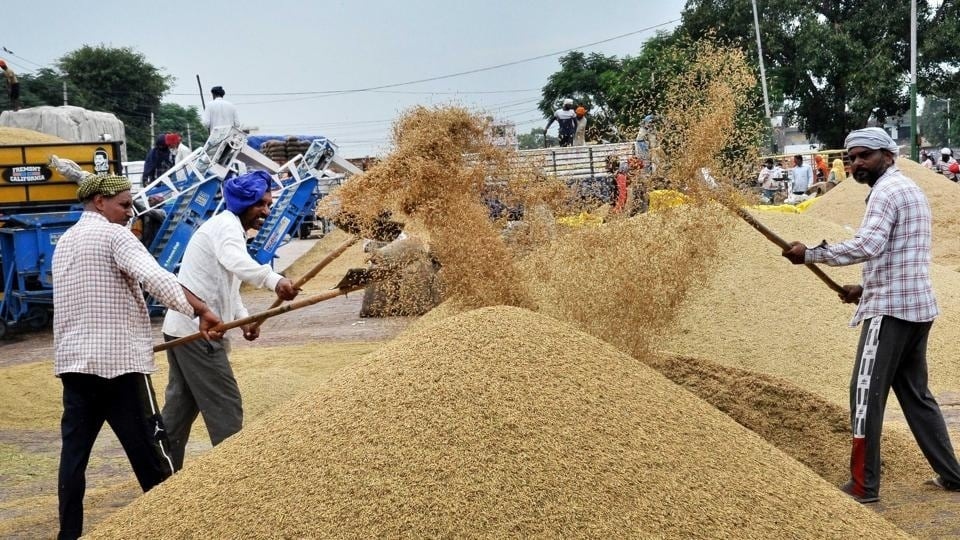
Local levies paid by the Centre to states for procuring grain on behalf of the Food Corporation of India (FCI), the federal grain-handling agency, include mandi or market fees, commission paid to agents known as arthiyas, local cess, and administrative charges.
These charges vary from state to state, and the Centre paid an estimated ₹14,000 crore on account of these charges to states, aside from MSP for wheat and rice, during 2021-22. MSP is a federally determined benchmark rate paid by the Centre to farmers for their produce.
According to the food ministry’s calculations, the Centre could save up to ₹4,000 crore annually by restricting local levies to 2% of the procured quantity.
“The Centre has written to all states. Private sector agencies will be roped in to buy foodgrains for the central buffer stock to improve efficiency and reduce the cost of procurement,” the person said.
Depending on bids, private agencies could undertake procurement, or purchase of grains, at lower incidental costs than what is charged by many states. Punjab levies up to 6% as taxes, which includes 3% each as market fees and rural development cess, besides ₹45 per quintal as commission charges.
The Centre procures grain for its buffer stock and distribution of subsidised cereals to nearly 800 million beneficiaries under the National Food Security Act, 2013.
On Wednesday, the Union Cabinet chaired by Prime Minister Narendra Modi approved the continuation of PM Garib Kalyan Anna Yojana (PMGKAY), a free food scheme launched as a Covid relief measure in March 2020, for three months till December 2022.
Under the scheme, beneficiaries have been getting 5kg of foodgrain free of cost. This ration is in addition to their monthly quota of subsidised foodgrain. The food security act applies to 67% of the country’s population (75% in rural areas and 50% in urban pockets).
“Procurement by private sector companies will bring down costs because they will likely bypass commission agents as they will act as aggregators and also have back-end linkages with warehousing,” said Ashok Agrawal of Comtrade, a commodity trading firm.


