
 E-Paper



Challenges ahead for new CBI director Subodh Kumar Jaiswal
The agency faced its worst credibility crisis in 2018-19 following a rift between then CBI director Alok Kumar Verma and his deputy, special director Rakesh Asthana, when almost all of its decisions and even a routine transfer came under the scrutiny of media and the courts


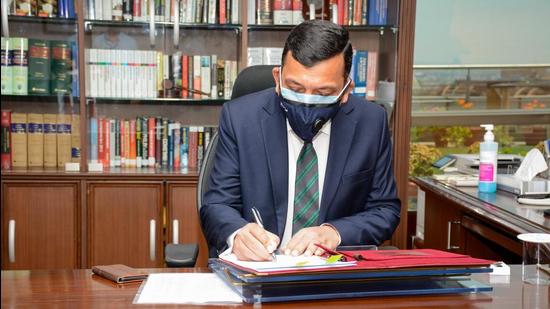
Subodh Kumar Jaiswal, who took over as the Central Bureau of Investigation (CBI)’s 33rd director on Wednesday, has his work cut out. He is expected to take forward his predecessor Rishi Kumar Shukla’s attempt to restore the federal agency’s credibility. The agency faced its worst credibility crisis in 2018-19 following a rift between then CBI director Alok Kumar Verma and his deputy, special director Rakesh Asthana, when almost all of its decisions and even a routine transfer came under the scrutiny of media and the courts.
The agency has also lately faced criticism in cases such as the Narada string operation that are perceived to be political in nature. The CBI arrested West Bengal ministers Firhad Hakim, Subrata Mukherjee, ruling Trinamool Congress (TMC) lawmaker Madan Mitra, and former mayor Sovan Chatterjee last week over bribery charges in the Narda case five years after videos of the sting purportedly showed them taking money in exchange for favours to a fictitious company.
West Bengal chief minister Mamata Banerjee has accused the agency of making the arrests on the Centre’s directions. She staged a sit-in at the CBI’s office in Kolkata in protest against the arrests while hundreds of TMC supporters protested outside.
Watch | How CBI chief Subodh Jaiswal is linked with Scam 1992 sequel on Abdul Telgi
The agency has been at loggerheads with the West Bengal government also over its action in cases including Saradha, Rose Valley chit fund scheme, and the probe into an illegal coal mining case in the state. Family members of Mamata Banerjee’s nephew, Abhishek Banerjee, have been questioned in the coal case.
The Shiv Sena-led Maharashtra government has criticised the CBI for registering a case against former state home minister Anil Deshmukh over alleged extortion and for influencing transfers in the state. The ruling Maha Vikas Aghadi coalition in the state has called the CBI probe against Deshmukh “illegal” and “an attempt to defame” him.
Jaiswal reported to Deshmukh when he was the Maharashtra police chief until December last year. He will now be overall in charge of the probe against Deshmukh.
There has not also been much progress in the CBI’s probe into actor Sushant Singh Rajput’s death in June last year after the case was transferred to the agency when Jaiswal was the Maharashtra police chief. The Mumbai police had concluded that Rajput died by suicide. The Maharashtra government has repeatedly questioned the lack of progress in the case. It has maintained the Centre transferred the case to the CBI in view of elections in Rajput’s native Bihar last year.
Jaiswal, who is seen as an upright officer who does not interfere much in investigations, takes over when eight non-Bharatiya Janata Party-ruled Punjab, Kerala, Maharashtra, Jharkhand, Chhattisgarh, West Bengal, Rajasthan and Mizoram have blocked the CBI from conducting probes in these states without prior permission.
There has also been an environment of mistrust between Indian Police Service (IPS) officers and the cadre officers within the agency. People aware of the matter said the cadre officers feel that the IPS officers “do not work for them and treat CBI as a platform for influence in Delhi”. The cadre officers complain that their career progression has been slow in the agency as they do not get to head the agency’s key branches or units. IPS officers, who lead most investigation units and branches, feel that cadre officers do not want to leave their comfort zones. Jaiswal is said to be strict when it comes to transfers and promotion rules.
Jaiswal was named as the CBI chief on Tuesday after a Prime Minister Narendra Modi-led panel cleared his name on Monday evening. Names of the other two contenders for the top CBI post--Rakesh Asthana and YC Modi--were dropped after Chief Justice of India N V Ramana, a member of the panel, cited a March 2019 ruling of the top court that officers with at least six months left in retirement should only be considered.
Former CBI joint director NR Wassan said the agency has its own procedures and intricacies, which take time for somebody coming from outside to understand. “But being an outsider has its advantages as well as disadvantages. While a person with zero experience in CBI would not have any preconceived notions about any case, he will take time to understand the procedures, intricacies, and human resources of the agency.”
Wassan said Jaiswal comes with a good reputation, but a lot will depend on whether he is a good learner and works with an open mind. “Also, if he is supported by a good team of deputies, he should be able to manage.” Wassan added one of the key challenges for Jaiswal will be how to stop corruption within the CBI. “Most of the officers down below have become corrupt. Identify them and set processes to make sure that this does not happen in future.”
Shukla tried to bridge some gaps in the agency by ordering mass transfers of officers, who had spent more than prescribed time in a particular unit or branch. He allowed personnel to approach him in case of any grievance.


