
 E-Paper



A mystery for decades, Maoist's selfie with wife led security forces to him
Ramachandra Reddy alias Chalapathi was among the 14 Maoists gunned down in a gunbattle with the Chhattisgarh on the state's border with Odisha.

 Prefer HTon Google


Top Maoist commander Ramachandra Reddy alias Chalapathi evaded the arms of law for decades until a selfie with his wife led security forces to him. He was among the 14 Maoists gunned down in a gun battle on the Chhattisgarh-Odisha border.
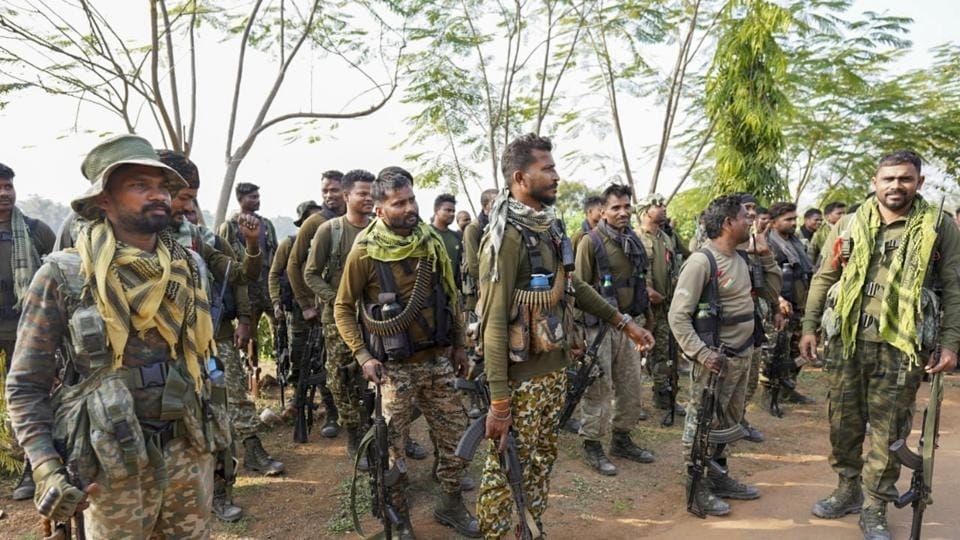
A joint team of security personnel from the District Reserve Guard (DRG) of the Chhattisgarh Police, CoBRA commandos of the Central Reserve Police Force (CRPF) and Special Operation Group (SOG) personnel from the Odisha Police were involved in the operation.
According to a PTI report, Chalapathi operated in the shadows and led the Maoist attack in Odisha's Nayagarh in 2008 in which 13 security personnel were killed.
"Though Ramakrishna, a top Maoist leader who is now dead, masterminded the attack of February 15, 2008, Chalapathi was the person who executed it on the ground. He was also the person who ensured that the Maoists could successfully escape from Nayagarh town after robbing the police armoury," a senior officer involved in anti-Naxal operations, was quoted by PTI as saying.
Hailing from Andhra Pradesh's Chittoor district, Chalapathi ensured that police reinforcements could not reach Nayagarh while the attack on the armoury was underway. The police official said that the Maoists blocked all roads leading to the town with massive tree trunks.
Chalapathi was mainly active in Chhattisgarh and Odisha, officials said. Over the last few years, he had been staying in Darabha in Chhattishgarh's Bastar district. In his mid-60s, Chalapathi couldn't travel much due to problems with his knees.
Chalapathi, who joined the banned People's War Group (PWG), was an expert in military tactics and guerrilla warfare. He did not go to school, but he was a voracious reader, fluent in Telugu, Hindi, English and Odia.
After the CPI(Maoist) was formed in 2004 with the merger of multiple underground Communist groups, including PWG, he started rising through the ranks, and became a member of the outfit's central committee, they said.
Chalapathi had set up Maoist operations in Odisha's backward Kandhamal and Kalahandi districts, expanding the network. However, his attempt to loot another police armoury in Kandhamal district was foiled by the police in 2011, officials said.
Chalapathi's marriage to Aruna
According to the PTI report, Chalapathi got close to Aruna alias Chaitanya Venkat Ravi, a 'deputy commander' of the Andhra Odisha Border Special Zonal Committee (AOBSZC). Subsequently, they got married.
He was a mystery for the security agencies but a selfie with Aruna led to his identification and a bounty of ₹1 crore on his head. This selfie of the couple was found in an abandoned smartphone that was recovered in May 2016 following a gunfight between Maoists and security forces in Andhra Pradesh, officials said.
This also restricted his movement, and forced him to travel with a dozen cadres guarding him.
(With PTI inputs)


