
 E-Paper



Chhattisgarh govt working on new surrender policy for Maoists
The policy, which is likely to be announced in two months, will also ensure a financial assistance of ₹10,000 per month for three years


The Chhattisgarh government is working on a new surrender policy for Maoists with a focus on rehabilitation camps in Left Wing Extremism (LWE)-affected areas and skill development training for those who wish to return to the mainstream, officials familiar with the details said on Thursday.
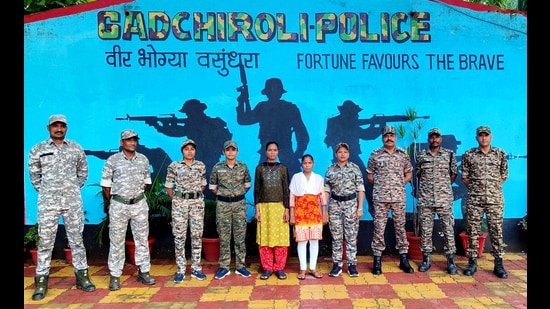
The policy, which is likely to be announced in two months, will also ensure a financial assistance of ₹10,000 per month for three years, and will be formulated on lines of the guidelines issued by the Centre in 2022 for all Maoist-affected areas in the country, the officials added.
During his visit to the eastern state last month, Union home minister Amit Shah had also said that the Vishnu Deo Sai-led government is working on a new surrender policy for the Maoists. He said the fight against the rebels is in its final phase and India will be free of them by March 2026.
“The new surrender policy seeks to establish a rehabilitation camp in Maoist-affected areas where beneficiaries will receive vocational and skill development training provided by the district administration. If they secure employment earlier, they can complete their training at that point,” a state government official said, seeking anonymity.
“Additionally, there is a provision to offer a financial aid of ₹10,000 per month for three years. Although similar efforts have been made previously, this new place will focus on a more structured and rigorous rehabilitation process,” the official added.
The official quoted above said skill development centres forcommon tribals of Bastar already exist under a centralscheme to provide training to blacksmiths and barbers.
A second government official said the new policy will also focus on an immediate grant of ₹5 lakh for high-ranked Maoist cadres like state committee members, regional committee members, central committee members, politburo members and ₹2.5 lakh for middle or lower ranked cadres.
“The immediate grantidentified by a state screening-cum-rehabilitation committee shall be kept in a bank in the name of the surrendered Maoist as a fixed deposit, which may be withdrawn after three years, subject to good behavior certified by authorities,” the official said, also speaking on condition of anonymity.
The screening-cum-rehabilitation committee will comprise an additional director general-level officer and a representative each from the state home department, state police and Central Armed Police Forces.
A third official said the new policy will be on the lines of the guidelines issued by the ministry of home affairs (MHA) in 2022 for all Maoist-affected areas in the country.
“The MHA guidelines clearly stated that government of India will provide 60% of reimbursement for the expenditures incurred by the states on rehabilitation of surrendered Maoists under the Security Related Expenditure (SRE) Scheme subject to a ceiling of ₹5 lakh for higher ranked LWE cadres and ₹2.5 lakh for lower rank LWE cadre. In addition, the monthly stipend of ₹10,000 for a maximum period of 36 months to be paid to the surrendered Maoist while undergoing training in the rehabilitation camp, will also be reimbursed by the Central Government under the SRE Scheme,” the guidelines said.
The guidelines added that the expenditure incurred by states on this account subject to the ceiling limits will be reimbursed on a sharing basis with funding pattern of 60 (Centre) :40 (State) as per the ‘Security Related Expenditure (SRE)’.
“The final draft of the new surrender policy is almost finalised,” the third official said.
-kW0H-U20214218012MgB-250x250%40HT-Web.jpg)


