
 E-Paper



The most dangerous mission an Indian official has undertaken since 1947
Forget Kashmir or the Northeast, this may be the most dangerous mission an Indian government official has undertaken.


Forget Kashmir or the Northeast, this may be the most dangerous mission an Indian government official has undertaken.
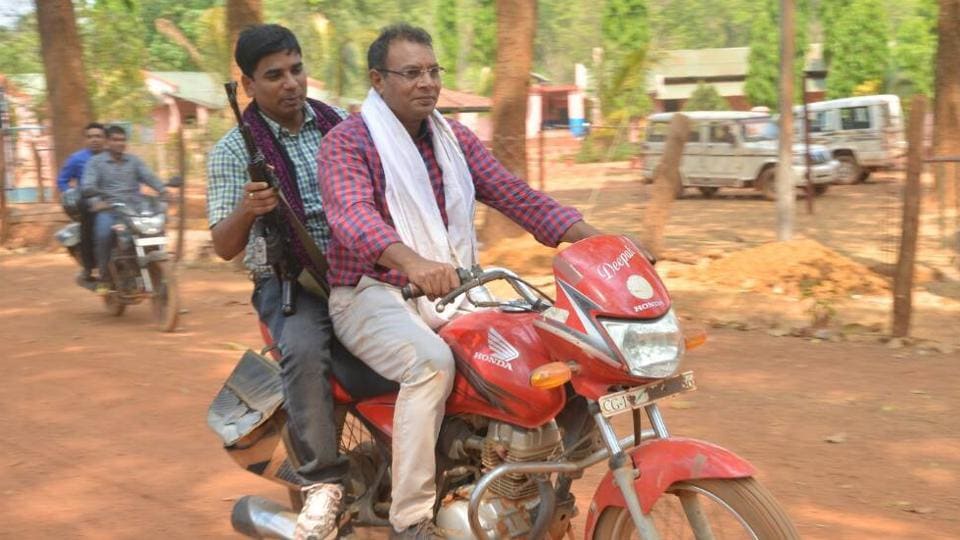
For the first time since Independence, scores of state government officials are being sent to collect data and talk to local population in the heart of India’s Maoist-hit territory in Chhattisgarh’s Abujhmad.
The thickly forested region where government presence is sparse and often in name is also overrun by landmines and booby traps, creating a situation former prime minister Manmohan Singh described as India’s gravest internal security threat.
Revenue department officials are now taking cycles and motorbikes down dirt tracks, often ringed by dozens of security personnel, to survey land, record land holdings and create maps.
The exercise is aimed at helping the government quickly build roads and other facilities to push back Maoist rebels, and bring in a wave of development to loosen the insurgents’ hold on local population.
“The aerial survey of the region was done in recent years but ground survey is being done for the first time since Independence,” Narayanpur district magistrate TS Sonwani said. The process began last week and findings of the aerial survey would be ‘corroborated’ during the field survey for deciding ownership and boundaries of a land, he added.
Spread over about 4,000 square kilometres, the heavily forested Abujhmad is considered the citadel of Maoist insurgents, who are said to run camps and training facilities in the cover of the inhospitable terrain. Government presence is not visible for miles, and the last sign of state administration ends a mere 15 kilometres from district headquarters of Narayanpur.
This is the region the government wants to penetrate in its efforts to wipe out Maoists after back-to-back attacks on paramilitary personnel. In March, 12 men were killed in an ambush. Last week, a near-identical attack killed 25 Central Reserve Police Force personnel. The government has vowed revenge and last week suspended road construction and transferred all personnel to anti-Maoist operations.
The government knows the security challenges. Hours before the survey began, a prominent local leader helping security forces was found murdered. The exercise has hovered around the fringes of Abujhmad’s formidable forests that contain 200-plus villages.
But with 200 security personnel assisting a dozen revenue officials and more reinforcements planned, the government is determined to push ahead.
“The idea is complete the mapping process in next few years. This is true that the process is dangerous and will take time,” said the magistrate.
(with agency inputs)
-kW0H-U20214218012MgB-250x250%40HT-Web.jpg)


