
 E-Paper



Chhattisgarh top leaders call on Rahul Gandhi amid friction
The meeting comes at least two months after the Chhattisgarh Congress government passed the two-and-a-half year mark on June 17 and the party in the state is waiting with baited breath for a resolution.

 Prefer HTon Google


Chhattisgarh chief minister Bhupesh Baghel and health minister TS Singh Deo met Congress leader Rahul Gandhi in Delhi on Tuesday, hoping to find a closure to friction that has existed between the two since late 2018, when they are believed to have agreed to a power-sharing agreement — but the meeting remained inconclusive.
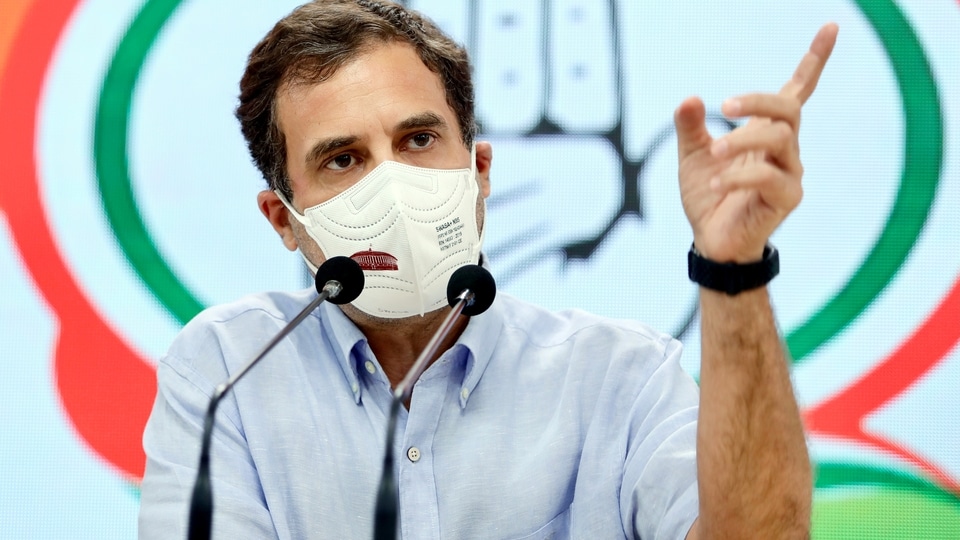
The meeting comes at least two months after the Chhattisgarh Congress government passed the two-and-a-half year mark on June 17 and the party in the state is waiting with baited breath for a resolution.
Senior Congress functionaries said while the two Chhattisgarh leaders, along with Congress general secretary incharge of the state PL Punia, and general secretary KC Venugopal, spent over three hours at Gandhi’s residence, no sense of finality was reached, and more meetings are in the offing in the coming days.
In December 2018, in the aftermath of a dominant Congress performance that saw the party win 68 of 90 seats in the state, four state leaders, Baghel, current home minister Tamradhwaj Sahu, current speaker Charan Das Mahant and Singh Deo flew to Delhi, all eyeing the chief minister’s post. As Mahant settled for speaker, friction between Baghel and Singh Deo meant that Sahu first emerged the front-runner. Worried that a third leader would take the top position, Baghel and Singh Deo, along with Punia and Gandhi, are believed to have hammered out a power-sharing arrangement.
On Tuesday, Singh Deo and Baghel, who arrived in Delhi for the meeting separately, reached Gandhi’s Tughlaq Lane residence just short of 11am. Functionaries in the know said both Punia and Venugopal were present as well, and that they and Gandhi met Baghel and Singh Deo separately.
“Singh Deo’s meeting with Rahul Gandhi was shorter in length. The meeting with Baghel was longer and lasted over an hour. Rahul then left for a meeting with Sonia Gandhi. Venugopal and Punia then conveyed to the leaders that the matter would be discussed further with the implication that they must stay discreet until a decision is made,” a senior Congress leader said on condition of anonymity.
Emerging from the meeting, Punia, Baghel and Singh Deo maintained the public stance that nothing political was discussed at the meeting, and that it was a review of policies implemented by the state government. Functionaries close to Baghel and Singh Deo, however, admitted that both leaders, waiting for word of what could happen, will stay on in Delhi for some time.
While Baghel and Singh Deo were once considered to be close friends, and even called “Jai-Veeru”, after the protagonists of Hindi blockbuster Sholay, distance between the two began to grow in the run up to the assembly polls in 2018.
“Every political party is made of humans and it is natural to have clashes. What Congress is facing as a party in Madhya Pradesh, Rajasthan and now in Chhattisgarh indicates that an amicable political formula for power sharing is missing. They let CM become a super power and then things explode,” said Sudeip Shrivastava, political commentator based in Chhattisgarh.
-kW0H-U20214218012MgB-250x250%40HT-Web.jpg)


