
 E-Paper



Children most vulnerable to sexual crimes: Attorney General tells top court
In March 2020, the Government had informed the Parliament that till December 2019, 2.44 lakh cases were pending before courts of rape and POCSO offences across the country. Attorney General KK Venugopal quoted this figure in Court and described it as a “sad state of affairs”.


Attorney General KK Venugopal told the Supreme Court on Wednesday that the controversial decision of the Bombay High Court requiring skin-to-skin contact of the accused with the child victim to establish sexual assault under POCSO Act showed a lack of sensitivity to the fact that children are most vulnerable to sexual crimes as they are unable to defend themselves.
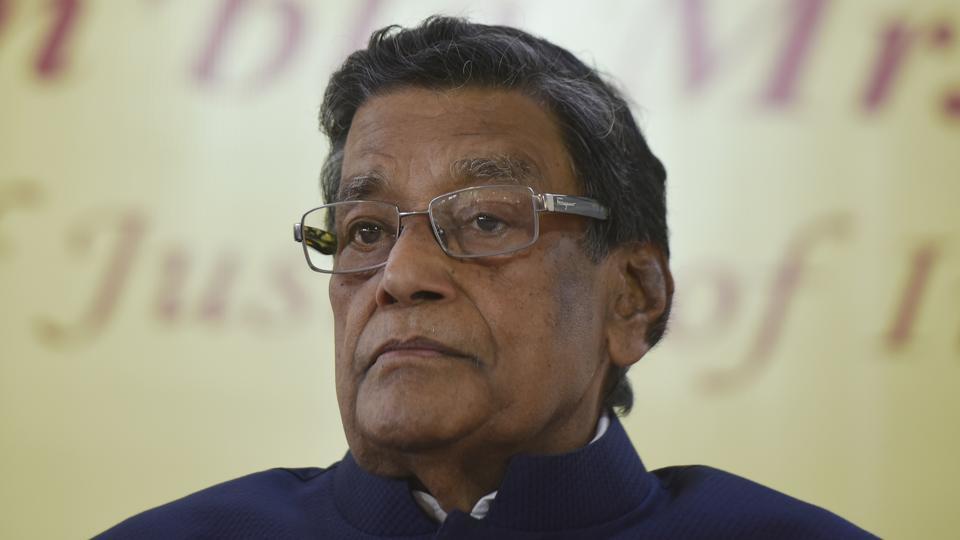
Venugopal, while making submissions on his petition challenging the January 19 Bombay High Court decision, said, “The Protection of Children from Sexual Offences (POCSO) Act 2012 is a special law to protect children against sexual offences as they are more vulnerable. The judge lacked the sensitivity to appreciate that POCSO Act is meant to prevent sexual offences against children who are unable to defend themselves.”
Stating that the judgment under challenge created an extraordinary situation leading to a wrong precedent, the top law officer said, “The judge has misinterpreted Section 7 of POCSO (dealing with sexual assault) by implying skin-to-skin contact as an essential ingredient to make out an offence. It will have a devastating effect on pending cases before subordinate courts.”
Section 7 of POCSO Act says, “Whoever, with sexual intent touches the vagina, penis, anus or breast of the child or makes the child touch the vagina, penis, anus or breast of such person or any other person or does any other act with sexual intent which involves physical contact without penetration is said to commit sexual assault.” This offence carries a minimum punishment of three years extending up to five years.
The HC judgment had acquitted a man for groping a 12-year-old through her clothing. Since there was no actual physical contact, i.e. skin to skin, the man was let off under the stringent POCSO Act. Instead, he was sentenced to one year imprisonment for outraging modesty under Section 354 of the Indian Penal Code (IPC).
AG further pointed out flaws in the judgment by saying, “The judge makes a reference to Section 354 which is an offence of assault to outrage modesty of a woman. Here, the victim is a child.” He added that “children are the most vulnerable to sexual assault” and it is for this purpose the Parliament enacted the 2012 Act.
In March 2020, the Government had informed the Parliament that till December 2019, 2.44 lakh cases were pending before courts of rape and POCSO offences across the country. AG quoted this figure in Court and described it as a “sad state of affairs”.
Besides AG, the National Commission for Women (NCW) and the Maharashtra government have also appealed against the January 19 HC order. Based on the same logic of physical contact being a must to prove offences punishable under Section 7 of POCSO, the same HC judge passed another order on January 15 acquitting a man who held the hand of a minor after unzipping his pant. This order too was challenged by the state government and is pending consideration before the Court.
The bench of Justices UU Lalit, S Ravindra Bhat and Bela M Trivedi concluded hearing the arguments by AG and NCW represented by senior advocate Geeta Luthra. The Court said, “Whether skin to skin contact is a requirement under Section 7 is the limited question that we will deal with.” The bench has appointed senior advocate Sidharth Dave to assist in the matter as amicus curiae. Dave told the Court that for proving an offence under Section 7, sexual intent is a must.
On an earlier occasion, the AG had submitted that if one was to go by the logic adopted in the HC judgment, then, if a person, using surgical glove feels the entire body of a woman, including her private parts, will escape punishment under this provision.
Dave supported this argument and said that the HC reasoning will be open to misuse by accused facing trial under other provisions of POCSO Act. The Court decided to continue the hearing of the case on Thursday.


