
 E-Paper



Child’s Aadhaar not mandatory for anganwadi benefits, say WCD’s Poshan 2 guidelines
Anganwadi services scheme under Poshan 2 is open to all eligible beneficiaries on the condition that the beneficiary is registered at the nearest anganwadi centre


NEW DELHI: A child’s Aadhaar card is not mandatory for availing benefits under the anganwadi services and it can be accessed using the mother’s Aadhaar card, according to the guidelines for the new ‘Saksham Anganwadi and Poshan 2 scheme’ released on Tuesday.
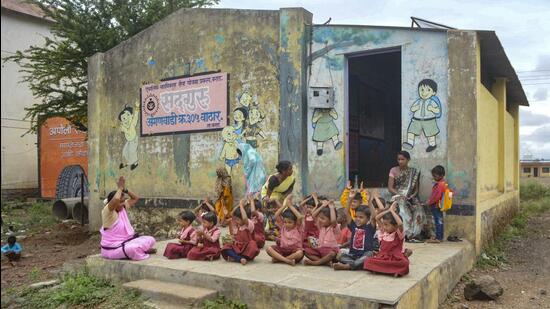
The ‘Saksham Anganwadi and Poshan 2 scheme’ is an integrated nutrition support programme approved by the government last year for five years. The scheme seeks to address the challenges of malnutrition in children, adolescent girls, pregnant women and lactating mothers. It integrates anganwadi services scheme, poshan abhiyan and nutrition scheme for adolescent girls.
According to the guidelines issued by the department of women and child welfare, the anganwadi services scheme under Poshan.2 is open to all eligible beneficiaries on demand on the condition that the beneficiary is registered at the nearest anganwadi centre.
“This scheme is open to all eligible beneficiaries on demand, irrespective of caste, religion and income criteria. The only pre-condition is that the beneficiary has to be registered at the nearest anganwadi centre with Aadhaar identification. A child’s Aadhaar card shall not be mandatory for availing the benefits under the Scheme. The benefits under the scheme can be accessed using the mother’s Aadhaar card,” the guidelines said.
Under Poshan 2, the scheme for adolescent girls has been revised and the targeted beneficiaries have been revised to adolescent girls in the age group of 14 to 18 years in aspirational districts of states including Assam and North Eastern States instead of out-of-school girls in the age group of 11-14 years was mandated earlier. However, all beneficiaries will require an Aadhaar number to avail benefits under the scheme.
The guidelines focus on providing supplementary nutrition to the beneficiaries and emphasised locally grown food being served to them under the anganwadi scheme. “Local dietary inputs and fresh produce (green vegetables, fruits, medicinal plants and herbs), fortified rice and millets shall be actively encouraged in the prescription of meals to be served to different categories of beneficiaries under the scheme to promote health, wellness and immunity and to manage anaemia,” it said.
“Millets should be mandatorily supplied at least once a week and suitably integrated in take-home ration and hot-cooked meal in a palatable form,” it added.
The guidelines make it mandatory to conduct a social audit and third-party evaluation of the scheme. Social audit can be undertaken by stakeholders including poshan panchayats, mothers’ groups or direct feedback from those who have availed the benefits.
The scheme also integrates the AYUSH (Ayurveda Unani Siddha Homeopathy) system for wellness and nourishment. “The science of AYUSH is a system that builds and promotes health and wellness and can address the requirements of nutrition by tapping into the country’s indigenous traditional practices,” the guidelines said.
Under the guidelines, the district magistrate will be the nodal point in the district for monitoring nutritional and quantity standards. Chief Secretaries will coordinate the activities of various departments through a state-level steering committee to ensure effective convergence between various schemes/programs and review the progress on a


