E-Paper



China can’t afford double standards in fight against terror: S Jaishankar
External affairs minister S Jaishankar is currently on a week-long visit to Belgium and France for meetings with the top leadership of the two countries and the European Union

 Prefer HTon Google


New Delhi: China cannot afford “ambiguity or double standards” in combating terror in the context of its close relation with Pakistan because terrorism is a problem that affects all countries, external affairs minister S Jaishankar said on Tuesday.
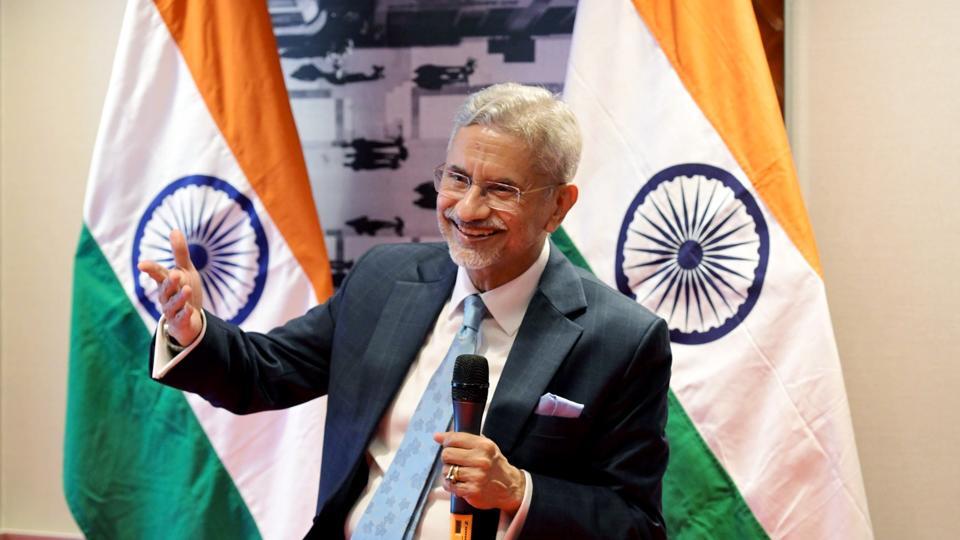
Jaishankar made it clear in an interview with French newspaper Le Figaro that India will hunt down terrorists who attack India “wherever they are, including in Pakistan”. India’s military strikes on terrorist infrastructure in Pakistan last month were about terrorism, and “not a dispute with Pakistan over Kashmir”.
He responded to a question on China’s support for Pakistan by saying: “They have had close ties for decades. But on an issue like terrorism, you cannot afford ambiguity or double standards. In the end, it’s a problem that concerns all of us.”
Jaishankar is currently on a week-long visit to Belgium and France for meetings with the top leadership of the two countries and the European Union (EU). This is his second visit to Europe since last month’s clashes with Pakistan that ended with an understanding on May 10 on halting military actions.
The visit is also an opportunity for India to brief key interlocutors on New Delhi’s new approach to fighting cross-border terrorism. Numerous reports have said China provided military and other support to Pakistan during the recent clashes.
He responded to a question on continued military actions between India and Pakistan by saying: “This is about terrorism. It has become an India-Pakistan issue because Pakistan harbours and supports terrorists (from Lashkar-e-Taiba). The conflict is between India and terrorism, not with a specific country.”
Noting that the most recent attack occurred at Pahalgam in Jammu and Kashmir on April 22, Jaishankar added: “This is not a dispute with Pakistan over Kashmir - we simply have zero tolerance for terrorism. And if terrorists attack India, we will hunt them down wherever they are, including in Pakistan. We have been very clear: As long as cross-border terrorism continues, we will retaliate and take all measures necessary for our self-defence.”
Jaishankar said there was “widespread international understanding” of India’s response to the Pahalgam attack, and the UN Security Council had called for accountability and justice. “That is exactly what we pursued on May 7 by striking terrorist bases,” he said, referring to India’s military strikes on terrorist infrastructure.
Asked whether China’s behaviour in the Indo-Pacific is a threat, Jaishankar said both India and China are rising quickly and “finding balance is a complex process”. He added, “Moreover, we have an unresolved border dispute in the Himalayas, which makes it a crucial parameter for our national security. And since our two countries wield large influence in the Indo-Pacific region, it’s not just a bilateral matter.”
India-China ties went through a difficult period since the 2020 military clash on the Line of Actual Control (LAC) and many exchanges were suspended. “The key question for us is: How do we ensure peace and stability in the border areas? Without that, everything else is affected,” he said.
“I believe both sides think relations can improve step by step. We’ve discussed some measures, and others are under consideration - like the resumption of direct flights, suspended since Covid.”
Jaishankar responded to a question about the US administration’s threat to impose 26% tariffs on India by saying that US President Donald Trump and Prime Minister Narendra Modi had agreed at their meeting in February to expand access to each other’s markets. “We are hopeful of reaching an agreement before the tariff suspension ends on July 9,” he said.
India’s ties with the US have strengthened under five American presidents over the past 25 years and “structural forces” - economic, technological, educational, scientific, strategic, military - are driving the relationship, he said.
India has taken note of Trump’s firm commitment to advancing the Quad. “Regarding the rest of the world, we see the US acting in line with its immediate self-interest. To be honest, I would do the same with them,” Jaishankar said.
Asked whether he wished for reconciliation between Trump and Russian President Vladimir Putin, Jaishankar said: “It’s not just about two men. We’ve always believed that an urgent solution to the war in Ukraine must be found - and that it won’t come from the battlefield. There must be direct negotiation between the parties, the sooner the better.”
India won’t take sides or prescribe the outcome, he said. “We’ve helped both Ukraine and Russia as much as we could. My prime minister has been to Moscow and also to Kyiv…Large parts of the world - from Africa to Latin America to the Pacific Islands - feel their economies and stability have been negatively affected by this conflict. The world wants it to stop.”