
 E-Paper



China incursions into Indian territory rise, but numbers lower than in 2014
The number has increased to 397 this year from 260 in 2016 but it was almost the same in 2015 (391) and 2013 (401), and much lower than in 2014 (507).


The number of recorded incursions by China’s army into Indian territory in 2017 rose to 397 from 260 in
2016, but the number was almost the same in 2015 (391) and 2013 (401), and much lower than in 2014 (507), indicating that last year isn’t what statisticians would call the outlier, but rather a normal year (in terms of Chinese incursions) when seen over a five-year period.
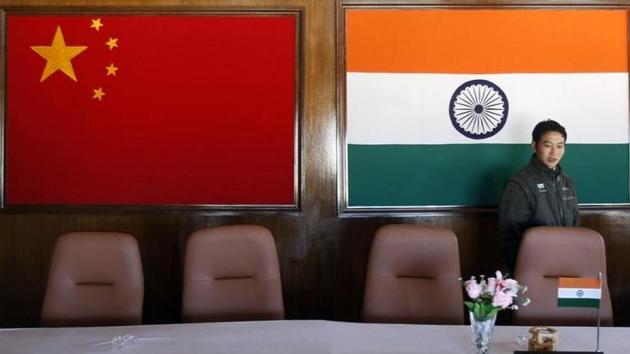
India and China share an uneasy relationship across a 3,488-kilometre Line of Actual Control (LAC) and the two countries were locked in a 73-day-long standoff in Doklam in Bhutan, near the tri-junction of the three countries.
The standoff was resolved in August.
The data on incursions, accessed from security agencies, show that they are almost exclusively concentrated in Pangong Tso, Chumar, Samar Lungpa, Kongka La, Spanggur Gap and Mount Sajum in eastern Ladakh sector, Kaurik in Himachal Pradesh and the so-called finger area in Sikkim.
When India and China exchanged middle sector maps in March 2002, differences in how the two countries saw the LAC was evident in four areas—Kaurik, Shipki La, Pulam Sumda and Barahoti plains. Maps on the western sector were not exchanged (although they were shown).
A comparison of the Chinese and Indian maps showed differences (in how the two countries define the LAC) in 12 areas of the Ladakh sector: Samar Lungpa, Tri Heights and Depsang Bulge, Kongka La, Spanggur Gap, Mount Sajum, Dumchele, Demchok and Chumar.
The Chinese claim 70,000-90,000 kilometers of the eastern sector and maps on the sector were neither shown nor exchanged. However, India continues to claim China is in unlawful possession of Namka Chu, Sumdorong Chu and Longju.
The India-China expert level group identified eight areas in 1995 as mutually disputed: Trig Heights and Dumchele in Ladakh, Barahoti in Uttarakhand, Namka Chu, Somdorong chu, Yangste, Asaphi La and Longju in Arunachal Pradesh. Although the Chinese army conveyed its unhappiness over events leading to the Doklam stand-off, Beijing’s top diplomatic interlocutors have indicated that the resolution of boundary issue is not a top priority for China as it has other pressing issues on the table, according to people familiar with the matter in South Block.
Even during the Special Representative dialogue between the two sides on the boundary issue on December 21, Chinese interlocutor Yang Jiechi told his Indian counterpart Ajit Doval that Beijing is for peace and tranquility on the border and against any aggravation.


