
 E-Paper



China may soften stand on India’s push for Jaish chief Azhar’s terrorist tag
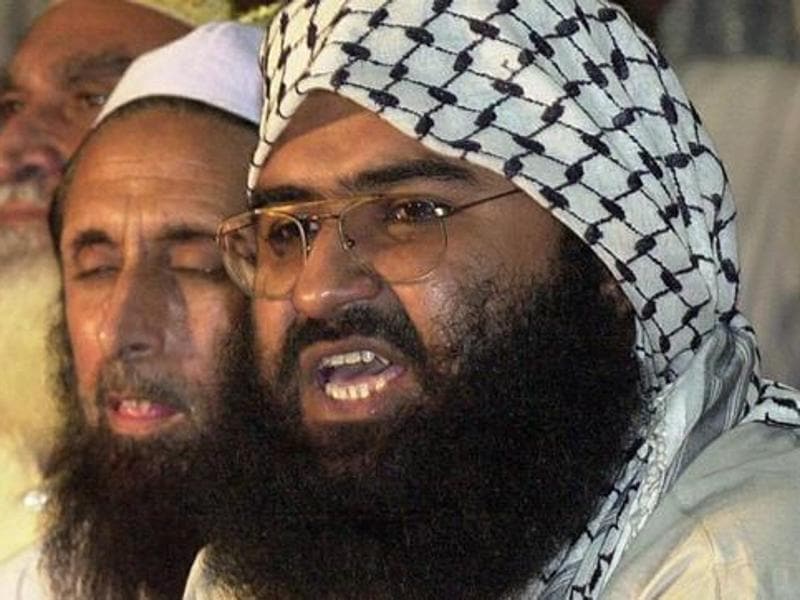
China could drop its opposition to India’s efforts to get Jaish-e-Mohammad chief Masood Azhar designated a global terrorist after a meeting between their top security officials recorded “forward movement” on the matter.


China could drop its opposition to India’s efforts to get Jaish-e-Mohammad chief Masood Azhar designated a global terrorist after a meeting between their top security officials recorded “forward movement” on the matter.
The outcome was from a “positive”, five-hour-long meeting national security adviser Ajit Doval had with powerful Chinese State Councilor Yang Jiechi a day earlier, government sources said on Saturday.
In April, China blocked New Delhi’s appeal to the United Nations to label Pakistan-based Azhar a terrorist, putting a “technical hold” on the proposal. Beijing extended that decision last month, once again highlighting its closeness with “all-weather ally” Pakistan.
China is the only one in a 15-member UN panel to block India’s appeal on the chief of Jaish, which was blamed for a militant attack on an Indian army camp in Uri, which left 19 soldiers dead in September.
The government sources said China might allow its “technical hold” on the proposal to proscribe Azhar to lapse when the panel dealing with the matter meets in January. They said Beijing too had spoken to Islamabad on Azhar’s status.
China’s possible change of heart is being attributed to the fact that there is growing realisation that Beijing stood to get isolated on the key UN panel as every other nation supported India’s proposal.
There was, however, no movement in the Doval-Yang meeting on Chinese objections to India’s entry into the Nuclear Suppliers’ Group (NSG).
China has held back on supporting India’s NSG bid, saying it would wait for a larger consensus on admitting any country to the group that hasn’t signed the non-proliferation treaty.
Doval and Yang also discussed other outstanding bilateral issues. They did not discuss their vexed border issue, which is being dealt with in a dialogue of Special Representatives.
Doval and Yang report directly to the head of their respective government – Prime Minister Narendra Modi and President Xi Jinping.
JAPAN NUCLEAR DEAL NEXT WEEK
On Saturday, Doval met his Japanese counterpart Shotaro Yachi, focussing on closing a crucial nuclear agreement that will allow India to build nuclear plants in Kowada in Andhra Pradesh and Mithi Virdi in Gujarat with the help of Japanese technology.
The final deal will be signed when Prime Minister Modi visits Japan on November 11.
Japan, the only country to have suffered a nuclear attack, has been demanding additional non-proliferation guarantees from India, which has a nuclear weapons programme, before exporting nuclear reactors.
A final deal with Japan will benefit U.S. firms. India has already given land for nuclear plants to GE-Hitachi - which is an alliance between the U.S. and Japanese firms - and to Toshiba’s Westinghouse Electric Company.
The 6600 MW Kowada plant will be built by NPCIL and Toshiba-Westinghouse while the 9,000 MW Gujarat plant is being set up by GE-Hitachi.
The two countries, however, are yet to be able to close New Delhi’s plans to spend more than a $1 billion on buying ShinMaywa US-2 amphibious aircraft from Tokyo. These sea rescue aircraft costs $120 million apiece.


