
 E-Paper



Climate crisis fund, petrol tax cut part of Tamil Nadu budget
After releasing a White Paper on Monday to show the dire straits of the state’s finances, Tamil Nadu finance minister Palanivel Thiaga Rajan presented a revenue-deficit budget.

 Prefer HTon Google


The Dravida Munnetra Kazhagam (DMK)-led Tamil Nadu government on Friday presented its maiden state budget, announcing a reduction of ₹3 per litre in petrol prices and focusing on school education and climate crisis, even as the Opposition All India Anna Dravida Munnetra Kazhagam (AIADMK) staged a walkout from the legislative assembly.
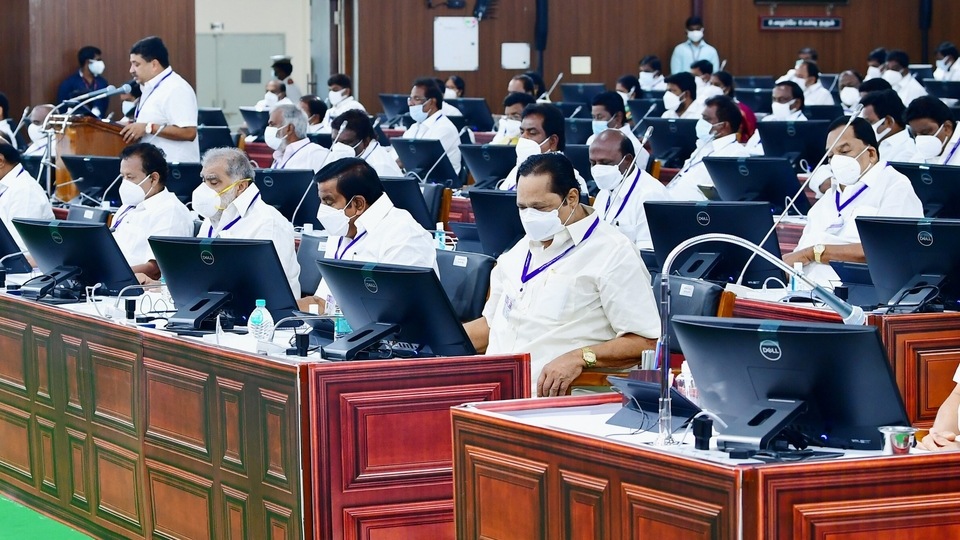
After releasing a White Paper on Monday to show the dire straits of the state’s finances, Tamil Nadu finance minister Palanivel Thiaga Rajan presented a revenue-deficit budget.
“This budget lays the foundation for our plans to restore TN’s finances, grow the economy and improve people’s lives. We will stem the decline this year,” Rajan tweeted.
One of the highlights of the budget was the announcement of cut in petrol prices by ₹3 a litre, which aims to benefit the working class in the state. “The price cut will come into effect on August 14,” said finance secretary S Krishnan at a press conference.
In its election manifesto, the DMK had promised to cut the state tax on petrol by ₹5 per litre. However, it reiterated in the budget that the onus of providing relief to consumers also lies with the Union government.

Rajan also announced that Tamil Nadu Climate Change Mission will be launched to focus on climate change adaptation and mitigation activities with a total outlay of ₹500 crore.
The DMK government in its budget also announced establishing an expert advisory council to develop a ‘Federal Fiscal Model’ on legislation involving revenue and taxation (including GST). “Nowhere is this dilution of the spirit of federalism more apparent than in the taxation of petrol and diesel at the pump. The overall Union levies on petrol were increased from ₹10.39 per litre in May 2014 to ₹32.90 per litre today,” Rajan said.
The government also announced setting up a high-level committee of educationists and experts to formulate a State Education Policy for Tamil Nadu. The DMK has been critical of the Centre’s new National Education Policy. The highest allocation of ₹32,599.5 crore in this budget went to the department of school education with an aim to bring Tamil Nadu among the top three states in terms of learning outcomes in the country. The school education department had seen the highest ₹34,181 crore allocation in 2020-21 as well.
The minister said that maternity leave for women employed in the public sector will be increased from 9 to 12 months.
Experts have welcomed the announcements made in the budget but added that the roadmap for how revenue would be improved was missing in the minister’s budget speech.
“The budget has set an ambitious target of lowering the revenue deficit to ₹58,692 crore, which is lower than the figure in 2019-20 and less than 60% of the revised revenue deficit estimate for 2020-21. It is unclear for now, without knowing the details on the revenue side how this would be achieved,” said Vidya Mahambare, professor of economics, Great Lakes Institute of Management, Chennai.
The finance minister said that the most critical reform the government has to undertake is to increase the tax GSDP (Gross State Domestic Product) ratio of Tamil Nadu. The White Paper found significant deterioration of the tax GSDP ratio from 8.4% in 2006-07 to 5.46% in the current year. This represents a loss of about Rs.65,000 crore worth of revenue annually.
“That’s a huge loss,” says A Kalairasan, assistant professor, Madras Institute of Development Studies and a Fulbright-Nehru scholar at the Watson Institute for International and Public Affairs, Brown University. “The state’s capacity (ratio of tax GSDP is one method to measure it) to intervene in the socio-economic condition of people's lives has been continuously declining. This is alarming in the sense that for any major reform to take place revenue has to come in.” With the minister indicating that major reforms will be brought in during the full budget next year, Kalaiarasan says that the good thing about this budget is the White Paper being tabled ahead so the two can be studied in comparison. “Like how we get the economic survey before the union budget is presented, we now have more clarity and transparency on the status of the state’s economy which we can compare with the government's roadmap,” he says.


