
 E-Paper



Collegium recommends elevation of K’taka HC chief justice as SC judge
In its resolution released on the Supreme Court website on Friday evening, the collegium took note of the vacancy that arose on the retirement of justice Sanjay Kishan Kaul on December 25


The Supreme Court collegium on Friday recommended the elevation of Karnataka high court chief justice PB Varale as a judge in the top court, underlining that he is a competent judge with unimpeachable conduct and integrity and has throughout maintained high standard of professional ethics.
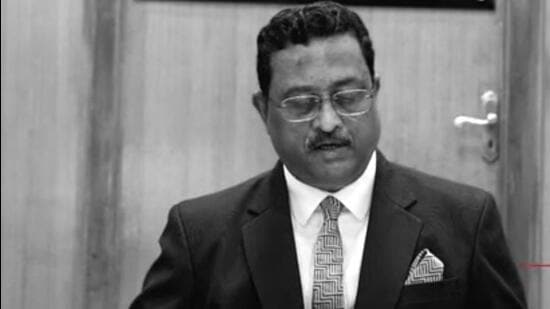
Headed by Chief Justice of India Dhananjaya Y Chandrachud, the collegium, in its resolution, noted that justice Varale has acquired considerable experience as a judge of the Bombay high court where he was appointed in 2008, and as the chief justice of the Karnataka high court.
“While recommending his name, the collegium has taken into consideration the fact that among the high court judges, he is the senior-most Judge belonging to a scheduled caste and the only chief justice belonging to a scheduled caste among the chief justices of high courts across the country,” emphasised the collegium, which also comprised justices Sanjiv Khanna, Bhushan R Gavai, Surya Kant and Aniruddha Bose.
If justice Varale’s elevation is cleared by the Union government, the Supreme Court will for the first time have three judges from the Scheduled Caste category.
At present, justices Gavai and CT Ravikumar are from the Scheduled Caste community. Justice Gavai is in line to become the CJI in May 2025. After justice KG Balakrishnan, justice Gavai will be the second Dalit to become the CJI. Following the retirement of justice Khanna on May 3, 2025, he will remain in that post till November 23, 2025.
In its resolution released on the Supreme Court website on Friday evening, the collegium took note of the vacancy that arose on the retirement of justice Sanjay Kishan Kaul on December 25.
“The Supreme Court of India has operated almost throughout last year with full strength of thirty-four judges and, therefore, could achieve the distinction of recording an unprecedented rate of disposal by disposing of 52,191 cases in 2023. Bearing in mind that the workload of judges has increased considerably, it has become necessary to ensure that the court always has full working judge-strength. The collegium has, therefore, decided to fill up the sole existing vacancy by recommending a name,” stated the resolution.
After carefully evaluating the merit, integrity and competence of eligible chief justices and senior puisne judges of the high courts and also accommodating a plurality of considerations, the resolution said, the collegium finds justice Varale to be a deserving and suitable candidate in all respects for being appointed as a judge of the Supreme Court of India.
Addressing an event in the national capital in September last year, CJI Chandrachud had stressed on institutionalising the system of appointing judges by laying down objective parameters, as he added that the Supreme Court collegium has collected data of the top 50 judges in the country who would be considered for future appointments in the top court. One of the important effects of institutionalising courts, the CJI added, is that it enhances transparency and accountability.
In April 2023, justice Chandrachud had said that there cannot be any justification for the collegium to keep even a single vacancy unfilled in the Supreme Court, as he announced involving the Centre of Research and Planning (CRP), the in-house think tank of the top court, in the process of preparing a list of probables for future appointments in the top court. CRP, he announced, was tasked to assist the permanent secretariat in the top court, which deals with various aspects of judicial appointments, including collection of information, preparation of records and putting them up before the collegium.


