
 E-Paper



Coming soon: Swachh Bharat to do a toilet count
Alok Kumar, health adviser at the Niti Aayog, said that survey is in line with central government’s campaign to bring an end to open defecation under the flagship Swachh Bharat Abhiyaan.


Union ministries of women and child development (WCD) and human resources development (HRD) along with government think tank Niti Aayog will soon launch a nation-wide survey to find out how many schools and anganwadis [rural child care centres] have access to clean drinking water and toilets, officials said.
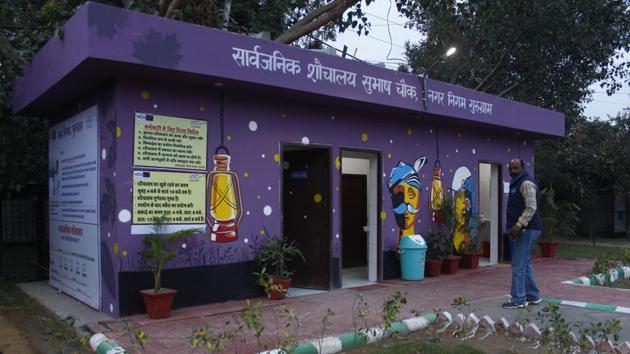
The exercise is part of an effort to increase nutrition levels among children, to increase their attendance in schools and to reduce open defecation, the officials said, adding there is a link between increased nutrition level and better sanitation facilities. They stressed that clean toilets and access to safe drinking water are key to preventing water-borne and chronic kidney diseases.
Alok Kumar, health adviser at the Niti Aayog, said that survey is in line with central government’s campaign to bring an end to open defecation under the flagship Swachh Bharat Abhiyaan.
“Children are particularly vulnerable as antibodies in them are less developed. The government cannot be justified in its approach to end open defecation if there is no functional toilet in a school; it is morally responsible for putting water facilities if we are to promote hand-washing to bring down diseases,” he said. Kumar added that the productivity of schoolchildren increases with better sanitation facilities.
The decision to have a sanitation census in all anganwadis that are run under the Centre’s Integrated Child Development Scheme, and schools was taken during a last meeting of the executive committee of the POSHAN Abhiyan scheme aimed at curbing malnutrition in July this year. As part of the efforts, the WCD ministry will be collating the data in anganwadis while the department of school education under the HRD ministry will collect data from schools.
While the HRD ministry routinely updates data of more than 15 lakh schools, both government and private, data on anganwadis is not readily available. In a reply to a question in Rajya Sabha in December last year, the WCD ministry said that toilets are available in 929,000 of the total 1.3 million anganwadis across the country.
Teachers and anganwadi workers across the country will now send this data to state officials, who will then forward it to the Centre.
A WCD ministry official said on the condition of anonymity that in some anganwadis, toilets exist only on paper. “If we do not know whether a school has a functional toilet or if it is simply on paper, there is no way to address the problem, which is more evident among girl students. They tend to drop out at the onset of adolescence, due to the absence of toilets and facilities for menstrual hygiene,” said the official.
Swachh Bharat Abhiyaan guidelines provide for separate toilets for girls and boys in schools. While it is the responsibility of the department of school education to ensure water inside the toilets for both boys and girls, the WCD ministry is responsible for toilets in anganwadis.
According to the UNICEF, the lack of sanitation is responsible for the deaths of over 100,000 children in India annually. Increased sanitation facilities have led to higher attendance, especially among girls, as well as a higher learning output. UNICEF’s ‘Drinking Water, Sanitation and Hygiene in Schools: Global baseline report 2018’, showed 69% had basic drinking water services, 22% schools had limited facilities, while 9% had none. In case of sanitation, 73% had sanitation services, and 24% had none.
Bindeshwar Pathak of Sulabh International, who has worked to eliminate open defecation, said that the effort is commendable and will help officials curb problems of malnutrition, which is deeply connected to nutrition.
“The only way that the government can realise its goal of an open defecation free environment is to bring societal as well percentional changes in how we view sanitation. Toilets in schools which do not function can be daunting for young children, not to mention the diseases that come along. Another way to help bring a perceptional change is if the government works on ways of involving teachers and children in cleaning these sanitation facilities, this will ensure increased awareness,” said Pathak.


