
 E-Paper



‘It is a nightmare’: Why Tablighi Jamaat-linked infections have the Centre worried
In the absence of proper documentation, officials had to touch base with the Jamaat coordinators in the country’s 700-plus districts to try to track down the foreigners. But the bigger challenge, the official said, lies in tracking down the Jamaat’s Indian followers.

 Prefer HTon Google


For days, hundreds of teams of police, health and bureaucrats have been out in the field across the country to track down the thousands of Tablighi Jamaat workers who may have come in contact with Covid-19 patients. By last evening, the Union home ministry counted 9,000 Tablighi Jamaat workers and their contacts who had been located and quarantined.

Top government officials who are closely associated with the mammoth exercise told Hindustan Times that they may just be looking at the tip of the iceberg.
“It is a nightmare… a logistical nightmare and one that stares India right in the face,” one official said.
Follow latest updates on coronavirus here
It started from a seven-storeyed building in central Delhi’s Nizamuddin, the Markaz. This has been the first stop for the Jamaat’s foreign workers who arrive in India before they set out into the hinterland for their preaching tours. Some of them from countries that had been exposed to Covid-19 and had picked up the infection.
And then it spread. In the Markaz and later, across the country.

Officials said the first priority for the establishment had been to trace nearly 960 foreign workers.
The Tablighi Jamaat did maintain a register of all the foreigners who arrived, just as they had been told. “But there were far too many cases where the names and passport numbers were wrong, or misspelt,” a senior home ministry official said.
Also read: In 4 years, India put 4,200 foreigners on visa blacklist for Tablighi activities
In the absence of proper documentation, officials had to touch base with the Jamaat coordinators in the country’s 700-plus districts to try to track down the foreigners.
But the bigger challenge, the official said, lies in tracking down the Jamaat’s Indian followers.
The Jamaat, which has grown into a religious movement across continents, has no proper records.
“We are still in the process of reaching out to as many people as possible, as we can,” said a top official in the security establishment.
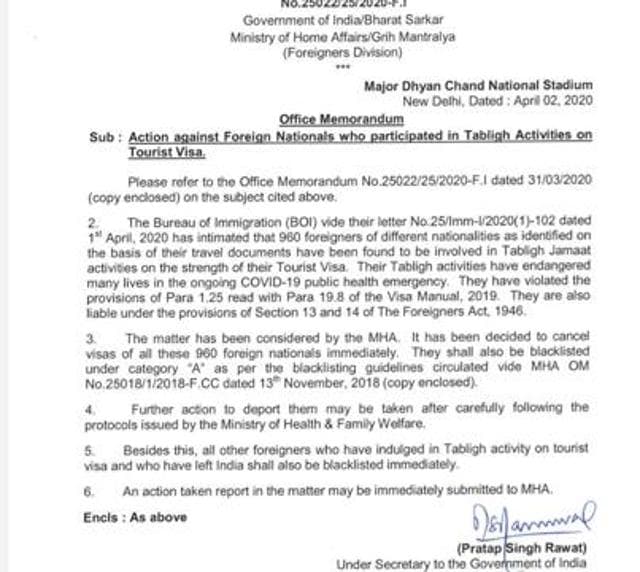
But there were lakhs of people who attended the Jamaat’s congregations that have been held in parts of the country.
Also read: Markaz leadership resisted, then NSA Ajit Doval dropped by at 2 am
“How do you trace them, figure out who came in contact with the suspected or confirmed cases,” the official said, hoping that the nationwide lockdown would have helped minimise any further spread of infection from the Jamaat’s followers.
India isn’t the only country that is seeing a surge of cases linked to the Tablighi Jamaat. In neighbouring Pakistan, a gathering of 250,000 people at the Tablighi Jamaat’s meeting in early March has been linked to infections as far afield as Palestine and Kyrgyzstan.
The Jamaat’s gatherings in Malaysia in February have been directly linked to over 600 of the country’s 3,000 odd cases.


