
 E-Paper



Markaz leadership resisted, then NSA Ajit Doval dropped by at 2 am
The operation has moved into Phase 2 after NSA Ajit Doval’s intervention. In this, security officials say the effort is to trace all the foreigners who are in India, get them medically screened and then take a close look at violation of the visa norms.

 Prefer HTon Google


When Maulana Saad, head of Nizamuddin Markaz, refused to yield to pleas from Delhi Police and security agencies to vacate the Banglewali Masjid, Home Minister Amit Shah requested National Security Advisor (NSA) Ajit Doval to get the job done.
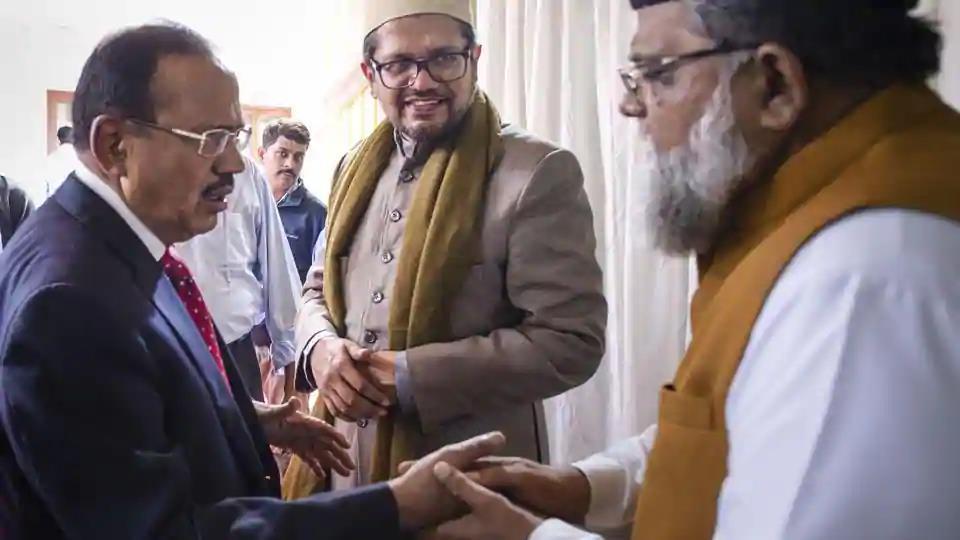
According to top home ministry officials, Doval reached around 2.00 am on March 28-29 night at the markaz and convinced Maulana Saad to get the occupants to be tested for the Covid-19 infection and be quarantined. Shah and Doval knew about the situation building up since the security agencies had tracked down the nine test positive Indonesians at Karimnagar, in Telangana, to the markaz on March 18 itself.
The security agencies had sent an alert on the markaz infection the very next day to all state police and subsidiary offices.
Also Watch | How Ajit Doval cleared Nizamuddin Markaz. Now for contact tracing
While the markaz allowed 167 Tablighi workers to be hospitalised on March 27, 28 and 29, it was only after the intervention of Doval that the Jamaat leadership yielded to cleaning up of the masjid. Doval, for the past decades, has built very close connections with the various Muslim movements in India and abroad. He is on a first name basis with virtually all the Muslim ulemas and spends time with them to form a national strategy for India.
The operation has now moved into Phase 2. In this, security officials say the effort is to trace all the foreigners who are in India, get them medically screened and then take a hard look at violation of the visa norms. There were 216 foreign nationals in the markaz in Delhi but there are over 800 more in different parts of the country. Most of them are nationals of Indonesia, Malaysia and Bangladesh.
Since January, the home ministry has said, about 2,000 foreigners have attended the markaz congregation. Initial reports indicate almost all of them violated their visa conditions by entering India on visas for tourists, not missionaries.
This, officials said, had happened despite the government’s repeated reminders to file visa requests under the missionary category. They will be blacklisted from entering the country again.
Apart from the foreigners, a massive effort is also afoot to identify all Indians who attended the congregations in Delhi or came in close contact with people who did. They are also being screened for Covid-19 and placed in quarantine.
The Tablighi Jamaat was founded by Maulana Ilyas Kandhlawi, great grandfather of Maulana Saad, in the Mewati region. The Tablighis, then comprised of Muslim converts of Mewati rural population, fought with Rana Sangha of Mewar against Babur in Battle of Khanwa near Bharatpur against Mughal ruler Babur in 1527 after the first Battle of Panipat. The Jamaat purely focuses on Quran to preach on how to be a good Muslim with the objective of proselytisation.
The movement has now been split into many factions with Pakistan using the Tablighis to take control of the group in South Asia and use it for spreading radical preaching.


