
 E-Paper



Corporate bosses in Delhi fall prey to honeytraps on gay dating app
Members of the racket allegedly contacted their targets through the app, and, after befriending them, arranged dates on isolated stretches of the Western Peripheral Expressway and Southern Peripheral Road in Gurugram.

 Prefer HTon Google


At least 50 senior executives, including CEOs, of companies based in the National Capital Region (NCR) were among 150 people who fell victim over three months to racketeers who befriended them on Grindr — a social networking app for gay, bisexual and transgender people — and blackmailed them with intimate pictures, according to senior Gurugram Police officers.
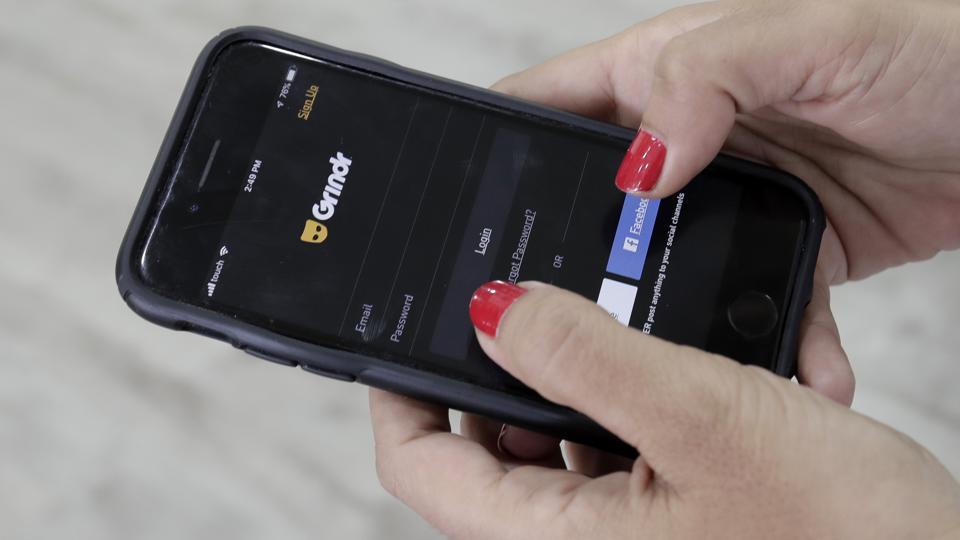
Members of the racket allegedly contacted their targets through the app, and, after befriending them, arranged dates on isolated stretches of the Western Peripheral Expressway and Southern Peripheral Road in Gurugram.
In most cases, the victims were ambushed in their cars while meeting their dates by the gang members, photographed in the nude, beaten up, and robbed of their belongings, the officers said.
Police said that the racket run by six men was busted in November after a decoy was sent to meet one of the members on Southern Peripheral Road following a complaint by a victim. Four of the six men were arrested on the spot and two are still at large, the police said.
Police commissioner Muhammad Akil said they have tracked down at least 80 of the 150 victims in the last three months and the investigation is still on.
“Around 50 executives of top multinational companies in Delhi-NCR have been duped and robbed by them. The victims, fearing social stigma, are not ready to take legal action against the suspects and have refused to come forward and record their statements with the police. We have written to Grindr to get more details of the suspects and their accounts as two of the gang members are still absconding. They targeted people in Delhi, Gurugram, Noida, and Ghaziabad,” he said.
Grindr, which is based in the US, did not respond to emails seeking comment.
The gang
Police said the six gang members are school drop-outs and but hired educated people with good command over English. “It took them almost a month to get friendly with the victims and once they gained [the victims’] confidence and assured them that their identities were safe, they set up meetings in Gurugram,” said Akil.
The engineers would strike a friendship on the app and call the victims to Sector 29, a hub of restaurants and pubs, where one of the two members of the gang given this responsibility on account of their looks, turned up. Akil said most victims failed to realise that the person was different from the picture in the app or probably didn’t mind the difference.
Same-sex relations are not illegal in India, but there is still some stigma attached to it.
In this particular case, many of the senior executives are married, have families, and are yet to come out, police said.
The designated gang member would then suggest to the victim that they take a drive along the Southern Peripheral Road and Western Peripheral Expressway where police presence is low and the streets are not lit properly. The gang would follow, and ambush the two once they started making out or started performing a sexual act.
Akil said the gang members used to surround the parked cars and threaten the couple with a pistol. “They used to click pictures and force them to hand over their belongings, threatening to upload their nude photos and videos on several websites . Fearing exposure, especially to family and friends, the victims used to hand over cash, laptops and watches. In many cases, the victims were also blackmailed into transferring money into different accounts,” he said.
The victims
“I downloaded the application just weeks before the incident in October. I met this person online and talked to him for 11 days; he said he wanted to meet me. As I live in Gurugram, I agreed and we met in Sector 29 parking. I insisted that we should have drinks and food in a restaurant but he suggested that we go for a long drive,” the 38-year-old victim (a senior executive) told HT on condition of anonymity.
The executive said his date appeared to be in his early 20s and seemed well-educated.
“After we drove around for 45 minutes, he initiated intimacy. He asked me to park the car on the side, but within minutes another car intercepted my car and they forced open the car door and assaulted and robbed me. The man posing as my friend joined them and fled the spot,” the executive added.
The victim said he returned home but did not disclose the incident to his family. Soon after, one of the suspects allegedly called him and asked him to transfer Rs 2 lakh to a bank account . “I transferred Rs 1 lakh to the given account number and switched off my mobile number and took a new connection. I could not sleep for many nights. I then shared my ordeal with my best friend who took me to the police. We met senior officials and got the case registered,” said the victim.
Akil said after getting all the details and mobile numbers, the police formed a team to contact members of the racket. One police official set up a meeting in Sector 29 from where the suspect took him to the Southern Peripheral Expressway. There the police ran into the gang and arrested the four men.
Police said that during questioning, the gang members revealed that they had duped, robbed and assaulted around 150 people in three months.
“There was only one formal complaint with us, so after their arrest, we started calling victims and asked them to meet us in person. Most of them refused to file any formal complaint and said they do not want to pursue any legal action but shared their ordeal with us,” said Akil.
Another victim, a 43-year-old CEO of a multinational company based in Gurugram, who was approached by the police after they retrieved his contact details from the possession of the gang, said that creating a profile on the app had turned his life upside down. He said he was scared of the pictures taken by the gang members, despite the arrests.
“What if they have stored the pictures in their email or on some other device, and once they are out from jail, they can misuse them. This will not only disrupt my personal life but also embarrass me socially,” he said on condition of anonymity.
The victim said he used the app as it was a popular one. “Searching for a same-sex partner has turned into a nightmare for me. It is not easy to find a partner other than on the internet where your identity is not revealed. I thought this was a platform where like-minded people were brought together,” he said.
Akil said the police were keen to identify more people involved in similar cases and were appealing to residents with any information to contact the police. “We want to urge people who use these online dating applications not to share their personal details with strangers and not to meet them in isolated places; they should meet at public places,” he said.


