
 E-Paper



Covid-19: Road map to ensure smooth functioning of govt officials in works
Senior officials of the personnel, pensions and grievances ministry met minister Jitendra Singh on Monday to review the projects undertaken by the ministry during the lockdown and formulate a comprehensive strategy to ensure efficiency and precautions against the coronavirus pandemic.


Amid suggestions that the nationwide lockdown be extended, authorities are framing a road map to ensure both work and preparedness to tackle the coronavirus disease aren’t hampered for the next two weeks, according to government officials.
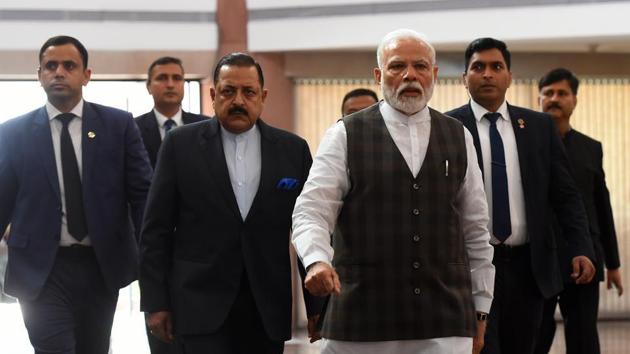
The central government is yet to announce its decision on whether the Covid-19 curbs will be extended, but there are suggestions that the ongoing, three-week lockdown be continued.
Senior officials of the personnel, pensions and grievances ministry met minister Jitendra Singh on Monday to review the projects undertaken by the ministry during the lockdown and formulate a comprehensive strategy to ensure efficiency and precautions against the pandemic.
This may include extending the virtual private network (VPN) providing a secure line of communication to all officials and issuing curfew passes to those living in containment zones, government functionaries who did not want to be named said on Monday. The DoPT guidelines apply to all departments and ministries of the central government.
The move came two days after the central government informally conveyed to senior officials that ministers and officers of the rank of joint secretary and above should return to work from Monday.
“The objective is not to bring people to offices, it is to avoid overcrowding,” said a senior official who was present at the meeting.
“Take today for instance, the Central Secretariat is overcrowded, there are nearly 150 cars at Shastri Bhawan and 100 in North Block. We have to maintain social distancing to fight this pandemic.”
In its bid to overcome overcrowding, officials are considering extending the secure VPN, until now being accessed by deputy secretaries and above, to under secretaries and section officers. One–third of officials, based on a roster decided by heads of departments, will come to work while others will continue to work from home unless called in.
“This will help officials to work from home,” said the senior official cited above. “E-office facilities will become paramount in the coming days.”
The official added, “Extra caution and care will be exercised while dealing with high-risk officials, such as those with heart problems and diabetes, while they are at work.”
The ministry will decide the protocol for using e-office from home, said a second official. “We want to foster an electronic platform-based functioning dispensation,” this official said. “A citizen-central public delivery system will have to be implemented.”
The ministry is also considering options such as providing scanners to those working from home. “This is the initial stage,” said the second official. “Most of our departments internally are working online and from home, you need a laptop and wi-fi, but we will evaluate if more equipment is needed.”
A proposal to provide curfew passes to “essential staff” living in containment zones has been mooted.
“We need to see how people living in screened areas will be able to travel, arranging curfew passes for them is another consideration,” said the first official.
A third official said government transport will be provided for those without cars. “Those who don’t have their own vehicles travelled using the department’s cars today, for example,” he said. “A similar model will be worked out.”
Prime Minister Narendra Modi will address the nation on Tuesday morning and is expected to announce a decision on the three-week, sweeping lockdown that was imposed on March 25 to stop the spread of Covid-19. States such as Telangana, Maharahstra, Odisha and West Bengal have already extended the lockdown till April 30
The ministry is also considering long-term solutions in case the Covid-19 crisis spills over into May. These will include strengthening electronic hardware capacities and software to enhance agility and flexibility in the ministry’s functioning.
“The thinking that emerged is that instead of treating this as a crisis situation, we should use it as an opportunity to ensure robustness of the ministry,” said DARPG secretary K Shivaji. “We have to see how this opportunity can help us improve productivity.”
Jitendra Singh reviewed the status of grievance complaints with the DARPG at the meeting, according to a statement issued by the ministry. As of April 12, the government has addressed 7,000 Covid-19-related public grievances, with an average disposal time of 1.57 days. Total grievances registered with the ministry are more than 21,000.
The ministries and departments with maximum disposal of grievances are external affairs ministry (1,625 grievances), finance ministry (1,043 grievances) and labour ministry (751 grievances). Peak disposals of 1,315 grievances a day were achieved on April 8 and 9.
More than 71,000 people have enrolled on the e-learning platform iGOT to combat Covid-19 after it was launched last week for doctors, nurses, paramedics, hygiene workers, technicians, auxiliary nursing midwives, central and state government officers, civil defence officials, various police organisations, National Cadet Corps (NCC), Nehru Yuva Kendra Sangathan (NYKS), National Service Scheme (NSS), Indian Red Cross Society, Bharat Scouts and Guides (BSG) and other volunteers. Nearly 27,000 candidates have completed the course.


