
 E-Paper



Covid-19 stabilising in many states, says Centre
Lav Agarwal, joint secretary, Union health ministry, presented a comparative data in the briefing to show how a lesser percentage of India’s population was infected with Covid-19 as compared to that in other countries.


Coronavirus disease (Covid-19) pandemic was stabilising in many states in India, said VK Paul, member (health), Niti Aayog, even as the country continues to report close to 300,000 daily new cases.
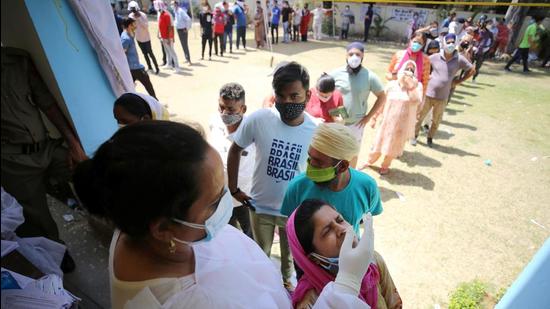
“In many states the pandemic curve is stabilising, as a result of comprehensive efforts at containment, at testing, restrictions, and all the other efforts that people of those states are carrying out. States such as Maharashtra, Kerala, Karnataka, Telangana, Uttar Pradesh, Delhi, Rajasthan, Bihar, Chhattisgarh, and Madhya Pradesh,” said Paul during the weekly briefing on Covid-19 updates.
Lav Agarwal, joint secretary, Union health ministry, presented a comparative data in the briefing to show how a lesser percentage of India’s population was infected with Covid-19 as compared to that in other countries.
“The continued efforts made by the medical fraternity, by states and districts, in coordination with Union government, during the past one year and four months have ensured that there has been limited infection spread in the country. If you look at data, only 1.8% of country’s population has been affected with Covid-19 that was found to be laboratory confirmed positive case,” he said.
Also Read | Consumption revival hit as Covid jolts middle class
Comparing the figures with other countries, Agarwal said that in United States about 10.1% of the population has been infected, in Brazil the percentage increased to 7.3%, in a developed country like France it is around 9%, in Russia about 3.4%, about 7.4% in Italy ...which goes on to show our efforts on ground, wherein we involved people at the community level, have resulted in the disease transmission having been curtailed to a large extent.
They also said that there were still a few states where there continues to be concern in terms of the trajectory such as Tamil Nadu, Andhra Pradesh, West Bengal, Odisha, and to some extent, Punjab.
“It is a mixed picture but there is overall stabilisation, and what we know from scientific analysis that the reproduction number (R0) is overall below 1 now,” said Paul.
Experts, however, say it is too early to predict a trend.
“It is not a good time to celebrate decrease in numbers as we are dealing with an infectious disease and it is way too early to say which direction the spread is going to take, especially since the disease has reached rural and tribal areas where health infrastructure is skeletal,” said a senior public health expert, requesting anonymity.


