
 E-Paper



BJP’s pan-India NRC pitch: Decoding the National Register of Citizens debate
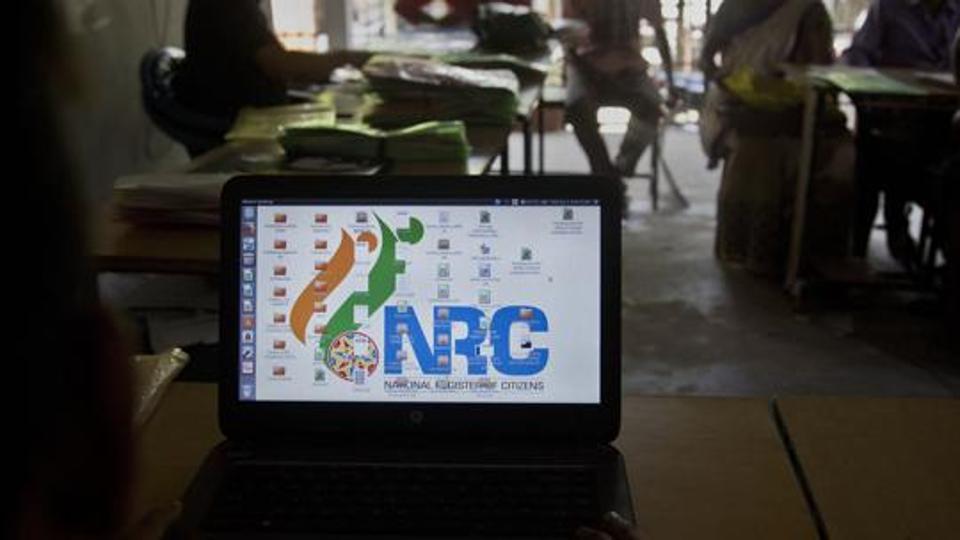
NRC is a verified digital register having names and basic demographic information about all Indian citizens in a digital format.

 Prefer HTon Google


Home minister Amit Shah said on Wednesday that an NRC will be created for all regions of India, expanding an exercise that was recently carried out in Assam and led to the identification of 1.9 million people who now face the risk of being labelled illegal immigrants. Here’s at look at how the process could be carried out:
WHAT IS NRC?
It is a verified digital register having names and basic demographic information about all Indian citizens in a digital format. Under the Citizenship Act, 1955, a person born in India or having Indian parentage or having resided in India for at least 11 years, is eligible for Indian citizenship. NRC would be India’s first such database of citizens.
WHO ARE ILLEGAL IMMIGRANTS?
Under the Citizenship Act, a person who enters India without valid travel documents or enters with valid documents, but stays beyond the permitted duration, are illegal immigrants. They can be jailed under the Foreigners Act, 1946, and Passport (Entry into India) Act, 1920. The govt has exempted non-Muslims from Afghanistan, Bangladesh and Pakistan, who reached India on or before Dec 31, 2014, from the two detention laws
HOW ARE NRC AND NPR DIFFERENT?
In the 2011 Census, the NRC was to be a subset of the National Population Register (NPR), which is a register of the usual residents of a country. Unlike NRC, NPR is not a citizenship enumeration drive; it would also include a foreigner staying in an area for more than six months. NPR is verified data of all Indian residents, linking the 12-digit biometric-based unique identification number, Aadhaar, with demographic data collected by Census enumerators
WHAT NEXT FOR NPR?
In April 2019, the Census commissioner notified that the NPR will next be updated across India with the next Census enumeration starting from April 2020. This exercise will be completed by Sept 2020. The office of census commissioner till 2015 had digitised data of 1.17 billion people. The biometric details of 40% of these people have been linked with NPR data
WHAT IS THE LINK BETWEEN THE CITIZENSHIP (AMENDMENT) BILL AND NRC?
As the Citizenship Act does not differentiate between foreigners on religious lines, the government plans to bring an amendment to the law to make Hindu, Sikh, Buddhist, Jain, Parsi, and Christian illegal migrants from Muslim-majority Afghanistan, Bangladesh and Pakistan eligible for citizenship of India without detention.
Under the present citizenship law, one of the requirements for citizenship by naturalisation is that the applicant must have resided in India during the last 12 months, as well as for 11 of the previous 14 years. The amendment relaxes the second requirement from 11 years to 6 years as a specific condition for applicants belonging to these six religions, and the aforementioned three countries.
WILL THE CENTRE NEED TO BRING THE STATES ON BOARD?
As the entire NPR exercise is conducted by state government officials, the Centre would have to take the states on board. The amendment in the Foreigners (Tribunals) Order, 1964, issued by the central government on May 30, 2019, empowered district magistrates of all states and Union territories to set up tribunals to identify foreigners living in India illegally. The process of detaining illegal immigrants will have to be overseen by the local police. The state governments will also be required to build detention centres for illegal immigrants.
HOW CAN A PAN-INDIA NRC EXERCISE BE CARRIED OUT?
Once the NPR is complete, the govt could start the process of identifying illegal immigrants. As the Census commissioner will have documents related to birth and voter identity cards of every resident, itdentifying illegal immigrants may not be difficult. However, the Centre has not specified the documents needed for identifying the citizens. Those failing to fulfil the criteria will be designated as illegal immigrants; an appeals process would be conducted by Foreigners Tribunals to be set up across India. As of now, there is no clarity on whether the office of Census commissioner, which will have the verified data of all residents, or some other body, will conduct the exercise of identifying citizens
HOW WOULD A NATIONWIDE NRC BE DIFFERENT FROM THAT IN ASSAM?
The NRC in Assam was mandated and monitored by the Supreme Court in 2014 and was based on the 1951 NRC done in Assam and voters’ lists of 1961, 1966 and 1971 — together bunched as legacy documents. The claim of every Assam resident was verified with these legacy documents. Close to 33 million people applied and the final list published on August 31 excluded 1.9 million people. The nationwide NRC will be implemented and monitored by the central government and documents required to prove one’s citizenship may not be similar to those accepted in Assam. The government is yet to specify the documents that would be needed.
WHAT COULD BE THE EXPENDITURE ON THE EXERCISE?
According to the latest estimate of the Assam NRC coordinator’s office, around Rs 1,600 crore was spent for conducting the exercise, in which around 50,000 state govt employees were deployed. This does not include the money spent on building and running detention centres for illegal immigrants and for the working of Foreigners Tribunals.
IS THE ASSAM NRC FINAL?
No. Home minister Amit Shah said that the NRC will be conducted again in the state, together with other parts of the country. This was because the Assam unit of the BJP, and several other organisations in the state, have opposed the final list, claiming that many genuine Indian citizens have been excluded and immigrants included because of a flawed identification process
WHAT ABOUT OPPOSITION TO NRC?
West Bengal CM Mamata Banerjee has said that she will oppose NRC in Bengal. The JD(U), an ally of the BJP, has also questioned the rationale for a nationwide NRC. The Congress has called it an attempt to create divisions in society on the basis of religion


