
 E-Paper



Deep inside Kanasar forest, felled Deodars and a vow of secrecy
The recoveries have worried the state forest department, for this is the second such discovery of widespread timber felling discovered in the last 12 months.

 Prefer HTon Google


The Kanasar woods are lovely, dark and deep.
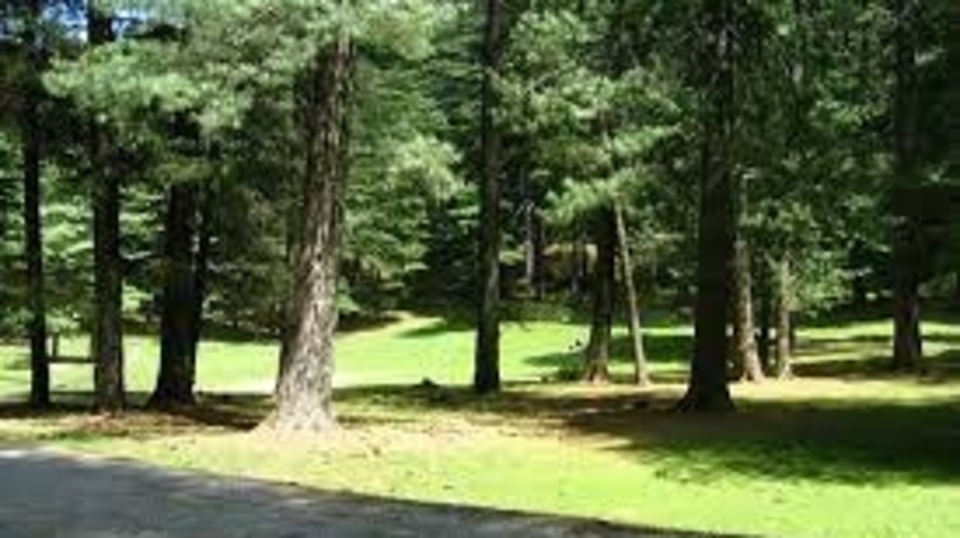
For decades, the forests in the Chakrata division have been home to the finest deodar trees; by some estimations, among the best in Asia. High up in the Himalayas, its valleys framed by two rivers, the inaccessibility lent itself to what was hitherto believed to be untouched green slopes, protected by the tribes that live in them.
Except, it turns out, the woods mask a secret that is only just beginning to peek out from under the dense foliage. A roaring illegal timber business; and a traditional tribal oath of silence that has been twisted into a system of complicity.
READ | U’khand forest dept busts timber mafia, recovers 4000 logs of deodar, kail trees
For 12 days between August 6 and 17, acting on a rare tip-off, the Uttarakhand forest department launched a search-and-seizure operation in the Kanasar range, and found 4,000 Deodar and Kail logs in two villages in the Jaunsar-Bawar region. The recoveries reeked of an organised operation, aided by both residents and the local government machinery. The illegally felled timber was found in two government schools, a panchayat building, a public water tank, some even buried.
The recoveries have worried the state forest department, for this is the second such discovery of widespread timber felling discovered in the last 12 months. In October last year, officials said that over 6,000 trees were felled illegally in the proposed Pakhro tiger safari in the Corbett Tiger Reserve over an area of 16.21 hectares, based on a report by the Forest Research Institute, Dehradun and field visits.
In the Kanasar forests though, there is another impediment to administrative action -- a veil of secrecy.
The Jaunsaris The Jaunsar-Bawar, spread over 1,002 square kmand 398 villages, is framed by the Yamuna to the east, and the river Tons in the west. Its northern periphery extends to the Uttarkashi district in Uttarakhand and some parts of Himachal Pradesh, while the Dehradun district traces its southern parts. The administrative centre has always been Chakrata, about 90km and three hours away from Dehradun.
The area is broadly divided into two regions -- Jaunsar (the lower region) and Bawar (the upper region). The Kharamba peak, at a height of 10,118 feet, lies in Bawar. The geography has kept it largely cut off, aiding a unique set of culture and traditions. It once formed part of the Sirmaur kingdom, and was conquered by the Gorkhas in 1804, who were then expelled by the British in 1854, according to the Chakrata government website.
READ | Uttarakhand: Probe ordered into felling of nearly 100 trees in Nainital forests
The region is home to the Jaunsari tribe, one of the five notified scheduled tribes in Uttarakhand. The 2011 Census pegs their population at 88,664. The tribe has its own social hierarchies, with Khasas and Brahmins at the top; Lohar, Bajgi, Mistri and Nath in the middle; and Dom, Chamar and Koltas at the bottom of the pyramid.
Uttarakhand expert Ajay Singh Rawat says that, over the years, the local geography kept the region, by and large free from invasion. “Jaunsar-Bawar is located in the middle Himalayas and its deep valleys, high mountain passes and steep terrain ensured it remained free from invasions. The Gorkha intrusion is the only exception. Otherwise, the terrain has kept the area peaceful,” Rawat said.
Much of the local economy, as a result, circles around its forests. “There are several tree species that are found in the region -- deodar, kail, chir, oak, birch and others. Undoubtedly, deodar is the most important of all of them. They are hardwood and remain unaffected by termites. That is why there is great demand, high costs, and is extensively used in the making of furniture,” Rawat said.
That cocktail of high demand, and relative accessibility, often means one thing -- illegal tree felling worth several crores.
The ‘lota-namak’ oathIn the middle of July, officials of the Uttarakhand forest department said, they received a tip-off of trees being illegally felled in the Kanasar forest range. The next month, teams of 150 officials began a search in and around two villages, Bison and Mashak, in an operation that lasted 10 days. Both villages are adjacent to the other, but while Bison has a thin motorable toad, Mashak has an unpaved dirt path that leads to it.
For all of those 10 days, the forest team faced challenges. There was resistance from villagers who would surround them in large groups, asking them to return; tree logs were kept in the middle of the matchstick-thin roads to impede movement. And nobody would tell the teams anything -- even something as basic as the directions to the home of the sarpanch.
As the forest department dug deeper, they found a peculiar reason why they had never been tipped off before; why accessing any information was difficult -- an age-old tribal tradition called “lota-namak”. In this tradition, salt is mixed with water in a vessel, and people from the tribal community swear an oath to the Mahasu Devta, the ruling deity of the Jaunsari tribe considered a local manifestation of the Lord Shiva, to follow the instructions of the Sayana (the titular village head or the gram pradhan.) If one reneges on the promise, they are ostracised, and considered sinners.
A member of the tribe, who did not wish to be named, said, “Several decades ago, when there was no police or administrative influence, this was a custom used for dispute resolution, and acted as a deterrent for criminals. It was a method to extract the truth.”
The suspect was asked to put salt in the vessel filled with water. Like the salt dissolves in water, the Mahasu Devta would reduce them to nothing, the legend went. “The person taking the oath is supposed to tell the truth or else their entire family would face the wrath of Mahasu Devta, and misfortune will befall them,” the Jaunsari tribe member said.
Over time though, the tradition morphed into an instrument for more worldly objectives. For the consolidation of votes during elections, with people sworn to vote for one candidate. Or to protect a local ecosystem that profits from the sale of wood.
Villagers who HT spoke to did not want to specify a date, or name themselves, for fear of ostracization, but said that the oath in this regard was administered in the two villages, at separate intervals, several years ago. “The Sayana called a meeting of villagers and said everyone must be united to ensure financial betterment in the name of Mahasu Devta, and refuse to reveal any details to the outside world to protect the interests of the villages,” one resident said.
Chander Singh, a 54-year-old local, said that there was still great belief in these traditional value systems. “It is a tribal region. For all these years, because it is so cut off, locals have been governed by local customs. There have been some traditions that have lost credibility, but there are many that still prevail, or have morphed into something else. Our communities have unique ways. Polygamy is still very much in practice and divorce is not considered a taboo,” Singh said.
The ‘maafi paas’A third villager, who also did not want to be named, said that based on the “lota-namak”, they would give a “maafi pass”(local parlance for permission to cut trees) to influential people in exchange for money. “There are limited ways to earn money in our remote regions. The felling of trees is carried out by influential people.”
Deodhar wood is worth between ₹6,000 and ₹7,000 a kilo.
Rai Singh, a “Sayana” from the region defended the “lota-namak” custom and said that it filled a vacuum of access to traditional justice systems. “Modern day litigation takes time and is rarely successful in our region. For example, if there is suspicion that someone has committed theft, going to court is too far and too cumbersome. The suspect will be administered the oath to tell the truth or Mahasu Devta will give them punishment by melting(dissolving into water like salt) him and his family. The oath is also administered to keep the community united. If anything big happens, it is difficult to narrow down on the guilty. Lota-namak is the only thing that works,” Singh said.
Mukul Kumar, assistant conservator of forests of the Chakrata forest division said, “Ordinarily, the region seems very calm as if nothing is going on. Tip-offs normally don’t reach us because of lota-namak. The lower level officials in our department also belong to this region. That is why the timber mafia has existed, as evidence now suggests, for many years.”
Kumar said that it was unclear exactly how long this tree felling had been taking place. “Some of the logs felled have blackened, suggesting they were felled some years ago. The extent of the nexus can be gauged from the fact that those booked in different cases include a government school principal, and a panchayat officer, and a sayana,” Kumar said.
The forest department have suspended six officials of the Kanasar range including range officer Mahendra Singh Gusain, forest beat officer Bhagat Rana, forest beat officer Shivam Gautam, section officer Ashish Chandra, section officer Pramod Kumar and forest beat officer Madan Singh. Divisional Forest Officer (DFO) Kalyani, who goes by one name, has been “attached” to the office of the Head of the Forest Force (HoFF) in Dehradun and an 11-member committee headed by the Chief Conservator of Forests(Garwhal) has been constituted to expand the ambit of the probe.
The forest department is yet to ascertain who cut trees and officials said that efforts were on to identify them.
Kumar said that preliminary investigations have suggested a nexus that benefits markets like Yamunanagar-Jagadhari (Haryana), Pathankot (Punjab) who work in close connivance with officials and influential locals. “In the region, there is a ‘maafi pass’ system. Influential people in the villages exploit the system, and organise a ‘maafi pass’. They stock the timber after felling the trees, subsequently pass the consignments to the timber merchants, and arrange a free pass at check posts in connivance with local officials,” Kumar said.
Officials said that they have now launched a combing operation in the entire Chakrata division, to identify other areas where trees are being felled in other areas too. There is however, much conversation in the bureaucracy on a sensitisation campaign; for the first hurdle to gathering information, is to find a way around “lota-namak”.


