E-Paper



Delhi action plan: 15% cut in average AQI targeted in 2026, focus on vehicles and dust control
Apart from Delhi, the plans outlining strategies to reduce the annual average AQI and particulate pollution, were submitted by UP, Haryana and Rajasthan.


New Delhi : Twelve cities across the National Capital Region (NCR), along with four NCR states and Delhi, have submitted detailed pollution mitigation plans aimed at slashing pollution in the region this year, the Commission for Air Quality Management (CAQM) said on Sunday.
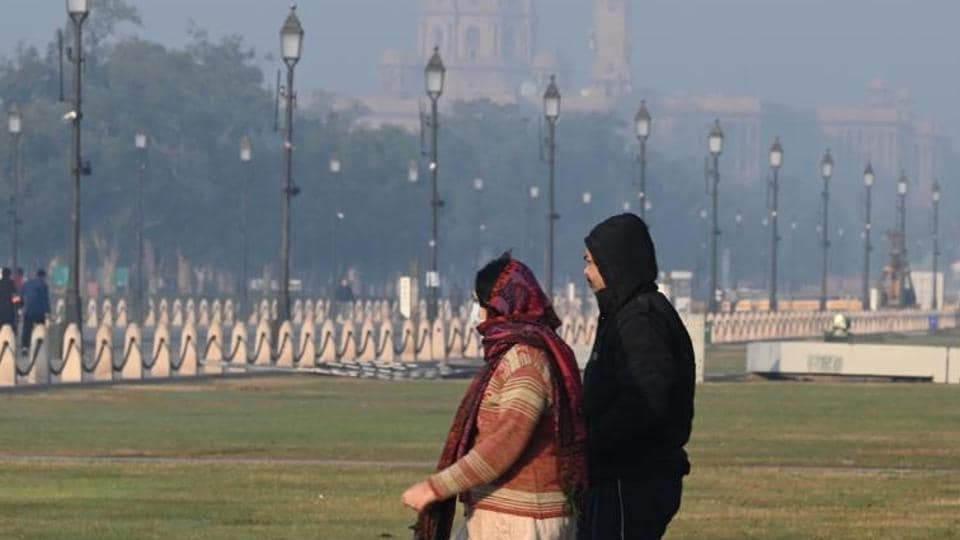
Apart from Delhi, the plans outlining sector-specific strategies to reduce the annual average Air Quality Index (AQI) and particulate pollution, were submitted by Uttar Pradesh, Haryana and Rajasthan.
The NCR cities that sent their proposals include Agra, Meerut, Noida, Greater Noida, Ghaziabad, Karnal, Faridabad, Gurugram, Manesar, Panipat, Rohtak and Sonipat.
As per Delhi’s action plan, the city has set a target of reducing its annual average AQI by 15% in 2026 compared to the average of previous five years. The plan also proposes a 15% reduction in annual average PM2.5 concentrations and a 20% reduction in PM10 levels in 2026.

Data shared in the document shows that Delhi’s annual average AQI stood at 191 in 2025. The target for 2026 is to bring it down to 177. Annual average PM2.5 levels are proposed to be reduced from 99 micrograms per cubic metre (µg/m³) to 96 µg/m³, while PM10 levels are targeted to decline from 209 µg/m³ to 177 µg/m³.
As part of air quality monitoring measures, the Delhi government reported that it had installed 40 Continuous Ambient Air Quality Monitoring Stations (CAAQMS) by December 31, 2025. The plan states that six additional stations are under procurement to meet the optimum requirement of 46 monitoring stations and will be installed soon, officials said.
Vehicular pollution remains a key focus area, with the action plan emphasising expansion of public transport and last-mile connectivity. Delhi currently has 352km of operational metro lines within the city, with additional corridors under construction or in the planning stage under the Delhi Metro Rail Corporation (DMRC).
The plan also outlines measures to strengthen last-mile connectivity through electric rickshaws, e-autos and e-bikes at metro and RRTS stations. DMRC’s ridership data shows daily usage of 1.78 million passengers through e-rickshaws, 53,439 passengers through e-autos and 2,343 rides per day through e-bikes during November 2025.
Road dust control is another major component. Multiple agencies, including the PWD, MCD, DDA and Delhi State Industrial and Infrastructure Development Corporation (DSIIDC), have been assigned monthly targets to make roads dust-free through mechanised sweeping, water sprinkling and redevelopment of road stretches.
In waste management sector, the plan sets timelines for clearing legacy waste at major landfill sites. Remediation at the Okhla landfill is targeted for completion by July 2026, while Bhalswa is expected to be cleared by December 2026, and Ghazipur by December 2027. Also, a new 1,000-tonne-per-day C&D waste processing plant has been proposed, with construction slated for completion by December 2026. CAQM said the action plans submitted by NCR states and cities would be reviewed periodically.