
 E-Paper



Delhi, Noida schools implement hybrid mode of classes amid GRAP-4 curbs
With GRAP 4 restrictions imposed, hybrid learning—combining online and offline modes—will be mandatory for students in Classes VI to IX and XI in Delhi NCR.

 Prefer HTon Google


Delhi-NCR schools are preparing to implement a hybrid mode of classes following the reimposition of anti-pollution measures under Graded Response Action Plan (GRAP) 4, in effect in the national capital from Monday night amid severe Air Quality Index (AQI).
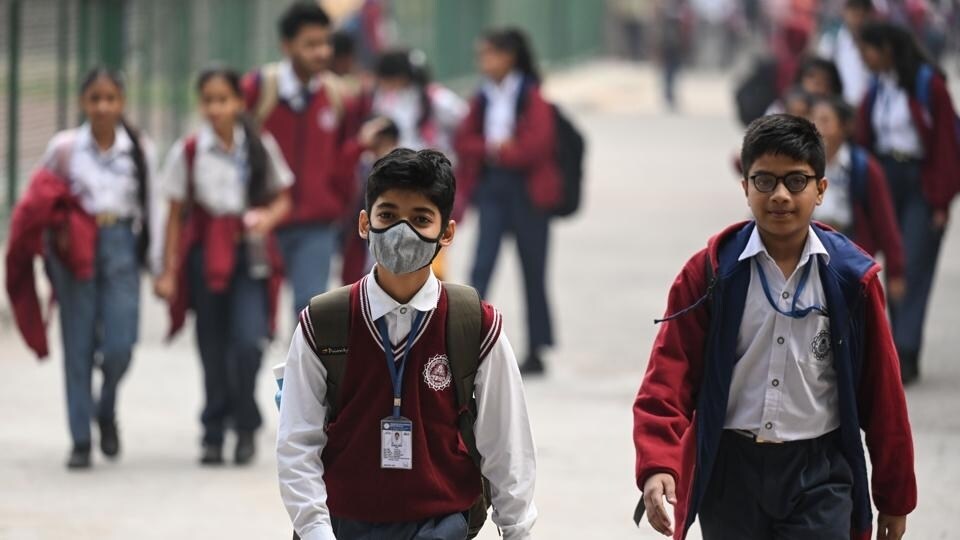
With GRAP 4 restrictions imposed on Monday, hybrid learning—combining online and offline modes—will be mandatory for students in Classes VI to IX and XI in Delhi and districts like Gurugram, Faridabad, Ghaziabad, and Gautam Buddh Nagar, where online options are feasible. The choice to opt for online mode will rest with students and their guardians. Other NCR districts are encouraged to adopt hybrid learning where feasible under GRAP 4 curbs.
The measures come after Delhi's Air Quality Index (AQI) crossed the 400 mark, with AQI recorded at 399 at 9 pm and 401 at 10 pm on Monday.
Meanwhile, the administration in Uttar Pradesh's Gautam Buddh Nagar issued an order mandating all schools in the district to start classes from 9 am starting Tuesday due to cold weather conditions.
“All schools in Gautam Buddh Nagar to start from 9 am from Tuesday in view of cold weather conditions,” the official order stated.
Dharmveer Singh, the District Inspector of Schools (DIOS), instructed, “In view of the extreme cold, as per the instructions given by the District Magistrate, Gautam Buddh Nagar, classes in all schools will start from 9 am till further orders. In this regard, all the principals are instructed to ensure strict compliance of the above instructions.”
Also Read | GRAP IV restrictions invoked in Delhi-NCR: What's allowed, what's not
Delhi NCR: Hybrid classes and office timings
The Gautam Buddh Nagar administration has directed schools to switch to a hybrid mode of teaching for students up to Class 5, in light of the GRAP III restrictions. Similarly, the Delhi Directorate of Education (DoE) on Monday also instructed all schools to conduct classes for students up to Class V in a hybrid mode due to the implementation of restrictive measures under GRAP III.
In a circular, the DoE said, “All heads of government, government-aided, unaided recognised private schools of DoE, NDMC, MCD and Delhi Cantonment Board are directed to conduct classes for students up to Class V in a 'hybrid mode,' wherever online learning is feasible, with immediate effect until further orders.”
GRAP Stage III restrictions also include a ban on petrol vehicles that do not meet BS-III emission norms and diesel vehicles failing to comply with BS-IV standards from entering Delhi.
Previously, all schools in Delhi transitioned to hybrid learning on November 25, with physical classes resuming on December 5.
State government offices have been directed to operate between 10 am and 5 pm, while Noida, Greater Noida, and Yamuna Expressway authorities have been asked to maintain timings from 9 am to 6 pm. Offices under the Nagar Palika Parishad and panchayats will follow timings from 8:30 am to 4:30 pm, as stated in the communique.
Public, municipal, and private offices in NCR would be directed to function at 50 per cent on-site capacity, with the remaining employees working from home. The Central Government would be advised to consider work-from-home options for employees in central government offices.
The steep rise in Delhi’s AQI, caused by highly unfavourable meteorological conditions and calm winds, prompted an emergency meeting of the CAQM Sub-Committee on GRAP on Monday.
(With inputs from PTI, ANI)


