
 E-Paper



Delhi's air pollution panel deploys ‘flying squads’ after Supreme Court's rap: Report
CAQM, a central body for managing air pollution, said that it has deployed “flying squads” to check on stubble burning near Delhi borders.


After Supreme Court's stern remarks on the matter of air pollution in Delhi, the Commission for Air Quality Management (CAQM) deployed ‘flying squads’ across the national capital to prevent farmers in Haryana and Punjab from burning stubble and improperly disposing agricultural waste, reported NDTV.
HT cannot independently verify this information.
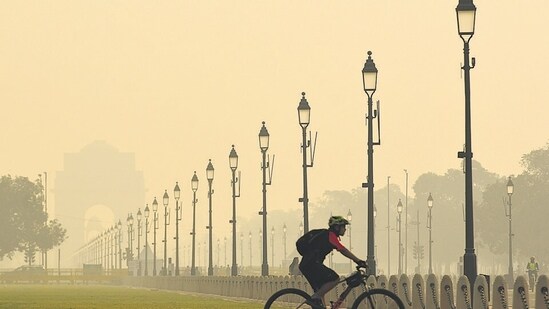
The CAQM, a central body set up to monitor air pollution and quality in Delhi, said in a statement that the flying squads will collaborate with state anti-pollution bodies to cover 10 districts in Haryana and 16 in Punjab to take preventative measures for air pollution in Delhi.
This comes after Supreme Court Justices Abhay S Oka and AG Masih on Friday questioned the authorities on the deteriorating air quality index of Delhi, which has become an annual winter occurrence in the national capital due to stubble burning, vehicular pollution and construction dust.
The apex court was unimpressed when told that the CAQM only meets once every three months, and slammed the anti-pollution body for “complete non-compliance” with the law.
Read more: ‘No plan’: SC slams CAQM on annual pollution crisis
“Have committees been constituted? Please show us a single step taken, which directions have you used... Just see the affidavit. Show us a single direction issued under S 12 and others,” the Supreme Court bench said on Friday.
As per the CAQM statement, the ‘flying squads’ will visit the hotspot districts in Punjab and Haryana between October 1 to November 30. They will coordinate with state administration and local officials regarding stubble burning and pollution issues.
“The squads will report to the Commission and CPCB on a daily basis, including steps taken to prevent further incidents of paddy stubble burning in the allocated district,” the statement said.
Last week, the air quality index in Delhi fell to 235, landing in the ‘poor’ category, for the first time in four months. The CAQM said that the primary reason for deteriorating air quality in the capital is vehicular pollution. Notably, the air quality in Delhi during the November-December period at times falls to 500++, leading to respiratory illnesses and disrupting daily life for citizens.


