
 E-Paper



Despite corruption charge, Madhu Koda’s clout remains intact
Koda, once a worker for the Rashtriya Swayamseval Sangh, started his journey in 2000 when he was elected to the Bihar legislature from Jagannathpur on the Bharatiya Janata Party (BJP) ticket.


Since 2000, former Jharkhand chief minister Madhu Koda (or his nominee) has never lost from Jagannathpur assembly constituency in West Singhbhum district in southern Jharkhand. This, despite Koda being convicted on corruption in allocation of coal mines when he was CM between 2006 and 2008.
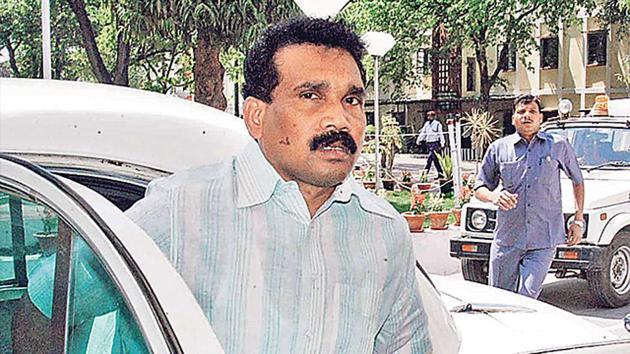
It had been a meteoric rise for Koda, son of a small farmer, Rasika Koda, and once a labourer at Steel Authority of India’s Gua iron ore mine. He holds the distinction of being the longest serving independent legislator in Jharkhand, the state where no political party has got a majority in an election (Jharkand was created in 2000).
Koda, once a worker for the Rashtriya Swayamsevak Sangh, started his journey in 2000 when he was elected to the Bihar legislature from Jagannathpur on the Bharatiya Janata Party (BJP) ticket. Later that year, Jharkhand was carved out of Bihar and Koda was made minister of state for rural engineering in the BJP government headed by Babulal Marandi. Marandi couldn’t hold onto his post for long as there was internal revolt within the party and in 2003, BJP lawmaker Arjun Munda was sworn in as the new CM. Koda was made minister of panchayati raj.
In 2005, the BJP denied a party ticket to Koda and he contested as an independent from Jagannathpur and won. He supported the BJP-led NDA even though it was Shibu Soren’s Congress-Jharkhand Mukti Morcha (JMM) alliance which was invited to form the government. Soren failed to win the vote of confidence and Munda formed the government. Koda got the ministry of mining, geology and cooperatives.
Within a year, Koda and three other independent MLAs withdrew support to the Munda government and Koda emerged as a consensus candidate for the CM, having the backing of the Congress, JMM and four independent legislators.
In 2008, JMM withdrew support and Koda had to resign. In 2009, he was arrested after the Enforcement Directorate and the CBI claimed he took bribes to allocate coal and mining blocks.
The same year, he won the Lok Sabha polls from West Singhum district as an independent candidate and a year later his wife, Geeta Koda, got elected from Jagannathpur assembly constituency as an independent. In 2017, he was convicted in the coal mining case and is out on bail after the conviction was stayed by a higher court. “Koda did a lot of work in Jagannathpur when he was the chief minister,” said Alok Nath, a political science professor at Kolhan University in Chaibasa. “He created a team of workers and the price for their support was a share in government contracts in Jagannathpur.”
Four months after his wife won from the West Singhum Lok Sabha seat – the only Congress candidate to win from the state -- Kodas’ confidant Sona Ram Tinku is the party candidate from Jagannathpur. Tinku was a bus conductor before taking the electoral plunge.
“Bhaiya called me one day and said I had to contest. He did everything,” Tinku said, at the Congress election office in Jagannathpur town on December 1 afternoon.
Koda refused to speak about his cases and said that his many electoral successes are because of the love people have for him. “Whatever I may have gone through, at heart, I am the son of a tribal and people here can identify with me,” he said.
His supporters claimed that he knows how to win elections. “As an RSS worker he is trained in creating a cadre. He knows every polling booth worker by name and calls them directly to give instructions,” said one of his supporters not willing to give his name.
“Anybody can meet Madhu and Geeta Koda, unlike other political leaders who are accessible only during elections,” said Ajit Kumar Pradhan, of village Gaukolad, who is not a tribal but is still a Koda supporter. Jagat Kumar, another non-tribal, said accessibility was the reason that Geeta won despite a “visible” Modi wave in the April-May general elections.
However, BJP candidate, Sudhir Kumar Sindi, claimed that Koda’s money is the secret of his success. Mangal Singh Monga, who defeated him in his first assembly election in 1995 said, “Come a day before polling and you will see the real influence of his money in elections.”


